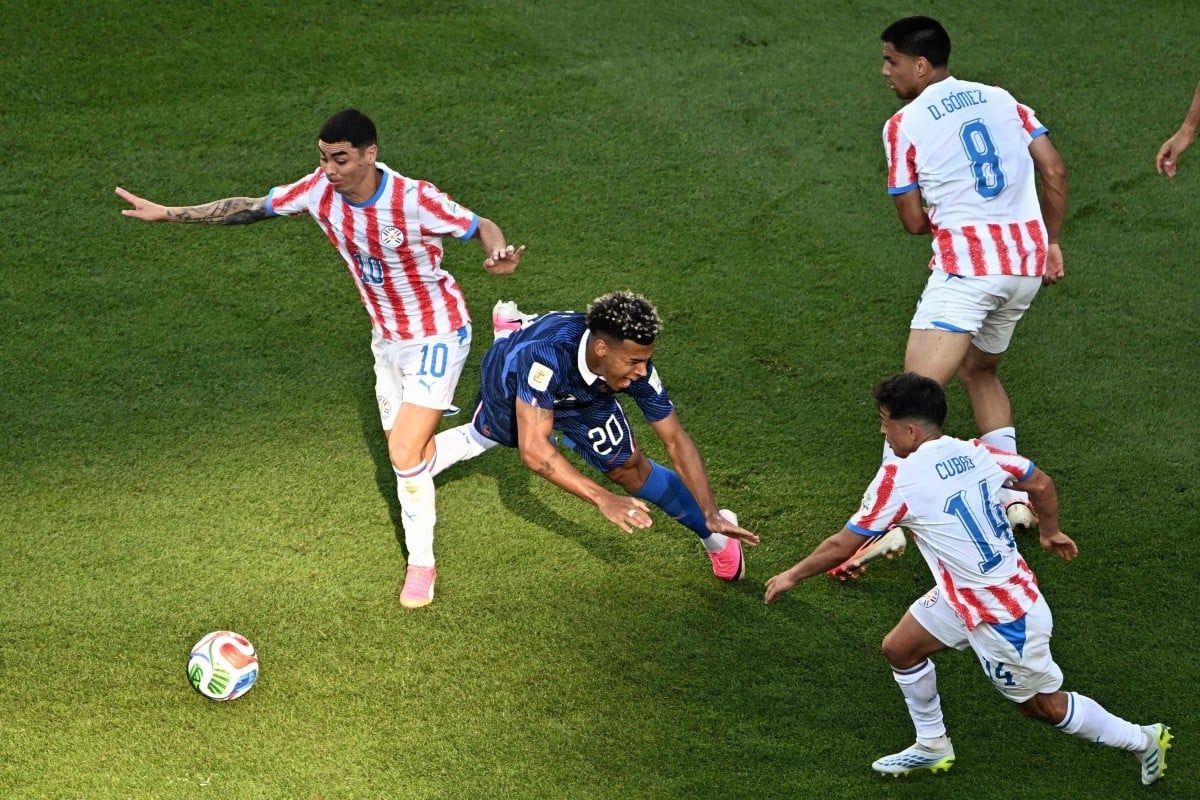
Chinese football enthusiasts have taken to social media to lambast Paraguay's overly physical and defensive approach during Saturday's World Cup last-16 encounter against France in Philadelphia, with many wishing that a more stringent match official had overseen the contest. The South American side's strategy appeared focused on disrupting their opponents through persistent fouling rather than generating attacking opportunities, ultimately proving insufficient as Kylian Mbappe's penalty kick in the 20th minute of the second half secured France's passage to the quarter-final stage. The manner of the victory, combined with the perceived inconsistency of Uzbekistan referee Ilgiz Tantashev's control, sparked considerable debate among Chinese viewers who regularly engage with international football discussions online.
The disciplinary record from the match revealed a stark disparity in how the official managed the two sides, a discrepancy that drew particular ire from followers in China. Tantashev distributed only four yellow cards throughout the ninety minutes, with three going to French players despite Paraguay committing what observers described as numerous deliberate infractions. This apparent imbalance prompted comparisons to Chinese referee Ma Ning, who has earned a reputation among supporters as the "card master" for his willingness to brandish cautions. One online commenter sarcastically suggested that had Ma been officiating, Paraguay would have been reduced to eleven players defending with only their goalkeeper remaining on the pitch by the final whistle. The contrast highlighted what many perceived as excessive leniency toward the Paraguayan team's approach.
China's digital sports community expressed considerable frustration at what they viewed as a substandard refereeing performance. Social media users classified Tantashev's officiating as belonging to "very low standard," with some questioning whether the official had somehow harboured sympathies toward the South American representatives. One particularly pointed observation suggested that the Uzbekistan referee appeared to be wearing a Paraguay jersey, implying a lack of impartiality. Others drew connections to Paraguay's surprise elimination of Germany in the preceding round, speculating that the Germans may not have been weak but rather that Paraguay's aggressive tactical approach had remained underdisciplined throughout the tournament. The cumulative criticism painted a picture of a match where officiating standards had failed to match the expectations of an international competition at football's highest level.
Mbappe, who bore the brunt of Paraguay's physical attention throughout the encounter, demonstrated composure in the aftermath while also revealing his team's awareness of the contest's likely character. The French forward acknowledged that both he and his teammates had anticipated the Paraguayans would adopt an aggressive strategy, and that France possessed the tactical flexibility to respond in kind. Speaking after the match, he noted that his side was "ready" for the intensity and refused to be intimidated, suggesting that France could "get our hands dirty" and "play ugly football" if required. His comments underscored how top-level international football sometimes devolves into contests of will and physical dominance rather than technical excellence, a reality that professional players must navigate regardless of their preferred style of play.
France coach Didier Deschamps expanded on the match's contentious atmosphere, revealing that unsporting behaviour extended beyond the field of play to the technical areas where coaching staff operate. The 57-year-old former World Cup champion indicated that Paraguay's coaching bench had engaged in verbal abuse and unsportsmanlike conduct, creating an environment he described as unpleasant. Deschamps characterised his opponents as willing to "pull out every trick in the book," suggesting a systematic approach to gamesmanship rather than isolated incidents. He lamented that such tactics represented the opposite of attractive football that would draw paying supporters to stadiums, yet acknowledged that each team had played according to its own tactical philosophy and capabilities.
An incident involving Paraguay goalkeeper Orlando Gill further illustrated the heated nature of proceedings. Gill was captured on video hurling a ball at Mbappe's back as the French forward walked away from the pitch following the final whistle without acknowledging him. The Paraguayan custodian subsequently attributed his reaction to the immediate emotions of losing a closely contested match, offering what observers might regard as a convenient explanation for behaviour widely seen as unprofessional. Chinese social media users demonstrated little sympathy for this account, with commentators suggesting that Paraguay had lost not merely the football match but also its collective composure and sporting dignity, comparing the goalkeeper's actions unfavourably to those of children rather than professional athletes representing their nation.
The broader context of this match extends beyond a single knockout encounter, touching on established patterns in how different football cultures approach international competition. South American teams have long carried a reputation among football observers for playing with physical intensity and employing tactical edge that sometimes crosses into illegality or poor sportsmanship. Paraguay's behaviour against France appeared consistent with this stereotype, though the question of whether refereeing standards adequately addressed such conduct remained contentious. For Chinese audiences accustomed to watching domestic football where enforcement can be variable, the disparity between standards across different confederations and match officials represented a source of frustration regarding competitive fairness.
The incident also resonated within China's football-following community because Ma Ning's contrasting approach to match management has become familiar through extensive domestic league coverage and occasional international assignments. His reputation for decisiveness and willingness to enforce discipline through card distribution has made him recognisable to casual fans, enabling straightforward comparisons when watching foreign matches. The implicit suggestion from numerous commentators was that football requires consistent, firm refereeing to discourage the type of persistent fouling and gamesmanship Paraguay displayed, and that allowing such behaviour undermines the spectacle and integrity of the competition.
The match ultimately demonstrated how refereeing remains one of football's most subjective and consequential elements, with officials' decisions and enforcement patterns shaping not merely individual matches but also perceptions of fairness and sporting values. France's advancement to face Morocco represented the first objective outcome, yet the manner of victory and the manner in which it was achieved generated far more discussion and criticism than the result itself might warrant. For Chinese observers, the episode served as a reminder that international football continues to operate under varying standards and philosophies, with consistency in enforcement remaining an ongoing challenge despite modern technology and professional development programmes. The criticism voiced across Chinese social platforms reflected not merely partisan disappointment but genuine concerns about whether world football's highest levels maintain adequate standards of sportsmanship and refereeing competence.

