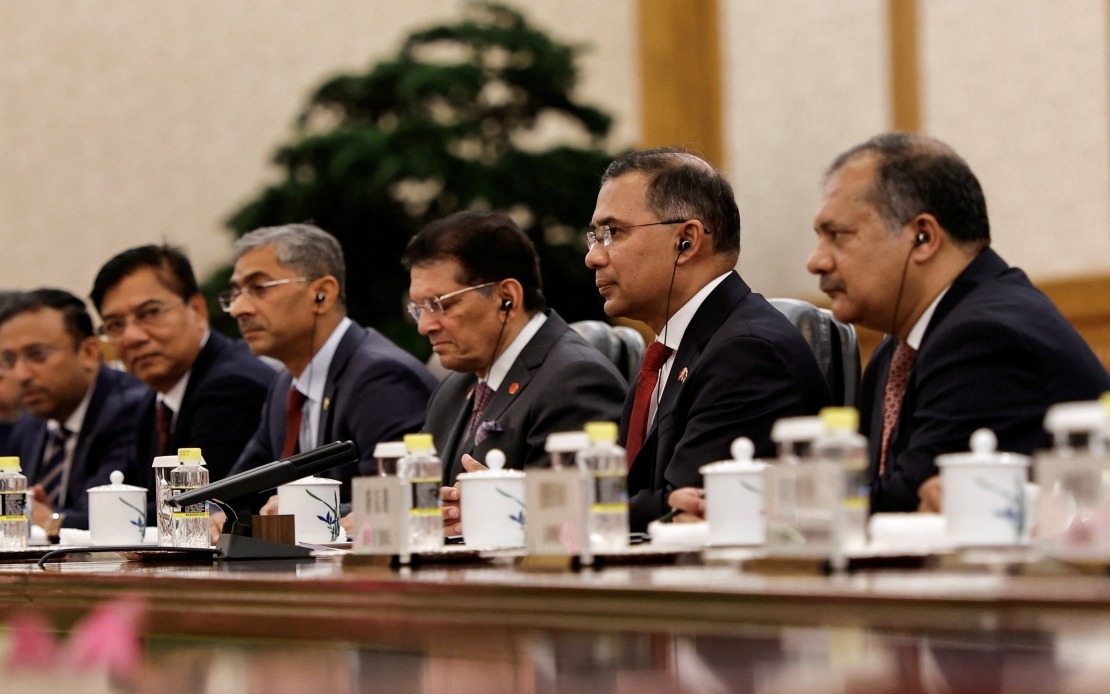
Bangladesh is preparing to welcome a substantial influx of Chinese capital, with twelve companies committing approximately US$9.2 billion to the nation's development during Prime Minister Tarique Rahman's recent visit to China from June 22 to 26. The investments represent a significant boost to Bangladesh's economic partnership with its northern neighbour, spanning critical sectors including energy generation, port operations, highway development, and manufacturing capabilities that have been identified as priority growth areas.
The framework for this cooperation was formally documented in a joint communiqué released on Friday, which outlined both countries' commitment to deepening engagement across trade, e-commerce, industrial development, and supply chain integration. The agreement signals China's interest in strengthening Bangladesh's export capacity whilst reinforcing their shared commitment to the multilateral trading system—language that reflects the broader geopolitical context of US-China competition over regional influence and trade architecture in South Asia.
Port development emerges as a cornerstone of the bilateral economic agenda. The modernisation and expansion of Mongla Port, a critical maritime gateway on the Bay of Bengal, will receive substantial attention from multiple Chinese investors. China Civil Engineering Construction Corporation alone has committed US$650 million to develop and operate the Mongla Port Economic Zone, which will encompass warehousing and advanced logistics infrastructure designed to position Bangladesh as a regional trading hub. This investment acknowledges the strategic importance of controlling maritime commerce in the Indian Ocean, a region where both China and India compete for influence.
Highway infrastructure receives the largest single commitment from any investor. Sichuan Road and Bridge Group has pledged US$4.5 billion to develop the crucial Dhaka-Chattogram highway through a public-private partnership model. This corridor connects Bangladesh's capital to its primary seaport city and represents essential infrastructure for domestic commerce and regional connectivity. The scale of this commitment reflects the strategic value Beijing places on improving Bangladesh's internal logistics networks, which directly impacts the viability of Chinese industrial operations and trade routes.
Energy security forms another critical pillar of the investment strategy. Shanghai SUS Environment Company plans to deploy US$890 million to construct waste-to-energy plants, addressing both Bangladesh's growing waste management challenges and its persistent energy deficit. Simultaneously, China Future Energy Group Holding Limited proposes allocating US$250 million for gas field exploration and development, diversifying Bangladesh's energy portfolio whilst providing Chinese firms access to hydrocarbon resources in the Bay of Bengal region.
The environmental remediation and manufacturing sectors attract equally ambitious commitments. Zhongxin Environmental Protection Group has proposed investing US$1.65 billion in an e-waste processing project at the Payra Port Industrial Zone, capitalising on the growing problem of electronic waste across South Asia whilst establishing processing infrastructure. This investment reflects China's strategic pivot towards environmental compliance and circular economy models, even as it captures valuable resource recovery opportunities. Huaxin Textile Industry Company Limited plans to invest US$190 million in establishing a 200 megawatt captive solar power plant within the same economic zone whilst expanding recycled cotton and yarn production alongside lithium battery manufacturing, demonstrating vertical integration across energy, textiles, and battery supply chains.
Lower-value but strategically important manufacturing projects round out the investment portfolio. Shenzhen Kaifa Technology's US$250 million commitment to electric smart metre production enhances Bangladesh's capacity for advanced energy metering and grid modernisation. SF Express's US$180 million cold-chain logistics facility at Mongla addresses Bangladesh's agricultural and perishable goods export capabilities, sectors where the nation possesses competitive advantages but lacks adequate infrastructure for high-value international trade.
Bangladesh's government views these investments as instrumental in addressing its persistent trade imbalance with China. Commerce Minister Khandakar Abdul Muktadir acknowledged on Saturday that attracting enhanced Chinese investment will help narrow the country's trade deficit, a chronic challenge that has widened as Bangladesh imports manufactured goods and energy resources whilst exporting primarily raw materials and textiles. The diversified investment slate suggests Beijing is committed to improving Bangladesh's value-added production capacity rather than merely using the nation as a resource extraction site.
For Malaysia and the broader Southeast Asian region, Bangladesh's success in attracting Chinese capital carries important implications. The investment model—emphasising port development, highway connectivity, and industrial parks—mirrors strategies Beijing has deployed across the region, including significant projects in Malaysia itself. The sheer volume of investment demonstrates China's continued prioritisation of South and Southeast Asian engagement despite geopolitical tensions elsewhere, suggesting sustained regional competition for Chinese capital allocation amongst ASEAN nations and neighbouring countries.
The creation of designated industrial parks and special economic zones, including the planned Chattogram Chinese industrial park, follows established patterns of Chinese investment infrastructure. These zones typically offer preferential tax treatment, labour flexibility, and regulatory streamlining that incentivise Chinese firms to relocate production from higher-cost jurisdictions. For regional competitors, including Malaysia, this signals the need for renewed competitive positioning in attracting manufacturing investment.
Bangladesh's openness to large-scale Chinese engagement also reflects the country's pragmatic diplomatic positioning between major powers. Having recently experienced political upheaval, the new leadership under Prime Minister Tarique Rahman appears committed to deepening economic ties with Beijing whilst maintaining relationships with Western partners and India. This balanced approach contrasts with some Southeast Asian nations' attempts to maintain strategic ambiguity and offers a potential model for regional countries seeking to maximise development financing without excessive strategic dependence.
The timeline and implementation mechanisms for these proposed investments remain critical variables. Large commitments, particularly in infrastructure and port development, typically face regulatory approval processes, land acquisition challenges, and environmental assessments that can delay or reduce actual disbursements from announced figures. Bangladesh's governance capacity and project execution capability will determine whether these US$9.2 billion in proposals materialise into completed projects generating promised employment and economic growth.
Looking forward, Bangladesh's experience with this Chinese investment surge will influence how other South Asian nations approach similar opportunities. Success in translating proposals into functional infrastructure and sustainable employment could reinforce the model; complications in project execution or adverse local impacts could generate political backlash affecting future Chinese engagement. For regional observers, including Malaysian policymakers, the Bangladesh experience provides instructive lessons regarding the benefits and complexities of large-scale Chinese economic engagement in developing economies.

