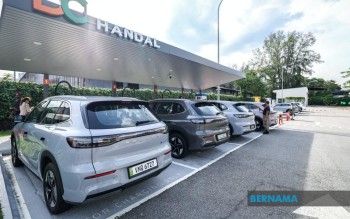
Malaysia's rapidly expanding electric vehicle sector is attracting Chinese smart charging technology providers, but successful deployment of these solutions will depend on careful adaptation to local conditions rather than wholesale replication of approaches that have worked in China. Xi'an LINCHR New Energy Technology Co Ltd, a major player in EV charging infrastructure, is making this point as it works to establish a foothold in Southeast Asia's largest economy, where the EV market is projected to grow significantly over the coming three to five years.
The challenge of synchronising EV adoption with adequate charging infrastructure represents one of the most critical bottlenecks constraining the region's transition to electric mobility. Without sufficient charging networks, consumer confidence in EV purchases remains fragile; conversely, without sufficient demand, investing heavily in charging infrastructure lacks economic justification. LINCHR chairman Yuan Qingmin acknowledges this interdependence, stressing that progress in either domain will effectively determine the pace at which the other can develop.
China's decades-long head start in both EV manufacturing and charging infrastructure deployment offers valuable lessons, but Yuan cautions against a simplistic copy-paste approach. While China has indeed emerged as an early adopter of both technologies, the pathways that worked in the Chinese context—shaped by China's specific climate, industrial ecosystem, regulatory environment, and grid characteristics—may prove unsuitable or inefficient when transplanted directly to Malaysia. Instead, successful technology transfer requires genuine partnership with local stakeholders and investment in research and development tailored to Malaysian conditions.
Yuan's point gains specificity when examined through concrete examples. LINCHR has already begun this localisation process by modifying the insulation design on printed circuit boards used in its charging stations. The switch to oil-immersed insulation represents a targeted engineering response to Malaysia's hot, humid climate and salt-laden air, particularly in coastal regions where corrosion poses a genuine threat to equipment longevity. Such modifications would be unnecessary in inland Chinese cities but prove essential for durability in the Malaysian environment. This detail illustrates how technology transfer demands not cosmetic adjustments but fundamental engineering rethinking.
LINCHR's participation in the Global Automotive and Technology Expo at Malaysia International Trade and Exhibition Centre in late August positions the company to cultivate relationships with government bodies, utility companies, and industry partners who will shape Malaysia's charging infrastructure standards and deployment strategy. These interactions matter not only for immediate business development but for establishing the technical partnerships and regulatory frameworks that will determine which solutions ultimately gain widespread adoption across the country.
The collaboration between LINCHR and Malaysian charger manufacturer Swift Bridge Technologies represents precisely the kind of localised partnership Yuan advocates. Rather than LINCHR attempting to dominate the Malaysian market directly, the partnership distributes expertise across infrastructure standards, physical product design, underlying technology, and engineering systems. This arrangement allows both parties to contribute distinct advantages: LINCHR brings proven testing technology commanding over 70 percent of China's market share, while Swift Bridge provides local market knowledge and manufacturing capability.
Standardisation and testing frameworks form another crucial dimension of this localisation effort. The tripartite cooperation agreement signed in March of the previous year among LINCHR, Swift Bridge, and Malaysia's Standards and Industrial Research Institute reflects recognition that without coherent technical standards and rigorous certification procedures, Malaysia's charging infrastructure could fragment into incompatible systems. The subsequent work upgrading equipment testing laboratories signals serious commitment to building institutional capacity for ongoing standards development and compliance verification.
Beyond current infrastructure needs, charging technology will require continued evolution as vehicles themselves become increasingly intelligent and connected. Yuan anticipates a future in which charging extends far beyond dedicated stations into homes and workplaces, with vehicles capable of drawing power when parked and, more intriguingly, returning stored electricity to the grid during peak demand periods. This vehicle-to-grid capability would fundamentally transform electric cars from simple electricity consumers into mobile energy storage assets that stabilise grid operations.
This vision of bidirectional energy flow between vehicles and grid infrastructure carries profound implications for Malaysia's energy sector and electricity pricing mechanisms. For the technology to realise its potential, Malaysia would need not only compatible charging equipment but also grid infrastructure capable of managing two-way power flows and regulatory frameworks enabling participation. LINCHR's emphasis on technology transfer and localisation takes on heightened significance in this context; solutions designed for China's grid architecture and regulatory environment could prove mismatched to Malaysian requirements.
The company's market position in China—commanding over 70 percent market share in testing technology—demonstrates genuine expertise rather than mere commercial ambition. Yet this dominance in the Chinese market neither guarantees success in Malaysia nor justifies simple replication of Chinese approaches. International expansion in technology sectors typically requires precisely the kind of patient localisation work that Yuan describes: understanding local conditions, engaging with local institutions, modifying designs where necessary, and building partnerships that blend international expertise with local knowledge.
For Malaysian policymakers overseeing the country's energy transition and electric vehicle adoption targets, LINCHR's approach offers a template for evaluating foreign technology partnerships more broadly. The critical question is not whether to adopt proven international solutions but how to ensure those solutions are genuinely adapted to local circumstances rather than imposed unchanged. This principle applies equally to charging infrastructure, battery technology, grid management systems, and the regulatory frameworks governing their deployment.
As Malaysia accelerates its EV adoption plans, the availability of sophisticated charging technology represents a genuine asset. However, the effectiveness of that technology will ultimately depend on how thoroughly it is adapted to the country's distinct climate, infrastructure, regulatory landscape, and energy system. LINCHR's willingness to invest in localisation rather than insist on replication suggests a partnership approach that could genuinely serve Malaysia's transition goals while creating sustainable business opportunities for both foreign technology providers and local industries.

