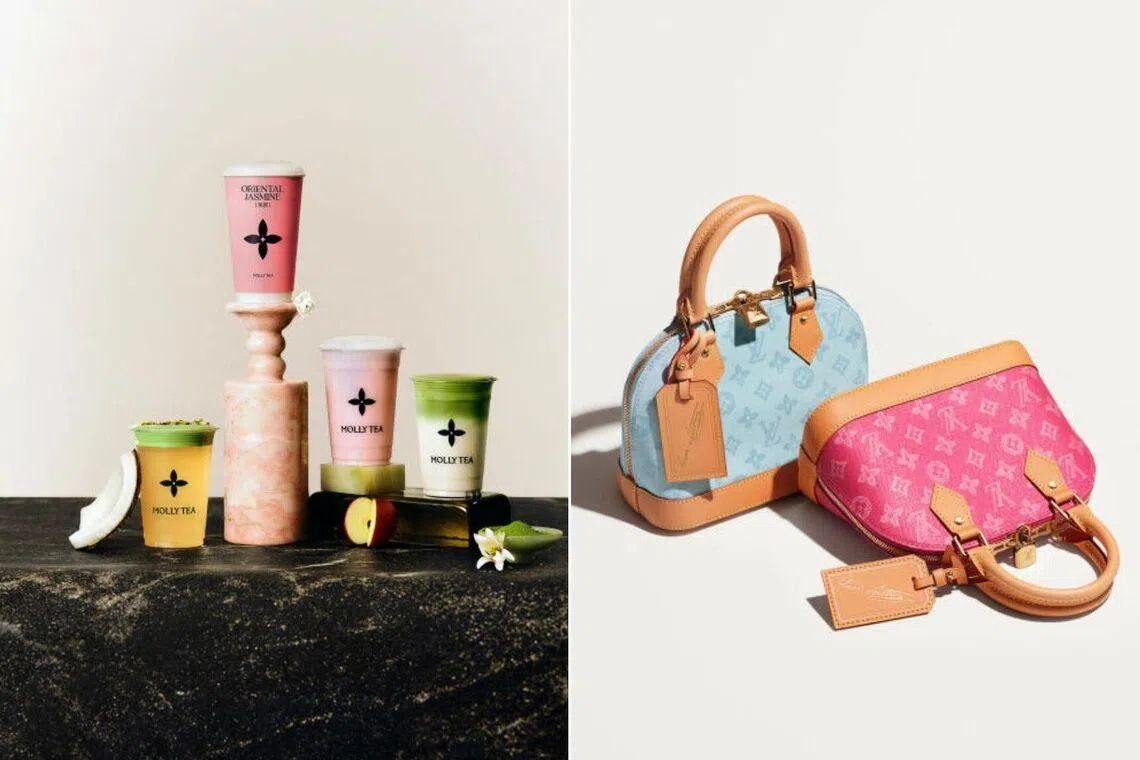
A Suzhou court in Jiangsu province has ordered Molly Tea, a prominent Chinese milk tea company based in Shenzhen, to pay 10.3 million yuan (approximately US$1.5 million) to French luxury brand Louis Vuitton for trademark infringement involving a four-petal flower design. The Suzhou Intermediate People's Court determined on June 29 that the milk tea chain and its affiliated franchise store in Wuzhong district had violated seven of Louis Vuitton's registered graphic trademarks. Beyond the financial penalty, the court mandated that Molly Tea issue a public apology and cease using the contested emblem. The ruling has triggered intense debate across Chinese social media platforms regarding intellectual property protection and the appropriate use of cultural symbols in commercial branding.
The legal action originated when Louis Vuitton initiated the lawsuit in May 2025, targeting what the French luxury house characterised as a confusingly similar visual identity. Molly Tea's brand emblem centres on a four-petal flower design that the court found sufficiently analogous to Louis Vuitton's iconic monogram motifs to constitute infringement. The company has already signalled its intention to appeal the verdict to a higher judicial authority, setting the stage for further legal proceedings that could reshape how Chinese courts interpret trademark boundaries in the beverage industry. This dispute arrives as Molly Tea navigates a competitive landscape where visual branding has become increasingly critical to market differentiation.
Molly Tea's trademark strategy appeared aggressive in the lead-up to litigation. Starting in March 2024, the company and its affiliated entities submitted multiple applications to the China National Intellectual Property Administration featuring various floral designs intended to cover restaurant services, accommodation, advertising, and convenience food categories. However, these applications encountered substantial resistance from the patent office. Of the numerous submissions, only the trademark containing the Chinese characters for "Molly Tea" itself secured successful registration, while applications centring on the four-petal flower motif were rejected—a pattern that should have signalled the intellectual property risks the company faced.
The case has captured extraordinary public attention within China's digital sphere since news of the ruling emerged. A social media hashtag discussing Louis Vuitton's lawsuit against Molly Tea accumulated more than 360 million views, whilst a related topic about the invalidation of Molly Tea's LV-inspired trademark garnered over 18.7 million reads. This phenomenon reflects broader Chinese public fascination with high-profile intellectual property disputes, particularly those involving foreign luxury brands and domestic companies. The polarised responses demonstrate fundamental disagreements about where trademark protection should end and cultural heritage rights should begin.
Online discourse surrounding the verdict reveals significant philosophical fractures within Chinese society. Some commentators contend that Molly Tea's floral emblem represents an unmistakable imitation of the French house's distinctive visual language, raising legitimate concerns about market confusion and brand dilution. Conversely, other observers emphasise substantial visual distinctions between the two designs and note that Molly Tea operates within the beverage sector whereas Louis Vuitton dominates luxury fashion—markets with minimal consumer overlap. A particularly vocal faction of internet users has questioned Louis Vuitton's originality claims altogether, suggesting the French brand's signature patterns potentially derive inspiration from traditional Chinese cultural aesthetic elements.
Kang Lixia, a partner at Beijing Standzer IP Firm, provided nuanced analysis of the legal framework governing such disputes. She explained that trademark law grants either dissatisfied party the right to pursue appeals, with success depending substantially on whether the appellant can substantiate claims of original and distinctive design elements. Lixia underscored that patterns and decorative motifs embedded within traditional Chinese culture technically constitute public domain resources available for any commercial entity to utilise. However, she highlighted a critical legal principle: China's trademark system operates on a "first to file" basis, meaning that applicants registering identical or comparable marks for equivalent product categories receive protection based on submission chronology.
The "first to file" principle created particular difficulties for Molly Tea given Louis Vuitton's prior registration and international recognition. Although the two entities registered their trademarks within different classification categories under the International Classification system, Louis Vuitton's status as an earlier-registered and globally recognised mark entitled it to what legal professionals term "cross-class protection." This doctrine permits established trademark rights to extend beyond their original product categories, effectively restricting subsequent applicants from adopting similar designs even in seemingly unrelated industries. For a newer entrant like Molly Tea, this dynamic presented formidable obstacles.
Liu Bin, an intellectual property attorney from Beijing Zhongwen Law Firm, advocated for measured deliberation regarding the underlying issues at stake. He stressed that Chinese trademark legislation governing figurative marks does not require absolute identity between the disputed design and the registered trademark. Rather, the determinative factor centres on whether ordinary consumers would experience confusion or mistake one brand for another. Liu identified public perplexity about the appropriate mechanisms for protecting and fairly utilising traditional Chinese cultural patterns—an issue transcending this single dispute. Since such motifs occupy public cultural space, many citizens maintain that no entity should enjoy exclusive commercial monopoly over them.
Nevertheless, Liu emphasised a crucial distinction between protecting cultural heritage and safeguarding intellectual property rights. Whilst traditional elements should remain accessible and continue circulating through society and artistic expression, commercial marks cannot legitimately appropriate earlier registered designs or generate marketplace confusion through imitation. The intellectual property regime protects not the cultural elements themselves but rather the brand recognition and consumer goodwill that companies develop through consistent commercial application of those elements. This distinction represents the conceptual heart of disagreement between those viewing the ruling as appropriate brand protection and those characterising it as unwarranted restriction on cultural expression.
The broader implications of this case extend beyond the immediate contestants. Chinese companies operating in the beverage, fashion, and consumer goods sectors must navigate increasingly stringent trademark enforcement, particularly when competing against established international brands with substantial prior registrations. The ruling signals that Chinese courts will vigorously defend registered trademarks even when the infringing design incorporates elements arguable derived from traditional cultural sources. For multinational corporations operating within China, the verdict reinforces the protective strength of early trademark registration and the substantial legal advantages conferred by prior establishment within the Chinese intellectual property system.
For Southeast Asian businesses and entrepreneurs watching this development, the case illuminates critical lessons regarding intellectual property strategy within regional markets. As companies expand across the Association of Southeast Asian Nations, each jurisdiction maintains distinct trademark registration timelines and enforcement philosophies. The Molly Tea litigation demonstrates how substantial financial exposure can result from apparently minor brand design similarities, particularly when operating in categories where visual identity drives consumer recognition. Smaller companies must carefully audit their branding elements against existing registrations throughout their geographic markets, recognising that cultural elements do not automatically shield designs from infringement liability.
The appeal process ahead will likely produce additional judicial guidance regarding the boundaries between legitimate use of cultural motifs and prohibited trademark infringement. Molly Tea's legal team will need to demonstrate either substantial visual distinction from Louis Vuitton's registered marks or establish that consumer confusion is unlikely given the products' different market positioning. Should the higher court sustain the lower court's ruling, it would reinforce cross-class trademark protection principles and discourage similar brand strategies among emerging Chinese companies. Conversely, if the appellate court reverses the decision, it would signal more permissive standards for trademark applications incorporating traditional design elements.

