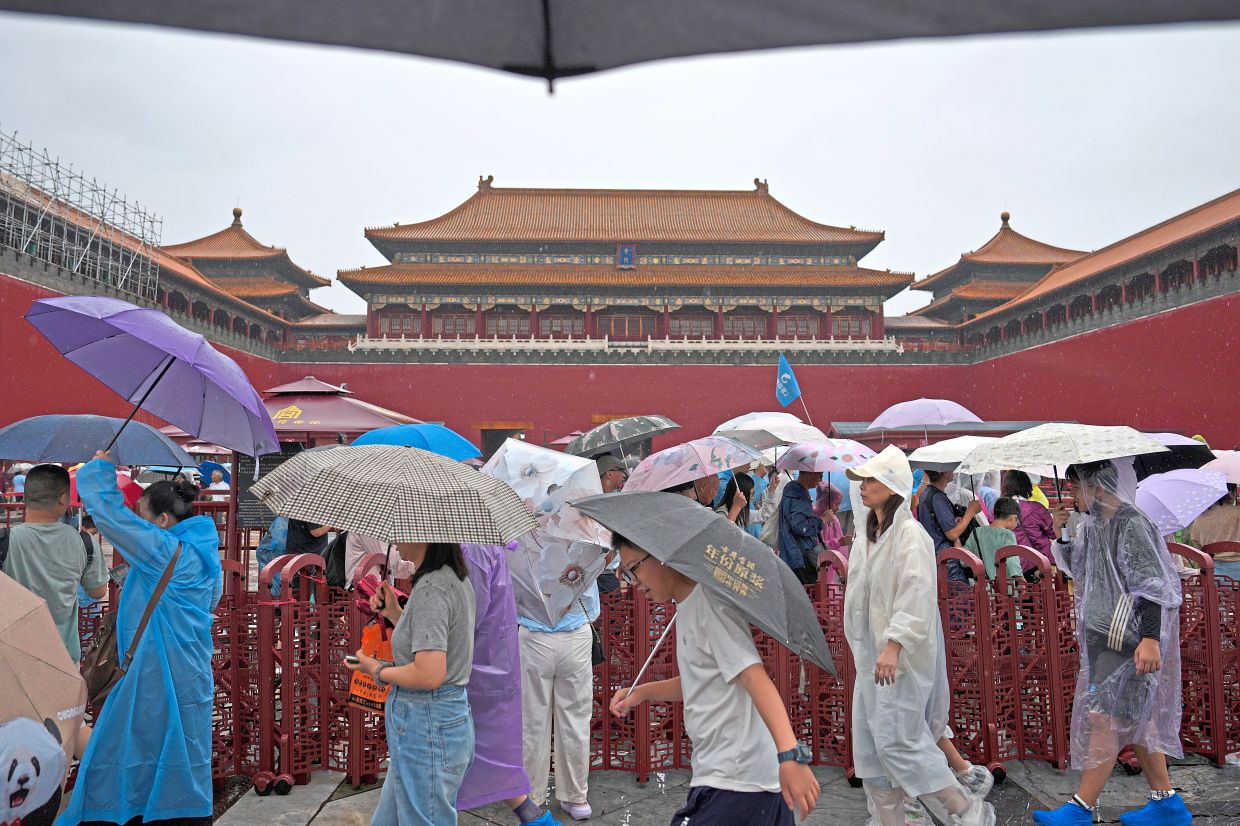
China has successfully reversed years of pandemic-induced tourism decline, with foreign visitor numbers climbing to 35 million in 2025—a milestone that places the world's second-largest economy among Asia's most established travel destinations. This recovery marks a significant inflection point not just for China's hospitality sector but for the broader geopolitical and economic landscape of Southeast Asia, where countries like Thailand and Malaysia have historically dominated the region's tourism markets. The surge represents the culmination of a multi-year strategic initiative that began in 2023 when Beijing gradually introduced visa-free travel for 50 countries, an experiment that faced considerable scepticism in its early stages given lingering concerns about China's pandemic restrictions and the sluggish restoration of international flight connectivity.
The turning point came in 2024 and 2025 when China's government substantially accelerated its promotional efforts, leveraging digital platforms to reach younger, socially connected audiences across the Western world. Unlike previous tourism campaigns that relied on traditional media and travel trade shows, Beijing's new approach weaponised social media platforms that are paradoxically banned within China itself. Officials established accounts on X and TikTok, recognising that Instagram-worthy content—particularly cinematic imagery of Shanghai's skyline, misty Yunnan landscapes, and viral attractions like the perfumery To Summer—could drive viral trends and seed curiosity among Gen Z travellers. This digital-first strategy proved remarkably effective: visa-free travellers accounted for over 70 per cent of all foreign arrivals last year, representing a 50 per cent increase from 2024 alone.
Cultural and geopolitical currents have worked powerfully in China's favour during this period. The rise of "Chinamaxxing"—a Western social media phenomenon where young people adopt Chinese lifestyle habits such as drinking hot water and embracing traditional wellness practices—created an aspirational mystique around Chinese culture that proved contagious. Simultaneously, favourable global perceptions of China reached record highs in 2025 according to the Pew Research Centre, partly because Donald Trump's presidency in the United States shifted international attention and criticism toward America rather than China. This reputational window, though likely temporary, provided essential breathing room for China's tourism sector to rebuild its image as a dynamic, modern destination rather than an economically stressed nation battling domestic consumption challenges.
Chinese city governments have invested substantial resources to capitalise on this momentum. Beijing allocated an extra CNY2.64 million (RM1.26 million) in 2026 specifically for tourism management and online publicity initiatives—a considerable commitment in an era of sluggish local government finances. Shanghai announced spending of at least CNY1.6 million on promotional campaigns across Expedia and Booking.com. These outlays reflect a deliberate strategy to move beyond passive tourism marketing toward active engagement with international travellers before and after their visits. Local tourism officials, recognising the outsized influence of social media celebrities and sports figures, have pursued unconventional promotional tactics. Chongqing's deputy director general of tourism, Zhu Mao, explicitly stated his ambition to make the city "Internet famous" and pursued partnerships with American basketball star Stephen Curry and international influencers to amplify the city's profile among overseas audiences.
The visa-free strategy has proven particularly potent in reshaping visitor flows. In the first half of 2026, 18 million people arrived from visa-free countries, pushing overall foreign arrivals up 20 per cent compared to the same period the previous year. Early data reveals interesting patterns: Asian countries with visa-free status—including South Korea, Russia, Malaysia, and Thailand—are leading the surge, while Japanese visitors have declined following a diplomatic dispute between Beijing and Tokyo. Beijing has witnessed particularly strong inflows from Vietnam and Russia, suggesting that geographic proximity and geopolitical alignment continue to influence travel decisions. This regional concentration underscores an important consideration for Malaysian and other Southeast Asian tourism boards: China's recovery is beginning to siphon visitors away from traditional Southeast Asian destinations, particularly young, digitally engaged travellers who previously defaulted to Thailand, Vietnam, or Indonesia as their primary regional travel choices.
The experience of visitors like Claire Thum, a 28-year-old Singaporean whose social media feed convinced her to visit Shanghai for the first time, exemplifies how China's new tourism model operates. Rather than encountering ancient terracotta warriors or the Great Wall—the stereotypical China of previous decades—contemporary visitors experience a hyper-modern, consumption-oriented version of urban China. Thum's itinerary included viral perfumeries, snowboarding simulations, and Japanese sportswear shopping, reflecting how China's cities now function as lifestyle destinations rather than historical museums. This repositioning creates powerful word-of-mouth momentum: visitors return home with narratives of cutting-edge retail experiences and urban sophistication that reshape perceptions among their peer groups, triggering further visitor waves. Intriguingly, Thum is already planning a return trip to China's western regions—Yunnan, Xinjiang, and Harbin—indicating that initial visits increasingly serve as gateways to deeper exploration of the country's geographic and cultural diversity.
China's tourism recovery is also benefiting from macroeconomic shifts beyond Beijing's control. The ongoing conflict in West Asia has disrupted traditional transit patterns through the Gulf region and increased airfare prices on many international routes. Chinese carriers—the state-run China Eastern, Air China, and China Southern—have capitalised on this disruption by offering substantially cheaper fares than foreign airlines that have not yet fully restored pre-pandemic service levels to Chinese cities. This competitive pricing advantage has naturally redirected transit traffic through Chinese hubs, converting potential connections into tourism opportunities. Travellers booking flights through Asia now frequently find that routing through Shanghai or Beijing costs less than alternative itineraries, and the economics incentivise spending several days exploring these cities rather than simply transiting through them.
Yet China remains constrained by structural limitations that prevent it from capturing the full value of its tourism boom. In 2025, international tourism accounted for less than 0.5 per cent of China's national GDP, far below mature tourism economies like Spain and Thailand where the sector contributes approximately 8 per cent. Per capita spending by foreign visitors—approximately US$2,240 (RM9,163)—lags significantly behind the United States, and total inbound tourism receipts represent less than one third of America's comparable figures. These gaps reflect both China's relatively recent opening to mass tourism and the infrastructure inefficiencies that still plague the visitor experience. The cashless payment ecosystem that works seamlessly for Chinese residents creates genuine friction for foreign tourists without local bank accounts or familiarity with Alipay and WeChat Pay. Limited English signage, non-existent access to global applications like Google, Instagram, and WhatsApp (except via illegal VPNs), and the complexity of ride-hailing and restaurant reservation systems have created barriers that discourage spontaneous exploration and repeat bookings.
Entrepreneurs and technology companies are rapidly identifying and addressing these pain points. Artificial intelligence–powered tourist guide applications like Kora have gained traction by simplifying navigation, restaurant bookings, and ride-hailing while providing multilingual support through chatbots. Since its launch earlier in 2025, Kora has served tens of thousands of international visitors, indicating genuine demand for friction-reducing solutions. Similarly, major Chinese tourism boards are now mandating English-language guide training and providing financial incentives to travel agencies that hire foreign-language staff. These interventions, though incremental, represent critical investments in the "stickiness" of the Chinese tourism experience—the likelihood that first-time visitors will return and recommend China to their social networks.
The tourism recovery is delivering immediate benefits to China's retail sector, which has struggled with anaemic domestic consumption and a collapsing real estate market. Foreign visitors have become economically significant foot traffic for major retailers. At Miniso's flagship Shanghai store on Nanjing East Road, international visitors account for up to 70 per cent of customers during peak periods, drawn by exclusive collaborations with characters from Chiikawa, Sanrio, Harry Potter, and Disney franchises. This phenomenon has triggered a fascinating secondary effect: Chinese consumer brands that achieve viral popularity among international tourists are experiencing exponential growth in overseas markets. Miniso's international sales now exceed its China revenue, with year-on-year growth of 20 per cent. Joy Group, the parent company of trending beauty brands Judydoll and Joocyee, generated over CNY600 million (RM363.88 million) in overseas retail sales in 2025, with Judydoll achieving more than tenfold growth over two years particularly in Vietnam and Japan—direct evidence that tourism exposure translates into sustained consumer demand for Chinese brands across Southeast Asia.
For Malaysia and other Southeast Asian nations competing for regional tourism market share, China's resurgence presents a complex challenge. On one hand, visitor flows to Malaysia are supporting the country's own tourism recovery—the NIA statistics indicate Malaysia remains a popular visa-free entry point for international tourists also visiting China. This "hub" positioning could theoretically strengthen Malaysia's tourism sector by positioning the country as a complementary destination within a broader Asian tourism itinerary. Conversely, China's aggressive marketing, superior digital infrastructure in major cities, and emerging reputation as a cutting-edge lifestyle destination may gradually absorb the discretionary travel budgets of younger, digitally native tourists who previously distributed their spending across multiple Southeast Asian destinations. The divergence in travel motivations is instructive: where visitors to Thailand and Vietnam traditionally emphasised budget accommodation, beach culture, and backpacker social scenes, China attracts visitors seeking high-end shopping, technological innovation, and aspirational urban experiences—a demographic with substantially higher per-capita spending power and greater lifetime travel value.
The experiences of recent visitors like Virgile Kebaili, a 23-year-old French history student, illuminate both the appeal and remaining limitations of China as a tourism destination. Kebaili spent more than two weeks traversing Chengdu, Chongqing, Xi'an, and Beijing, ranking the food experience among his top two international trips alongside India—extraordinarily high praise from a European visitor. His journey yielded small victories: purchasing Chinese cigarettes at one-sixth French prices and becoming an informal cultural ambassador as he posed for local photographs and participated in university interviews. Yet Kebaili also noticed the relative absence of other international tourists during portions of his visit, suggesting that while aggregate numbers are climbing substantially, distribution remains concentrated in major urban centres rather than dispersed across secondary cities and rural attractions. This geographic concentration creates both opportunity and risk: it means that infrastructure investments and marketing resources focused on Shanghai, Beijing, and Chongqing will continue generating returns, but it also indicates that many regions of China remain under-utilised by international visitors despite possessing significant cultural and natural attractions.

