China's ambitious drive to harness artificial intelligence for scientific discovery confronts a fundamental constraint: the country remains heavily dependent on foreign suppliers for the precision instruments essential to generate the high-quality experimental data that advanced AI systems require. At a major conference in Shanghai last week, prominent researchers highlighted this vulnerability as a critical impediment to China's scientific progress, with implications that extend across the region's technology ecosystem and competitive dynamics with the West.
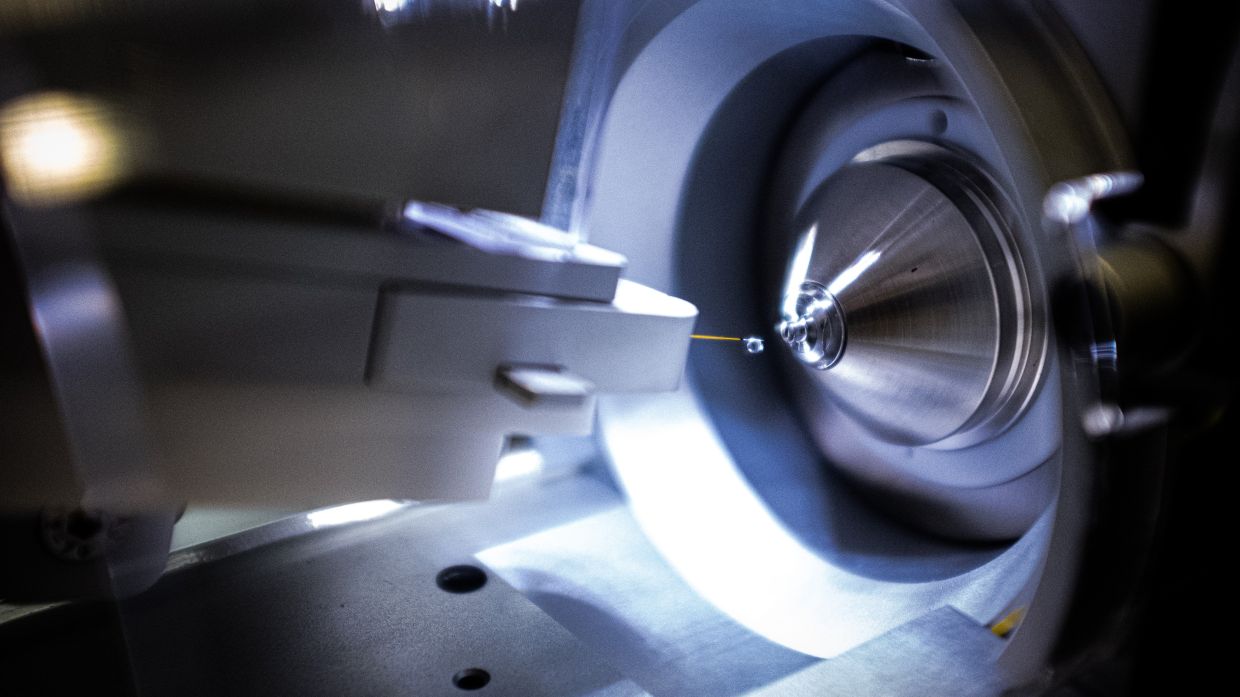
The challenge stems from a basic but unforgiving reality in modern research. Sophisticated artificial intelligence models depend entirely on the quality of data fed into them. Weinan E, a mathematician at Peking University and member of the Chinese Academy of Sciences, used a vivid metaphor to capture the dilemma: deploying AI without access to high-quality experimental data is like "cooking without rice." Mass spectrometers, chromatographs, and spectrometers—instruments that identify molecular structures, separate chemical compounds for analysis, and study material properties—are not luxuries but foundational tools for contemporary scientific work. Without them, researchers cannot generate the precise observations that AI systems need to learn patterns and make predictions.
The scale of China's equipment import dependency is striking. In 2024 alone, the country imported nearly US$17 billion in scientific apparatus, with more than three-quarters of major research instruments arriving from overseas sources, according to data from Puhua Policy, a Beijing-based consulting firm. The reliance on specific categories is even more pronounced: a recent analysis by LeadLeo found that China sources 83 percent of its mass spectrometers and chromatographs from imports, and 75 percent of its spectrometers. Optical instruments and biological tissue analysis equipment show near-total import dependency. This structural imbalance creates cascading problems—equipment costs remain inflated, maintenance cycles stretch longer, and after-sales technical support lags, all of which compromise research efficiency and expose vulnerabilities in supply chains that China cannot afford to lose.
Geopolitical tensions have sharpened this vulnerability into a strategic liability. The United States has systematically tightened export controls on precisely these categories of equipment, viewing them as potential enablers of military modernization through AI-assisted weapons design. During the Trump administration's first term, more than 42 percent of China-related entries on the US export control list were added within a specific period. The restrictions have intensified rather than eased. In January, the US Department of Commerce expanded export controls covering high-parameter flow cytometers and certain mass spectrometry devices, explicitly citing concerns that these technologies could generate biological data suitable for developing AI systems and bioengineering tools. The message is clear: Washington regards these instruments as dual-use technologies with military implications, and Beijing's access will remain contested.
Yet China's challenges extend beyond mere supply chain dependency. Weinan E also identified a second, equally troubling weakness in the country's AI infrastructure. China's artificial intelligence foundation models—the large, general-purpose systems underlying specialized applications—lag materially behind their American counterparts, a gap that no amount of post-training adjustment can remedy. The strategic difference between Chinese and American approaches to AI for science reveals the depth of this disparity. The United States has concentrated on building exceptionally powerful general-purpose foundation models, then integrating them with automated research infrastructure to handle scientific tasks. China, by contrast, has pursued a more narrowly focused strategy: developing specialized AI systems tailored directly to specific research domains, integrated with dedicated data, software, and computing resources. This application-centric approach, while pragmatic, cannot compensate for underlying weakness in foundational capabilities.
E emphasized that grafting scientific capabilities onto existing open-source models represents a conceptual dead-end. Solving genuinely complex scientific problems requires fundamentally stronger underlying models rather than cosmetic enhancements through fine-tuning. This assessment carries profound implications. It suggests that China cannot simply purchase or adapt Western open-source AI systems to leapfrog its competitors. Building world-class foundation models demands sustained investment, enormous computational resources, and access to diverse, high-quality training data—precisely the bottlenecks that China's equipment import dependency exacerbates. The two vulnerabilities reinforce each other: without precision instruments, China struggles to generate differentiated scientific data; without distinctive data and stronger foundation models, Chinese AI cannot break through into genuinely novel discovery.
The broader context for Southeast Asian policymakers and technology strategists is significant. China's constraints in this domain have regional spillover effects. As China attempts to establish itself as a technological leader in Asia and compete globally in AI-driven innovation, persistent dependencies on Western equipment and insufficient foundational AI capabilities create leverage points for other actors. Vietnam, Thailand, Singapore, and Indonesia—all pursuing their own technology ambitions—may find that partnerships centered on scientific research and AI development face headwinds from competing access to critical instruments and model capabilities. Furthermore, any escalation in US export controls could disrupt regional research collaborations that depend on equipment flowing through China or distributed across multiple countries.
Recognizing these structural constraints, Weinan E has called for a fundamental restructuring of China's research enterprise to adapt to the artificial intelligence era. He proposes what he terms three necessary "breaks." First, scientific disciplines must become more porous, breaking down the traditional walls between fields to enable genuinely interdisciplinary research teams and knowledge transfer. Second, the divide between theoretical research and experimental work must blur, creating tighter feedback loops where computation and physical investigation inform each other continuously. Third, the barrier separating academic institutions from industry must dissolve, allowing commercial pressure and academic rigor to shape each other more directly.
Beyond organizational restructuring, E argues that China's research evaluation systems require fundamental renovation. Traditional metrics—academic publications, citation counts, institutional prestige—no longer adequately capture scientific value creation in an AI-driven era. The country should recognize and reward contributions that historically went undervalued: development of datasets, creation of software tools and libraries, construction of research infrastructure and computing platforms. This reorientation acknowledges that foundational scientific progress increasingly depends on ecosystem-level assets rather than individual papers. Countries and research institutions that build the best platforms, tools, and data repositories will attract talent and accelerate discovery across their entire scientific base.
The stakes are not merely academic or economic but geopolitical. China's relative weakness in precision equipment and foundation AI models, when combined with Western export controls and strategic competition, may constrain the pace at which Chinese science can leverage artificial intelligence for breakthroughs. This has immediate implications for competing visions of technological development across Asia. Southeast Asian nations watching this dynamic must assess whether closer integration with Chinese technology platforms leaves them vulnerable to similar constraints, or whether diversified partnerships with multiple sources of equipment and AI capability offer a more resilient path forward. The tension between China's ambitions and its structural limitations will shape not only Beijing's research trajectory but the competitive landscape for technological leadership across the entire region for the coming decade.

