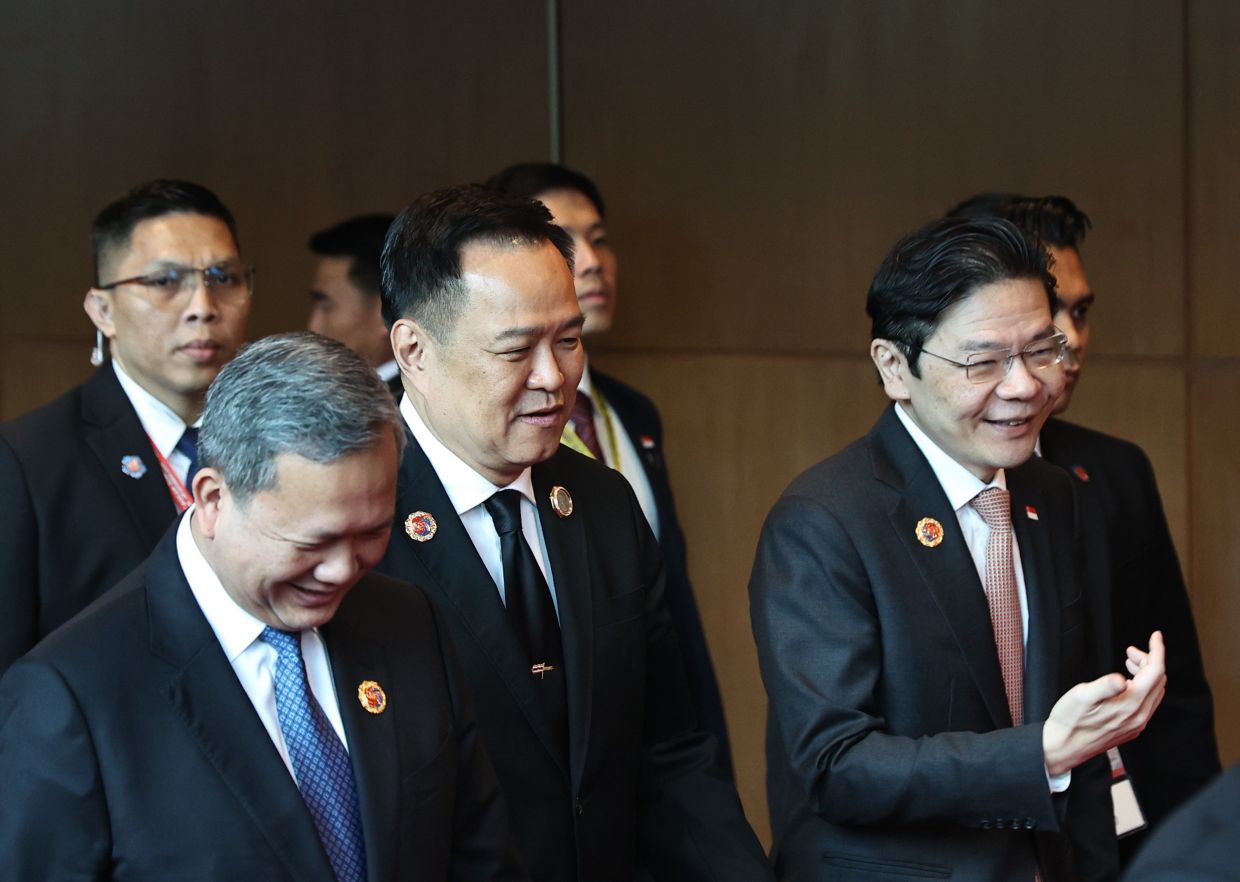
The possibility that China could step into a formal diplomatic role to help resolve the persistent Cambodia-Thailand border dispute has gained momentum following separate high-level meetings in Beijing, even as neither side has explicitly requested such intervention. Prime Minister Hun Manet's decision to brief Chinese Premier Li Qiang on the frontier situation during bilateral talks on July 16 signals that Phnom Penh views Beijing as a crucial partner whose input on the matter carries weight, while Thai Prime Minister Anutin Charnvirakul's subsequent comments suggesting Thailand would not reject Chinese involvement indicate a diplomatic opening that few analysts expected months earlier.
The timing of these discussions is hardly coincidental. Both Hun Manet and Anutin are currently in China attending the 2026 World Artificial Intelligence Conference, a gathering that has provided unexpected cover for substantive diplomatic engagement on one of Southeast Asia's most sensitive regional issues. Hun Manet seized the opportunity to place the border question directly before China's top leadership, underlining for the Chinese government that this matter remains a priority for Phnom Penh even as other bilateral concerns dominate the relationship. In doing so, Cambodia is attempting to leverage its status as what Beijing considers an "ironclad friend" to maintain high-level attention on an issue that threatens regional stability.
Thailand's more cautious but notably non-dismissive position suggests Bangkok recognises the value of having a respected third party with leverage over both nations involved in confidence-building efforts. Anutin's statements to Thai media, indicating that "we have not asked China to mediate, but we are not closing the door if China wishes to help reduce tensions," represent a delicate diplomatic formulation that preserves Thailand's preference for bilateral dialogue while signalling receptivity to external support. This measured approach reflects Bangkok's traditional wariness of appearing weak or dependent on outside powers, while simultaneously acknowledging that direct talks alone have not resolved the underlying disputes.
China's own diplomatic positioning on the issue has evolved in recent months, moving from general expressions of support for regional harmony toward more substantive engagement with the question itself. In 2023, Foreign Minister Wang Yi stated publicly that Beijing was "willing to uphold an objective and fair position and play a constructive role for the harmonious coexistence between Thailand and Cambodia," comments that were made during separate meetings with both nations' foreign ministers. This language carefully avoids the term "mediation," which carries formal implications, while keeping the door firmly open to playing a larger role should both parties request it. Subsequent Chinese diplomatic efforts have included hosting trilateral discussions among senior officials from Cambodia, Thailand, and China aimed at maintaining dialogue and building confidence between the two neighbours.
For Malaysia and other Southeast Asian nations, the prospect of Chinese-facilitated dialogue on the Cambodia-Thailand dispute carries both opportunities and complexities. On one hand, any mechanism that reduces tension along the border and prevents military escalation serves regional interests, as instability in one corner of ASEAN invariably affects broader security calculations throughout the bloc. Malaysia has consistently championed the principle that regional disputes should be resolved peacefully through dialogue, and Chinese involvement in channelling such dialogue could be viewed as supportive of that objective. On the other hand, the increasing role of extra-regional powers in mediating intra-ASEAN disputes raises questions about the bloc's own capacity for conflict resolution and the degree to which member states are comfortable relying on Beijing's benevolence.
Cambodia's broader diplomatic strategy on the border question reflects an attempt to build a coalition of support that transcends bilateral dynamics with Thailand. Beyond engaging China, Phnom Penh has welcomed ASEAN observer missions to the disputed area and pursued legal mechanisms grounded in international law, including references to existing treaties and conventions between the two countries. This multi-track approach serves several purposes: it demonstrates Cambodia's commitment to resolving the matter peacefully, it internationalises the dispute in ways that may constrain Thailand's military options, and it positions Cambodia as the reasonable party seeking resolution rather than escalation. Hun Manet's personal decision to brief Li Qiang on developments underscores how seriously Phnom Penh takes the need to maintain China's engagement and sympathy.
The absence of any announcement regarding a bilateral meeting between Hun Manet and Anutin during their respective Beijing visits is noteworthy for what it suggests about the current state of direct relations. That two leaders dealing with a shared border dispute could be in the same city without meeting one another indicates that considerable tension remains between the governments, and that both prefer to approach the matter through their respective relationships with Beijing rather than in direct confrontation. This pattern of triangular diplomacy, wherein parties to a dispute pursue engagement with a third power rather than with each other, often precedes either resolution or deepening conflict, depending on how the third party employs its influence.
Whether China will ultimately assume a formal mediation role depends on factors beyond the current statements and signalling. Beijing's decision to intervene at an official level would require clear requests from both Cambodia and Thailand, not merely receptiveness to the idea. So far, neither government has formally asked China to mediate, a distinction that allows all parties to preserve flexibility while exploring whether a Chinese role might prove helpful. The Chinese approach reflects its preference for operating behind the scenes, facilitating dialogue and building consensus among relevant parties rather than publicly imposing solutions or making public demands.
For regional observers, the current diplomatic posturing suggests that while military escalation remains a serious concern, both countries appear genuinely interested in exploring peaceful pathways forward. The fact that Thai officials are explicitly declining to close the door to Chinese involvement represents a shift from earlier periods when Bangkok might have viewed such engagement as infringement on bilateral affairs. Similarly, Cambodia's emphasis on its "ironclad" friendship with China while maintaining commitment to peaceful resolution indicates a government that believes diplomatic channels, particularly through Beijing, offer better prospects than military posturing or further confrontation.
The ultimate impact of any Chinese mediation effort will depend heavily on Beijing's willingness to pressure both sides toward compromise and its capacity to offer incentives that make peaceful resolution more attractive than continued standoff. History suggests that China prefers to facilitate outcomes that both parties can accept rather than impose solutions, meaning that mediation would only succeed if Cambodia and Thailand have already shifted toward positions that are themselves reconcilable. The simultaneous presence of both leaders in Beijing this week may represent the opening of a new phase in this dispute's evolution, though confirmation must await concrete developments in the coming months.

