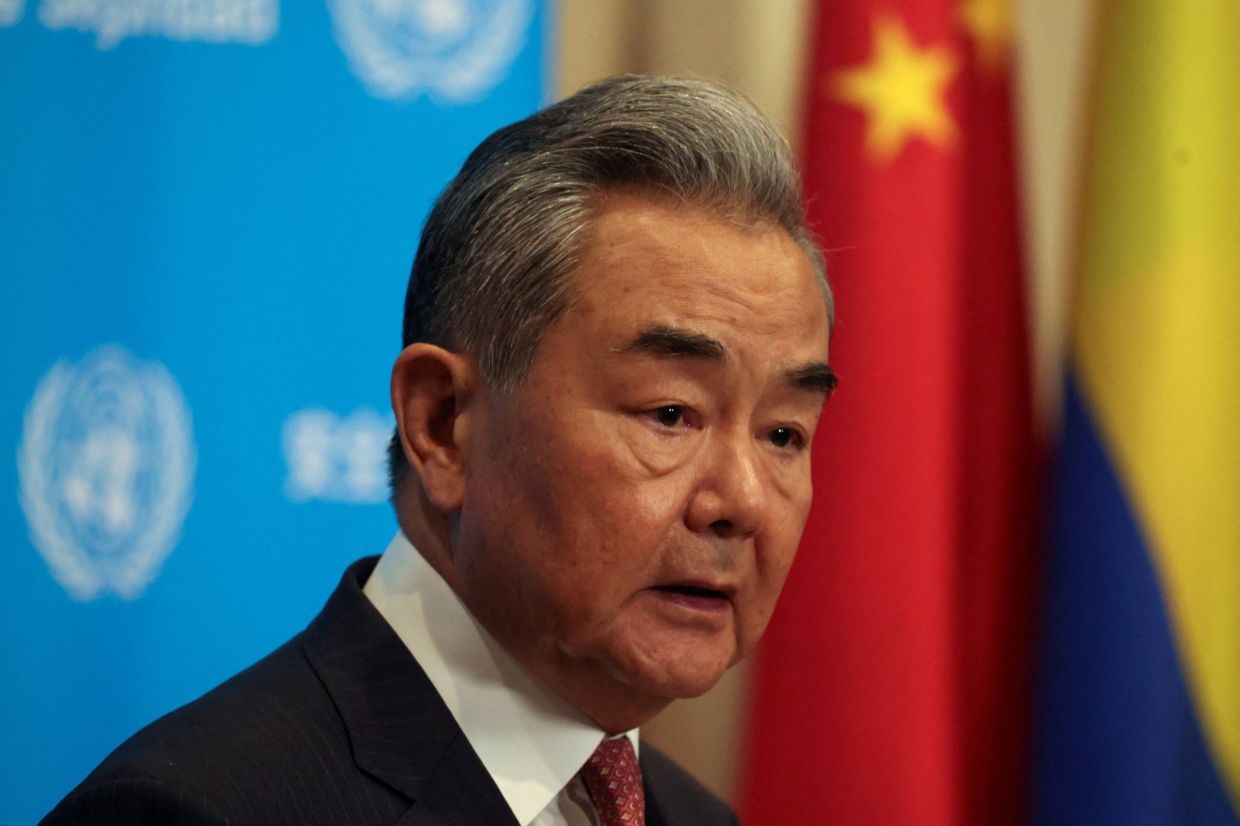
Chinese Foreign Minister Wang Yi has issued a carefully calibrated warning to United States Secretary of State Marco Rubio regarding how Washington approaches the sensitive Taiwan issue, underscoring Beijing's determination to keep the matter at the centre of diplomatic discussions between the two superpowers. The message, delivered during a Tuesday conversation between the two officials, reflects China's growing anxiety about American policy direction under the Trump administration and signals that despite recent summitry, fundamental disagreements persist over one of the world's most volatile geopolitical flashpoints.
Wang's intervention comes at a delicate moment in bilateral relations. The Foreign Minister stressed that pursuing a constructive and strategically stable relationship between China and the United States aligns with the fundamental interests of both nations and serves the broader international community. This framing attempts to position Beijing as the responsible party seeking stability, while implicitly suggesting that any deviation from this path would constitute recklessness that could destabilise global affairs. The language choice—emphasising mutual benefit rather than confrontation—reflects diplomatic convention, yet the underlying message carries unmistakable weight given the context of recent high-level exchanges.
According to Wang's public remarks, both countries must work deliberately to eliminate sources of interference, overcome structural obstacles blocking cooperation, and maintain firm commitment to what Beijing describes as the correct trajectory for relations. This phrasing carries significant meaning within Chinese diplomatic discourse, where the term "correct path" typically refers to arrangements that preserve China's core interests and acknowledge its claim over Taiwan. The Foreign Minister stressed that building such a relationship transcends mere rhetorical commitment, demanding concrete action, reciprocal movement, and sustained dedication from both capitals.
The strategy outlined by Wang involves a dual-track approach that mirrors Beijing's standard negotiating framework. On the positive side, both nations should expand their cooperation agenda, identify new areas for mutual benefit, and create collaborative initiatives that generate momentum toward stability. Simultaneously, they must address the lengthening list of contentious issues—of which Taiwan represents only one, albeit the most consequential—while carefully managing emerging risks and potential crises. This formulation allows China to appear open to dialogue whilst maintaining its red lines.
Taiwan's status forms the ideological and territorial core of Beijing's foreign policy. The Chinese government has consistently maintained that Taiwan constitutes an inseparable part of the People's Republic, and any international engagement with the island that contradicts this principle provokes stern warnings from Beijing. Wang's specific emphasis on "utmost caution" when approaching Taiwan affairs telegraphs that Washington's actions on this issue will determine the trajectory of overall relations, and by extension, regional stability throughout Asia-Pacific.
The timing of Wang's conversation with Rubio carries particular significance. The two leaders spoke weeks after President Trump held a closely watched summit meeting with Chinese President Xi Jinping, an engagement that both capitals sought to frame as a breakthrough moment restoring stability to bilateral ties. During that summit, Xi himself forcefully raised the Taiwan question, cautioning Trump that mismanagement of this issue could precipitate military conflict and drive the relationship toward what Xi characterised as an "extremely dangerous situation." The reiteration of this message through Wang suggests that Beijing remains deeply concerned Washington has not fully absorbed the gravity of Chinese demands.
Both capitals are currently preparing for a potential reciprocal state visit by Xi to the United States, an event that would represent significant diplomatic capital for the Trump administration. Such a visit would underscore Trump's claimed success in managing great power relations and could serve as a platform for announcing further agreements. However, the persistent messaging about Taiwan indicates that Chinese leadership views such ceremonial achievements as secondary to substantive shifts in American policy regarding the island. Beijing appears intent on using diplomatic channels to signal that any positive developments in the relationship remain contingent upon Washington's handling of Taiwan.
Official American assessments have portrayed the May summit between Trump and Xi as yielding tangible benefits for the United States. The State Department released documentation claiming Beijing committed to addressing American concerns regarding supply chain vulnerabilities and access to critical materials. These were presented as concrete victories demonstrating the administration's negotiating prowess and its ability to secure commitments from China on economically significant issues. However, such achievements, however genuine, may constitute only partial returns on American strategic objectives if the core question of Taiwan remains unresolved or if American policy continues to drift in directions Beijing finds unacceptable.
Despite appearances of stabilisation following the Trump-Xi summit, underlying tensions continue surfacing in bilateral relations, suggesting that the fundamentals driving competition between the two powers remain largely unchanged. Washington's security commitments to regional allies, military movements near Taiwan, and economic policies that Beijing views as containment strategies all generate friction. Wang's cautionary message should be understood not as an isolated diplomatic reminder but as part of Beijing's broader effort to establish clear boundaries for American behaviour, particularly regarding Taiwan and the broader Indo-Pacific region.
For Malaysian policymakers and Southeast Asian observers, these high-level exchanges carry direct implications. The region's stability depends substantially on whether Washington and Beijing can manage their competition without triggering military escalation, particularly around Taiwan. Malaysia, as a trading nation with interests in both countries and positioned along critical shipping routes, faces increased complexity navigating great power competition. Any military confrontation over Taiwan would catastrophically disrupt regional commerce and security, making Beijing's warnings and Washington's responses matters of pressing concern far beyond the two capitals involved.
The diplomatic intensity surrounding Taiwan reflects how this single issue dominates the entire architecture of US-China relations. Wang's emphasis on caution represents Beijing's attempt to establish that the burden of maintaining stability rests primarily on Washington's willingness to constrain its actions regarding Taiwan. Whether this messaging achieves its intended effect depends on how the Trump administration weighs its own strategic interests against Beijing's red lines—a calculation that will unfold through subsequent policy decisions and high-level interactions.

