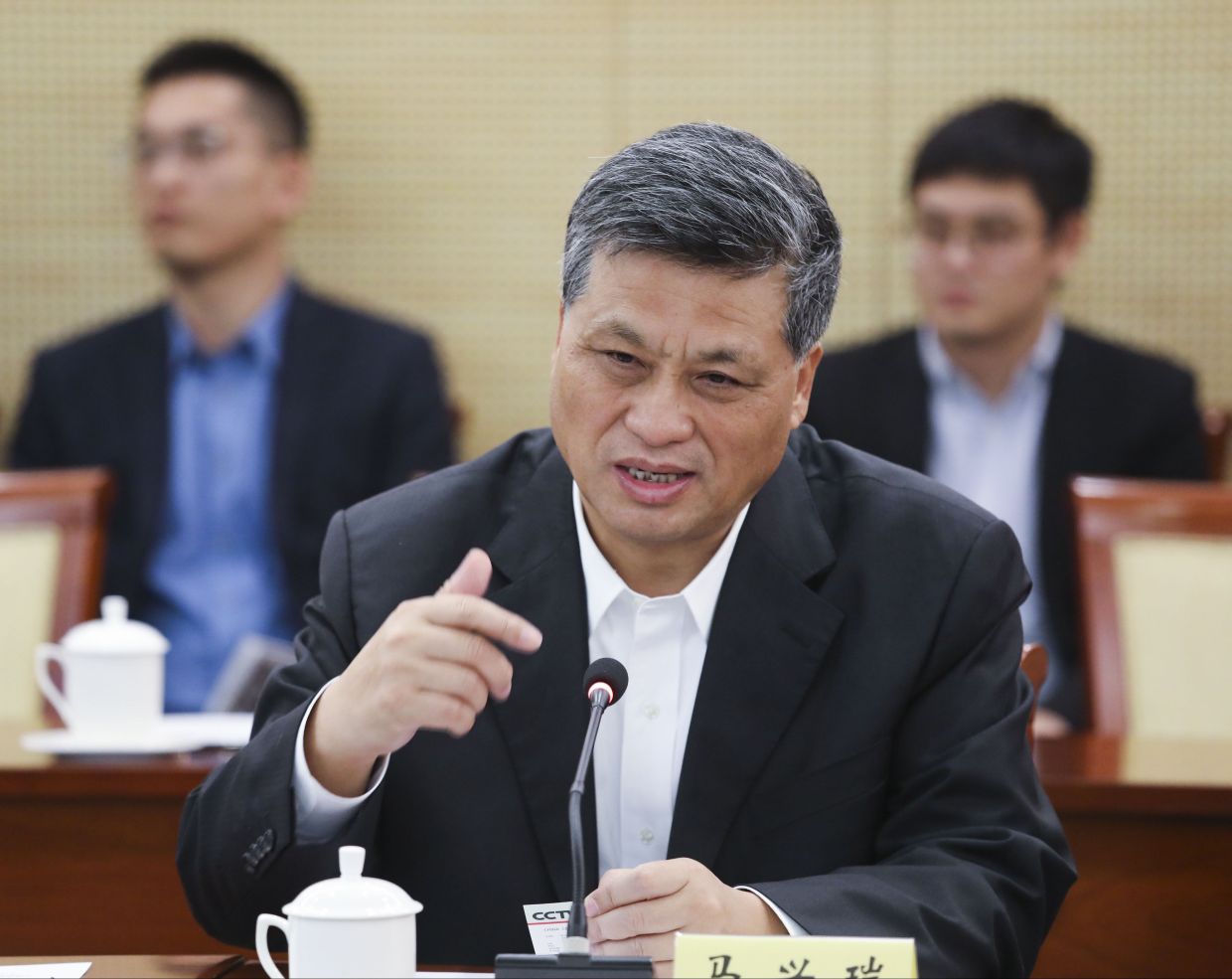
The Communist Party's discipline apparatus has formally moved against Ma Xingrui, the 67-year-old former Xinjiang party chief, signalling an escalation in President Xi Jinping's sprawling anti-corruption campaign that has now ensnared three Politburo members since 2022 — a frequency unseen in recent decades. On June 30, the party's elite Politburo reviewed and approved the comprehensive disciplinary report compiled by the Central Commission for Discipline Inspection, China's paramount anti-graft body, setting the stage for Ma's prosecution and removal from power's highest echelons.
Ma's career trajectory spans three decades of advancement through key technical and administrative posts, beginning as a deputy commander-in-chief of China's manned space programme and chief architect of the country's new-generation carrier rocket initiative while employed at the China Aerospace Science and Technology Corporation. His aerospace credentials earned him the post of general manager at that corporation from 2007 to 2013, during which several subordinates would later face their own corruption inquiries. The transition from rocket science to provincial governance came through a 2013 appointment as deputy party secretary of Guangdong, followed by more senior postings including party secretary of the special economic zone Shenzhen, provincial vice-governor, and ultimately governor. This resume of ascending administrative responsibility positioned him as a candidate for national leadership, culminating in his succession of Chen Quanguo as Xinjiang's top party official in 2021 and elevation to the Politburo at the 20th party congress in October 2022.
The disciplinary report paints a picture of systematic personal enrichment masquerading as public service. Officials accused Ma of abandoning ideological moorings and violating core party principles by converting his governmental authority into an instrument of private gain. The catalogue of alleged misconduct encompasses improper acceptance of gifts and monetary transfers, arranging subsidized property purchases for family members, and engaging in transactions explicitly characterised as involving sexual exploitation in exchange for favours or financial benefit. Crucially, investigators determined that Ma not only perpetrated these violations himself but actively abetted his relatives' exploitation of his official position for commercial advantage, thereby cultivating what the commission termed "rampant corruption across his family."
Beyond personal enrichment, Ma stands accused of manipulating state power across multiple domains critical to governance. He allegedly leveraged his influence to engineer business contracts and development projects for connected parties, deployed personnel authority to secure inappropriate job placements and promotions, and distorted the cadre selection process to benefit himself and associates. The disciplinary findings suggest a pattern of institutional capture whereby Ma subordinated meritocratic advancement to patronage networks and financial arrangements. His abuse of appointment authority proves especially significant given that personnel decisions in China's one-party system represent fundamental expressions of political control and stability.
A particularly damaging element of the investigation involves Ma's supervisory failure regarding his staff. Investigators found that he permitted subordinates to engage in serious disciplinary violations and suspected criminal activity without meaningful correction or restraint, thereby amplifying the institutional damage from his leadership. This negligence transformed his office into a source of systemic corruption rather than an instrument of state discipline. The report's characterisation of his conduct as "extremely serious in nature and an extremely bad influence" represents the strongest language typically employed in such proceedings, essentially foreclosing any possibility of rehabilitation or lighter sentencing.
Ma's behaviour, according to the commission, persisted and possibly intensified even after Xi Jinping's 2012 assumption of the presidency and his immediate announcement of sweeping anti-corruption reforms and heightened official conduct standards. Rather than moderating his conduct in response to the party centre's clearly stated priorities, Ma apparently calculated that his technical expertise and administrative position rendered him immune from consequences. His initial failure to confess fully during early interrogation sessions further undermines any claim to remorse or voluntary compliance with party expectations. These factors substantially influenced the severity of charges and the commission's recommendation for judicial prosecution and comprehensive asset forfeiture.
The removal of Ma reduces the Politburo's membership to twenty-one, following the earlier expulsion of He Weidong, a former vice-chairman of the Central Military Commission, who faced his own party and military dismissal in October. The simultaneous investigation of two top military figures alongside Ma suggests that Xi's disciplinary apparatus operates across the party-military divide without institutional boundaries, indicating centralised direction of the campaign. This breadth reflects the unprecedented scope of the anti-corruption programme now in its thirteenth year, having transformed the political landscape through the systematic removal of rival faction members and officials deemed insufficiently loyal.
Xinjiang has emerged as a particular focal point of recent investigative activity, with multiple provincial officials facing unprecedented scrutiny. Chen Weijun, the region's former executive vice-chairman, came under investigation in December, while Li Xu, former deputy commander of the Xinjiang Production and Construction Corps, faced public accusation in January. This concentration of cases within a single province suggests either genuinely widespread misconduct, a sustained political purge targeting Xinjiang's institutional structure, or some combination thereof. For Malaysian observers, this pattern underscores the volatility of Chinese provincial politics and the precariousness of official position regardless of apparent advancement or technical competence.
The implications for Malaysia and Southeast Asia warrant consideration given the region's deepening economic integration with China and reliance on Chinese investment and expertise. Ma's background in aerospace and infrastructure development mirrors the technical leadership involved in signature Belt and Road Initiative projects throughout Southeast Asia. His fall demonstrates that even senior technical experts and administrators cannot expect immunity from party discipline in contemporary China, a reality that reshapes risk calculations for international partners, foreign investors, and regional governments dependent on continuity of relations with Chinese officials. The unpredictability introduced by such investigations may influence how Southeast Asian states approach long-term infrastructure partnerships and official exchanges with Beijing.

