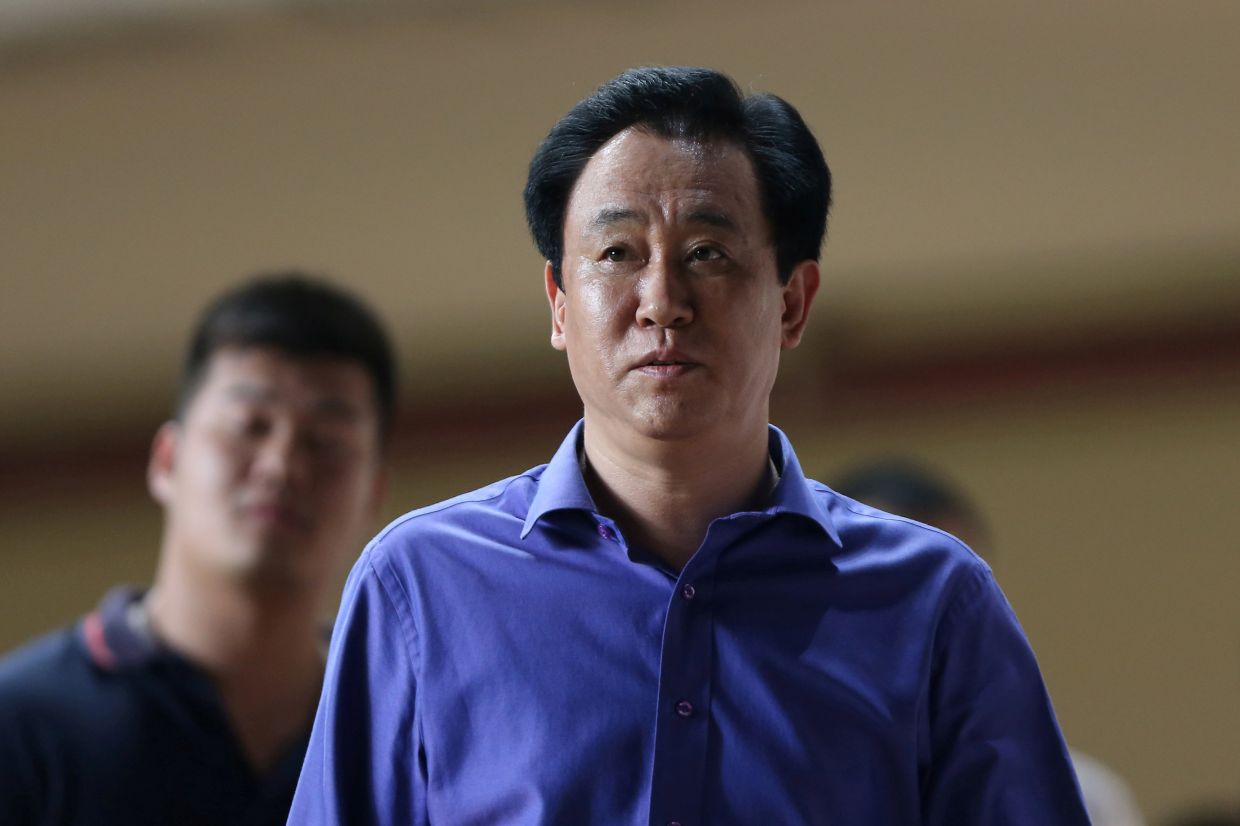
China has delivered a decisive legal reckoning against Evergrande Group, one of the nation's most visible property conglomerates, sentencing founder Xu Jiayin to life imprisonment on Thursday and imposing combined fines exceeding US$2.4 billion on the company and its real estate subsidiary. The Shenzhen Intermediate People's Court in Guangdong province handed down the verdict following a comprehensive investigation into fraudulent practices that spanned five years, cementing the downfall of a developer that once symbolised China's real estate ascendancy.
The magnitude of the financial penalties underscores the severity of misconduct uncovered during the proceedings. The court levied fines totalling 15.82 billion yuan against both Evergrande Group and its real estate division, targeting the very corporate entities through which the fraudulent schemes were orchestrated. Beyond the monetary sanctions, Xu faces permanent revocation of his political rights and complete confiscation of his personal assets, representing a comprehensive dismantling of his economic and political standing within China.
Xu's conviction encompassed multiple criminal charges reflecting the breadth of Evergrande's malfeasance. Prosecutors successfully demonstrated that between 2016 and 2021, the company and its founder engaged in systematic financial deception designed to artificially inflate the firm's asset values while concealing substantial liabilities from creditors and regulators. The court specifically identified "large-scale financial fraud" as the most serious infraction, alongside supplementary convictions for embezzlement and bribery. Xu had entered a guilty plea in April to these charges, facilitating the expedited judicial process that concluded this week.
The fraudulent architecture extended beyond mere accounting manipulation to encompass institutional corruption. Court documents revealed that Evergrande leveraged bribery as an instrument to gain controlling influence over multiple financial institutions, though the court refrained from identifying these entities by name. This revelation demonstrates how deeply the company's misconduct penetrated China's financial system, compromising banking and credit institutions that presumably extended substantial loans to the developer. The broader implications suggest potential systemic vulnerabilities within China's oversight mechanisms that allowed such extensive fraud to persist for several years before detection.
The company's trajectory from market dominance to criminal liability mirrors the broader convulsions afflicting China's property sector. Throughout the 2010s, Evergrande embodied the aspirational narrative of Chinese homeownership, leveraging decades of sustained real estate appreciation to expand rapidly across dozens of cities. The developer successfully cultivated an image of boundless growth and financial invulnerability, marketing properties as safe wealth-accumulation vehicles to middle-class Chinese households increasingly viewing real estate as essential savings mechanisms.
This narrative unravelled decisively when China's regulatory authorities implemented sweeping restrictions on property sector leverage. Beginning around 2020, Beijing systematically tightened credit availability to large developers, establishing strict limits on debt ratios and borrowing capacity. These restrictions, ostensibly designed to deflate speculative excesses and prevent systemic financial risks, severed Evergrande's access to the continuous credit flows that had fuelled its expansion. The developer suddenly confronted an impossible situation: maintaining debt obligations across a sprawling portfolio of projects without the financing mechanisms that had previously sustained operations.
Evergrande's formal default in 2021 crystallised the financial crisis that had been building throughout 2020 and early 2021. The company proved incapable of servicing its obligations to creditors holding both onshore yuan-denominated bonds and offshore dollar-denominated debt instruments. This default triggered investigations that ultimately exposed the systematic fraud underlying the company's reported financial health. Creditors discovered that profitability metrics, asset values, and financial positions had been substantially misrepresented, revealing that Evergrande's apparent strength was largely illusory.
Beyond Xu Jiayin, the criminal accountability extended through Evergrande's senior management hierarchy. The court on Thursday convicted five additional executives of the company, imposing prison sentences ranging from six to eighteen years for their roles in perpetuating fraudulent schemes. These parallel convictions establish that financial misconduct was not attributable to a single individual but represented institutionalised corporate practice, with multiple layers of management complicit in asset inflation and liability concealment. The staggered sentencing reflects varying degrees of culpability and involvement within the conspiracy.
The Evergrande case carries significant implications for foreign and domestic investors throughout Southeast Asia and the broader Asia-Pacific region. Many regional investors held substantial Evergrande debt or equity positions, absorbing considerable losses when the company's true financial condition became apparent. The scandal has heightened scrutiny of Chinese property sector dynamics and raised questions about the reliability of financial disclosures from other major developers facing similar regulatory pressures. Malaysian and Singaporean institutional investors, in particular, recalibrated their exposure to Chinese real estate debt instruments following Evergrande's difficulties.
For Malaysia specifically, the Evergrande collapse offers cautionary lessons regarding property sector stability and the dangers of unsustainable leverage. While Malaysian developers operate within a different regulatory environment characterised by more conservative capital requirements, the episode demonstrates how rapidly market conditions can shift when governments implement corrective policies. The case also illustrates how fraudulent financial reporting can mask underlying structural problems, reinforcing the importance of stringent disclosure requirements and auditing standards that Malaysian regulators increasingly emphasise.
China's decisive punishment of Evergrande and Xu Jiayin signals the government's resolve in enforcing accountability within the property sector while attempting to restore confidence in corporate financial disclosures. The severity of sentencing—life imprisonment represents the maximum penalty available under Chinese criminal law—conveys that such large-scale fraud will face the harshest possible consequences. This stance may strengthen regulatory credibility but simultaneously highlights the extent to which state oversight mechanisms initially failed to detect or prevent years of systematic misconduct.
Looking forward, Evergrande's resolution remains incompletely determined. The company continues navigating debt restructuring negotiations involving multiple creditor classes with competing interests. The criminal convictions and fines, while establishing legal accountability, do not automatically resolve the underlying financial obligations that numerous bondholders and investors still expect to recover. The judicial proceedings thus represent one component of a prolonged process through which the sprawling consequences of Evergrande's collapse will continue reverberating across China's financial system and regional capital markets.

