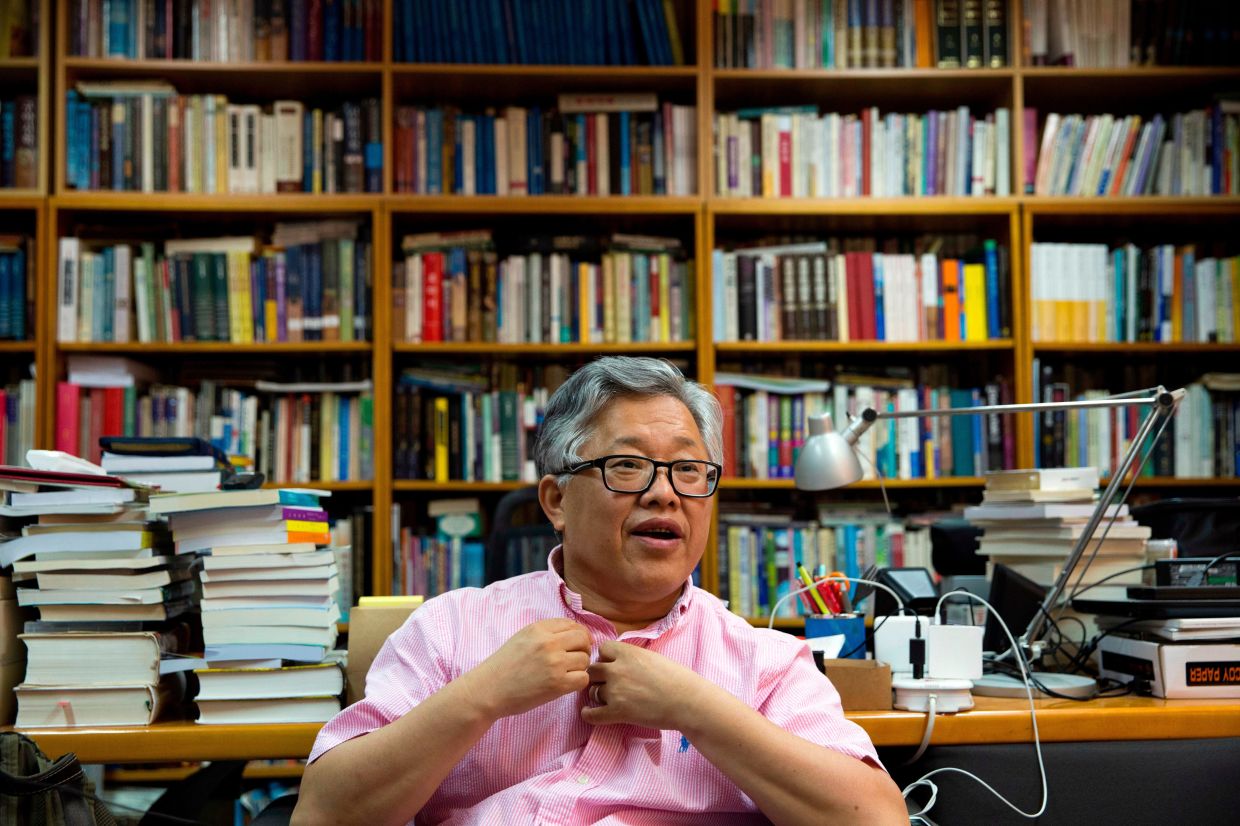
China has released Ezra Jin, the founder of Zion Church, an unregistered Christian congregation that operates outside state oversight, after nearly nine months of detention. His family and the church confirmed the release to international media on Sunday, marking a significant moment in the contentious relationship between Beijing and religious communities operating in the shadows of Communist Party control. Jin, known also by his Chinese name Mingri, was apprehended alongside other church members on October 10 on charges relating to the illegal use of information networks—a common accusation levelled against organisers of unauthorised gatherings and online activities in China.
The pastor's freedom appears directly tied to diplomatic pressure from the United States. During a visit to Beijing in May, US President Donald Trump raised Jin's case with Chinese President Xi Jinping, expressing confidence that the Chinese leader would "strongly consider" his release. On Saturday, the international rights organisation ChinaAid released a statement confirming that Jin had arrived safely in Los Angeles, having been discharged from Chinese detention. According to official communications Jin received from authorities, his release was explicitly presented as a reciprocal gesture following discussions between Trump and Xi, with timing that coincided deliberately with American Independence Day celebrations.
Jin's daughter Grace welcomed the development in remarks shared with media outlets, expressing gratitude to God for what she termed "a tremendous miracle." Her statement carried broader implications for the imprisoned pastor's family, who have endured prolonged separation. The family's gratitude extended specifically to Trump and his administration for "their tremendous leadership," framing the release within the context of improving bilateral relations between Washington and Beijing. Yet this moment of relief masks a deeper crisis within China's unregistered religious community, where eight other members of Zion Church detained alongside Jin in October remain imprisoned with no confirmed release date.
Zion Church itself represents a significant phenomenon within contemporary China—a sprawling network of believers who consciously choose unregistered worship communities over state-supervised religious organisations. The congregation was established in 2007 in Beijing and expanded substantially before being effectively shuttered in 2018 when government pressure intensified. Despite physical closures and legal restrictions, the church adapted ingeniously to the digital age, maintaining a robust online presence that expanded dramatically during the Covid-19 pandemic. By the time authorities moved against the community, Zion Church had cultivated a distributed following spanning forty Chinese cities, demonstrating both the hunger for autonomous spiritual spaces and the capacity of underground networks to evade complete suppression.
Jin's personal sacrifice underscores the cost of religious leadership outside official channels. After his family relocated abroad following the 2018 crackdowns, Jin made the deliberate choice to return to China to support his congregation, accepting the personal consequences of that decision. The authorities responded by imposing a travel ban that has effectively imprisoned him within China's borders, preventing reunion with his wife and two young sons for more than seven years. His daughter's statement reveals the human toll extracted by the state's religious restrictions—extended family separation, uncertainty about the future, and the enduring strain of maintaining faith under governmental surveillance and periodic detention.
China's approach to organised religion, particularly under Xi Jinping's leadership, reflects the Communist Party's longstanding suspicion of any large-scale autonomous social organisation. The regime distinguishes sharply between state-approved religious bodies, which operate under Party oversight and ideological constraints, and unregistered churches, which the government views as potential threats to political control. Recent months have witnessed an intensified campaign against these unofficial communities. In June, authorities raided a service conducted by Early Rain Covenant Church in Sichuan province and detained two prominent leaders. That same week, the Yayang church in Zhejiang province was physically dismantled, with its religious cross removed—a symbolic erasure of Christian presence in public space. These coordinated actions suggest a broader strategy to eliminate or drastically reduce the footprint of unregistered churches across multiple provinces.
The Early Rain Covenant Church provides a particularly instructive case study. Several of its leading members faced detention in January, followed by additional arrests in June, indicating that the government is systematically targeting the leadership structures of established underground congregations. By removing key figures, authorities aim to decapitate these movements and prevent them from reconstituting elsewhere. Yet the persistence of these communities—their migration to digital platforms, their expansion across provincial boundaries, their ability to attract new members despite repression—suggests that official pressure, while painful and destabilising, has not eliminated the demand for autonomous religious expression in contemporary China.
For Malaysian and Southeast Asian observers, Jin's case illuminates broader questions about religious freedom and state control in the region. While Malaysia operates under a constitutional framework that formally protects religious liberty, the experience of unregistered churches in China raises uncomfortable questions about the trajectory of religious regulation across Asia. Malaysia's own restrictions on unregistered religious groups, though less severe than China's, reflect similar underlying anxieties about autonomous social organisations operating outside state supervision. The Chinese government's willingness to use detention as a mechanism for suppressing religious dissent, coupled with its deployment of vague charges like "illegal use of information networks" to criminalise online worship and prayer sharing, represents an extreme end of a spectrum along which several Asian governments are moving.
Trump's intervention in Jin's case reflects American strategic interest in leveraging religious freedom as a diplomatic tool while simultaneously pursuing broader economic and geopolitical objectives with China. The timing and framing of the release—as a goodwill gesture coinciding with American Independence Day—suggests careful choreography designed to generate positive publicity for both the American administration and Xi's government. For Chinese officials, releasing a single imprisoned pastor creates an appearance of flexibility and reasonableness without fundamentally altering the state's posture toward unregistered religious communities. The eight remaining Zion Church members in custody serve as a stark reminder that Jin's liberation, while genuinely significant for his family, represents an exceptional instance of international pressure rather than a systematic change in how Beijing treats underground congregations.
The broader context reveals a regime determined to maintain comprehensive control over the religious landscape. Xi's government has invested substantial resources in expanding state-approved religious bodies, training clergy loyal to Communist Party interests, and ensuring that all religious expression remains channelled through official structures where it can be monitored and controlled. Unregistered churches represent an intolerable anomaly within this framework—communities that exist, grow, and sustain themselves without state permission or supervision. That Jin's release required direct intervention from the American president underscores the extreme difficulty facing these communities in securing basic freedoms through domestic channels. For the millions of Chinese Christians worshipping in underground churches, Jin's case offers both inspiration and a sobering reminder of the precariousness inherent in choosing faith over state compliance.

