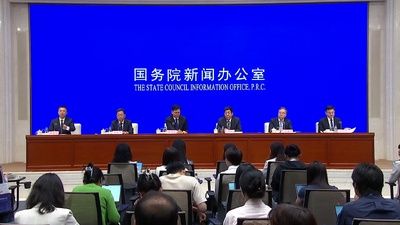
China has categorically rejected claims of forced labour and forced migration in the Xinjiang Uygur autonomous region, with Chen Ruifeng, Minister of the National Ethnic Affairs Commission, dismissing accusations from Western organisations and media as baseless. Speaking on Wednesday, Chen emphasised that the Chinese Constitution and national legislation explicitly prohibit all forms of forced labour, underpinning Beijing's legal framework against such practices across the entire country.
The timing of Chen's remarks coincides with the passage of the Law on Promoting Ethnic Unity and Progress, which was approved on March 12 and is set to take effect on July 1. This legislation represents a significant development in China's approach to protecting vulnerable workers, particularly those engaged in cross-regional employment. The new law introduces specific provisions designed to safeguard the rights of migrant workers from all ethnic groups, establishing formal mechanisms for legal assistance and rights protection that the government argues will strengthen protections for labourers moving between provinces and regions.
According to Chen's statement, all employment movements from Xinjiang occur on a purely voluntary basis, with workers making conscious decisions to seek opportunities beyond their immediate communities. He characterised such decisions as stemming from individual aspirations to enhance family welfare and develop professional skills, suggesting that economic motivation rather than coercion drives labour mobility in the region. This framing positions employment transfers as part of broader development initiatives aimed at lifting living standards across Xinjiang's diverse population.
The minister rejected Western criticism as fundamentally misguided, using strong language to describe allegations as "extremely absurd and ridiculous." This rhetorical approach reflects Beijing's defensive posture on the issue, which has attracted sustained scrutiny from human rights organisations, Western governments, and international observers who have raised concerns about working conditions and employment practices in the region. The characterisation suggests China views these criticisms as politically motivated rather than grounded in factual concerns.
Chen outlined what Beijing describes as a comprehensive employment strategy designed to generate opportunities and improve economic outcomes. Labour transfers from Xinjiang, in this narrative, function as a deliberate policy tool aimed at expanding job availability while respecting workers' preferences and cultural backgrounds. The government's emphasis on "practical and beneficial outcomes" attempts to reframe employment mobility as economically rational policy rather than addressing the core Western allegations regarding worker autonomy and conditions.
The government released statistics to support its employment narrative, reporting that Xinjiang created more than 2.39 million new urban jobs over the preceding five years through various policy interventions. These figures suggest substantial labour market activity and job creation across the region. Beyond urban employment, agricultural workers reportedly undertook 16.1 million trips for work outside their home regions during the same period, indicating significant cross-regional labour mobility that Beijing characterises as reflecting worker choice and opportunity-seeking behaviour.
Income growth data presented by Chen indicates economic improvements for residents across Xinjiang's urban and rural areas. Urban residents' per capita disposable income increased at an average annual rate of 5.3 per cent, while rural residents experienced faster growth at 8.1 per cent annually over the five-year period. These figures, if accurate, suggest that at least in income terms, Xinjiang residents have experienced economic advancement, though such statistics do not directly address allegations regarding worker autonomy or employment conditions.
Chen highlighted institutional developments that the government presents as evidence of labour rights protection. By establishing what it characterises as a fair employment policy system and comprehensive labour rights protection mechanism, China claims to have created frameworks ensuring legal protections for workers and facilitating employment access for all able-bodied individuals across ethnic groups. These institutional structures are offered as proof that the system prioritises worker dignity and voluntary participation rather than coercion.
For Malaysian and Southeast Asian observers, this dispute reflects broader international tensions regarding labour standards, worker rights, and the role of government in employment markets. The allegations against Xinjiang have implications for regional trade relationships and discussions about labour mobility within ASEAN, particularly as Southeast Asian countries grapple with their own challenges around migrant worker protections and employment practices. How these international disputes surrounding Xinjiang employment are resolved may influence broader regional discussions about labour standards and worker mobility across Asia, including within ASEAN frameworks and bilateral agreements.