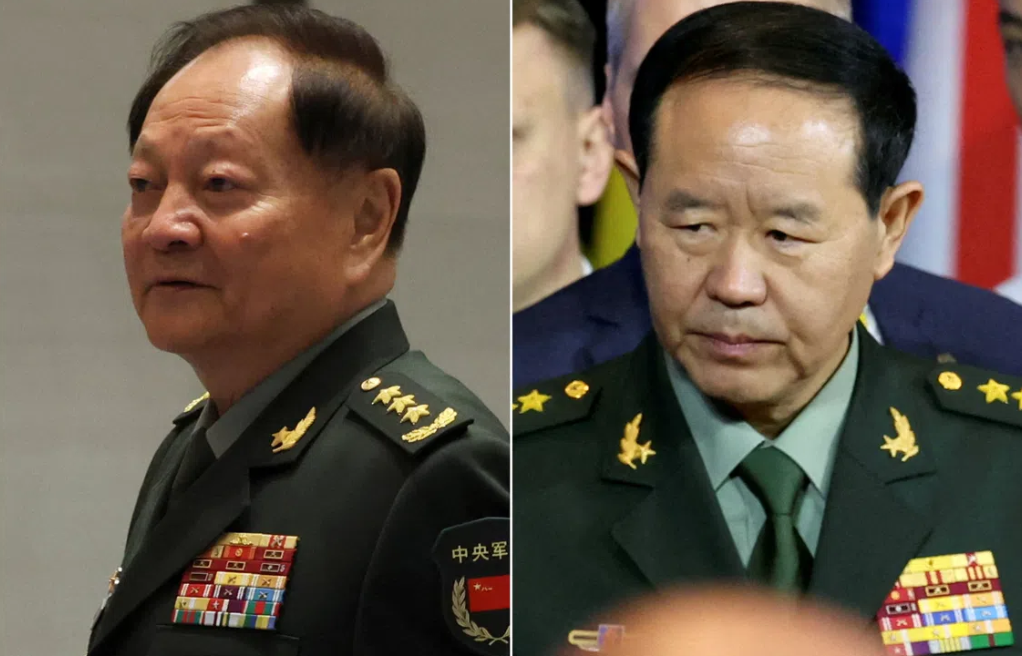
China on Friday dismissed two prominent military commanders from its top defence institution, the Central Military Commission, after investigations uncovered alleged serious breaches of party discipline and legal statutes. The action, announced through state media Xinhua, represents the latest move in an extensive overhaul of the military hierarchy that has dominated Xi Jinping's tenure as paramount leader.
The departure of Zhang Youxia and Liu Zhenli fundamentally reshapes the commission's composition, reducing its active roster to merely two members besides Xi himself. The institution, formerly comprising seven serving officials, has been hollowed out by successive removals that underscore the scale and ruthlessness of the ongoing purge within China's defence establishment. This skeletal membership raises questions about operational continuity and decision-making structures within the world's largest standing army.
Zhang Youxia occupied a particularly prominent position as vice-chairman of the commission, effectively serving as second-in-command to Xi in military affairs. His standing was further elevated by membership in the Politburo, the Communist Party's highest policy-making body, making his removal a significant blow to the military hierarchy. Liu Zhenli, meanwhile, held the crucial role of chief of staff within the commission's Joint Staff Department, positioning him at the operational heart of China's armed forces. Both men represented the institutional memory and continuity of military governance, yet neither position afforded protection against investigation.
The anti-corruption campaign within the military, initiated by Xi in 2012, has systematically targeted the defence establishment as a cornerstone of his broader governance philosophy. Over more than a decade, dozens of high-ranking officers and officials have faced investigation, dismissal, or prosecution on corruption-related charges. The campaign reflects Xi's determination to assert civilian party control over the military while simultaneously rooting out perceived disloyalty and financial malfeasance. This strategic objective has reshaped the officer corps and altered promotion pathways throughout the armed forces.
Last month, Xi personally called upon senior Communist Party leadership to intensify the anti-corruption struggle within military ranks, signalling that the campaign remains a top priority despite its longevity. The timing of Friday's announcement, coming shortly after this directive, suggests renewed momentum in the crackdown and serves as a reminder that no position, regardless of seniority or proximity to power, guarantees immunity from investigation. For military officers throughout the chain of command, the message is clear: institutional loyalty and political reliability remain paramount concerns for advancement and retention.
China maintains dual command structures for its military, with parallel institutions within both the Communist Party and the state apparatus. While the National People's Congress announced the removal of Zhang and Liu from the state commission, their status within the Communist Party's parallel military commission remains formally unaddressed. This procedural distinction, though perhaps technical, reflects the complexity of governance structures within the Chinese political system and suggests that formal announcements may yet follow through party channels.
The parliamentary announcement formally stripped the two generals of their positions by removing their names from the updated deputy list published by the National People's Congress. This administrative action, while bureaucratic in appearance, carries profound implications for their authority, access to classified information, and retirement benefits. Alongside Zhang and Liu, ten other lawmakers lost their seats, indicating a broader reorganisation of parliamentary representation rather than an isolated incident.
Other military figures removed from parliamentary positions include Lieutenant General Zhong Shaojun, who previously directed the commission's General Office, and General Ju Qiansheng, a former Strategic Support Force commander. The Strategic Support Force, established in 2015 as China's cyber and space warfare arm, has been a particular focus of anti-corruption investigations, reflecting concerns about emerging military domains. The involvement of aerospace and defence sector personnel, exemplified by Gao Shiwen's removal from parliamentary representation alongside his prior work at China Aerospace Science and Technology Corporation, demonstrates that the purge extends beyond uniformed military into the defence industrial complex.
In a related development announced earlier in the week, Zhao Zongqi, a former Western Theatre Command leader, was stripped of his advisory body membership by China's political consultative conference. Zhao's removal carries particular geopolitical significance given his command role during the 2020 border clashes between Chinese and Indian forces in the Himalayan region. His purge may reflect scrutiny of military conduct during that conflict or broader questions about strategic competence along China's borders.
For Malaysia and Southeast Asia, these internal Chinese military developments carry strategic implications. Leadership instability within the People's Liberation Army chain of command, particularly affecting major commanders and defence planners, may influence Beijing's foreign policy calculations and military posture throughout the region. The systematic removal of experienced officers could affect institutional knowledge regarding regional military capabilities and strategic planning. Observers in Kuala Lumpur and across the Association of Southeast Asian Nations will likely monitor whether these changes alter China's approach to regional disputes, military exercises, or diplomatic engagement.
The extent of Xi's military consolidation raises questions about military institutional autonomy and the balance of power within China's political system. By systematically replacing experienced commanders with loyalists, Xi strengthens personal control but potentially weakens institutional expertise and meritocratic advancement within the officer corps. This dynamic may have longer-term consequences for military effectiveness, civil-military relations, and the sustainability of China's strategic objectives.
The purge also illustrates the precarious position of Chinese officials who occupy high office without securing paramount leader endorsement or demonstrating unwavering loyalty. Institutional position, military rank, and even Politburo membership provide no guarantee against investigation and dismissal. This environment of uncertainty, while concentrating power in Xi's hands, may also discourage independent thinking and institutional reform that could enhance military capability.
As China's military establishment continues its transformation under Xi's oversight, regional partners must consider how these internal reorganisations may affect bilateral military relationships, crisis communication channels, and the predictability of Chinese strategic behaviour. The removal of experienced commanders and the consolidation of control suggest that future military decisions will increasingly reflect Xi's personal strategic vision rather than institutionalised consensus or professional military judgment.

