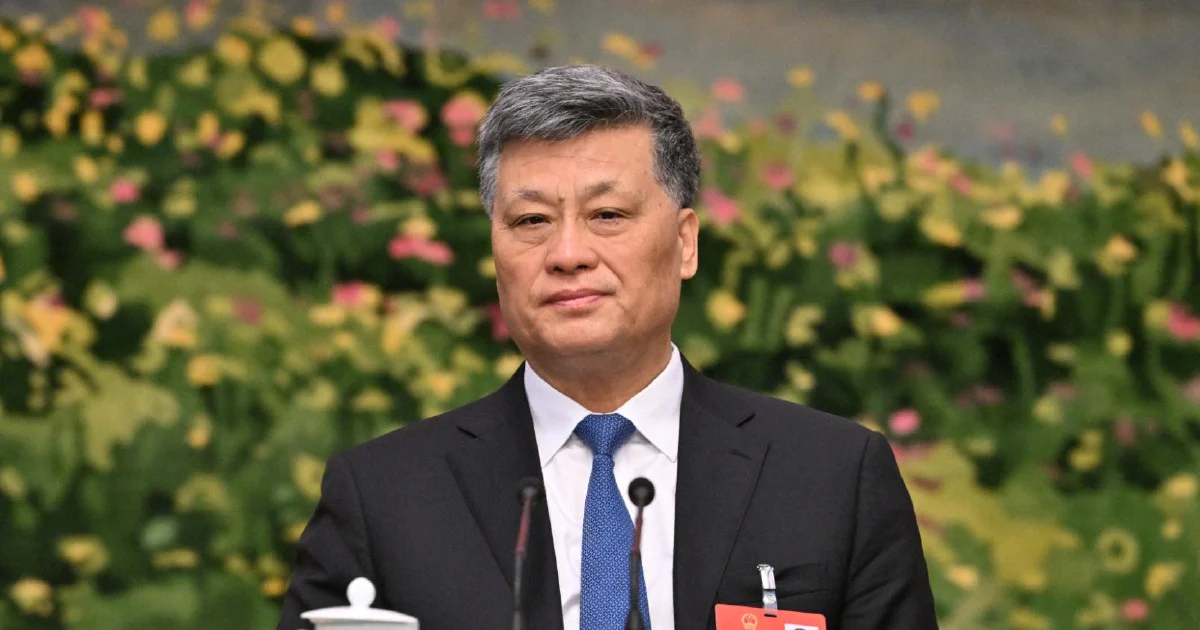
A former senior administrator in Xinjiang has been purged from China's Communist Party and dismissed from every official position as part of a widening crackdown against high-ranking officials accused of financial wrongdoing. State media disclosed the action on Tuesday, citing investigations that uncovered a pattern of misconduct stretching across nepotism, acceptance of bribes, and improper personal conduct. The move signals Beijing's continued determination to root out graft among regional cadres, even those who previously held significant portfolios overseeing one of China's most strategically important territories.
The corruption case underscores the persistent vulnerability within China's administrative apparatus despite decades of anti-corruption campaigns. Officials in Xinjiang, where Beijing maintains tight political and security control, have historically wielded considerable power and access to substantial budgetary resources. This concentration of authority, combined with limited transparency mechanisms, has created conditions where misconduct can flourish unchecked for extended periods. The expulsion represents tacit acknowledgment that internal oversight mechanisms failed to detect or prevent the alleged wrongdoing in real time.
Neportism allegations have emerged as a recurring theme in recent anti-corruption investigations across Chinese provincial administrations. Family members and close associates of powerful officials often secure lucrative contracts, government positions, or business advantages through informal networks that circumvent merit-based selection processes. Such arrangements drain public resources while entrenching dynastic structures within state institutions. The inclusion of nepotism charges in this case reflects Beijing's recognition that personal networks operating outside official channels pose a systemic governance challenge requiring explicit policy attention.
Bribery accusations comprise another significant dimension of the case, suggesting that the official leveraged his administrative authority to extract financial benefits from individuals or organisations seeking favourable treatment. This pattern corrupts the impartiality essential to effective governance and erodes public confidence in state institutions. In Xinjiang specifically, where government contracts related to infrastructure, development, and security represent substantial financial flows, opportunities for illicit rent-seeking are particularly acute. Officials controlling approvals, licences, and resource allocation can demand kickbacks while appearing to execute routine administrative functions.
The allegation involving payment for sexual services represents a moral and political dimension beyond conventional embezzlement or fraud. Chinese leadership has increasingly emphasised personal conduct and ideological discipline as prerequisites for party membership, viewing lifestyle transgressions as indicators of weakened commitment to socialist values and party discipline. Such charges carry particular weight in cases involving regional officials, where perceived moral lapses undermine the party's legitimacy claims in territories where Han Chinese administrators govern predominantly Uyghur and other minority populations. Maintaining ethical standards becomes a proxy for asserting broader party control.
Xinjiang's strategic importance ensures that governance problems in the region receive heightened scrutiny from central authorities. The territory sits along China's western border, serves as a major transportation hub for Belt and Road Initiative projects, and contains substantial energy resources. Personnel appointments and disciplinary actions affecting senior Xinjiang officials therefore carry implications beyond routine administrative matters. Beijing views the region through a security lens, making the competence and reliability of local administrators a matter of strategic concern.
This expulsion occurs within the context of Xi Jinping's sustained anti-corruption campaign, which has operated continuously since 2012. Originally framed as a mechanism for consolidating power by removing potential rivals, the campaign has evolved into an ongoing institutional mechanism for maintaining party discipline. High-profile cases involving provincial-level officials serve multiple purposes: they demonstrate leadership commitment to fighting graft, they deter other officials from engaging in similar conduct, and they occasionally serve to eliminate obstacles to factional interests. The timing and publicity surrounding such cases thus warrant scrutiny for their political implications alongside their ostensible anti-corruption rationale.
For Malaysian readers and Southeast Asian observers, developments within China's internal governance structures merit attention insofar as they reflect the Communist Party's administrative capacity and decision-making processes. Malaysia maintains substantial economic ties with Xinjiang through energy imports, investment projects, and cross-border commerce. Understanding the stability and effectiveness of regional administration directly affects the environment in which Malaysian companies operate. Periodic anti-corruption actions, while ostensibly positive reforms, can also create unpredictability for foreign investors navigating relationships with local bureaucrats.
The removal of experienced officials from their positions simultaneously raises questions about continuity in regional administration and the implementation of Beijing's policies. Whether successors possess comparable expertise and whether leadership transitions affect the consistency of decision-making on development initiatives remain open questions. Malaysian stakeholders engaged in Xinjiang-based projects must monitor how administrative transitions influence project timelines, approval processes, and stakeholder relationships. Institutional knowledge often departs with dismissed officials, potentially complicating negotiations or creating delays.
The case also illustrates broader challenges facing China's governance model. Despite establishing extensive surveillance apparatus and digital monitoring systems, Chinese authorities often discover corruption only after patterns become entrenched and substantial damage occurs. This reactive rather than preventive approach suggests that technological capacity and institutional design alone cannot prevent misconduct without complementary mechanisms such as transparency, competitive politics, or genuinely independent oversight. These observations carry implications for how Southeast Asian nations should assess China's technical capacity to implement complex regional projects or maintain reliable institutional commitments.
Moving forward, the expulsion signals that Beijing remains willing to address high-level misconduct, maintaining the appearance of meritocratic governance despite structural incentives favouring patronage. However, selective enforcement—where officials aligned with powerful factions escape accountability while others face harsh punishment—undermines reform legitimacy. The broader pattern of anti-corruption action, viewed across multiple cases, provides more revealing evidence of institutional health than individual expulsions. Malaysian policymakers monitoring China's governance trajectory should therefore track whether disciplinary actions follow consistent standards or reflect factional political struggles beneath the surface.

