China is deepening its scientific collaboration with Iran by moving into the strategically vital arena of rare earth metals exploration and processing. The expansion comes through joint workshops funded by China's National Natural Science Foundation (NSFC) and Iran's National Science Foundation, reflecting Beijing's broader effort to secure reliable sources of materials deemed essential for both civilian technology and military applications. The timing underscores how scientific exchanges have become entangled with geopolitical tensions, particularly as Washington and Beijing compete fiercely for control over supply chains for defence-critical materials.
The financial commitment outlined by the NSFC reveals the scale of engagement. China will provide 30,000 yuan (approximately US$4,200) per workshop to cover logistical costs including venue hire, accommodation, and domestic travel. Iran's counterpart agency will shoulder the expenses of international flights for Iranian participants and lodging for Chinese researchers visiting Iran. This arrangement suggests a sustained, structured programme rather than a one-off initiative, with both nations clearly invested in establishing productive channels for knowledge exchange and research collaboration.
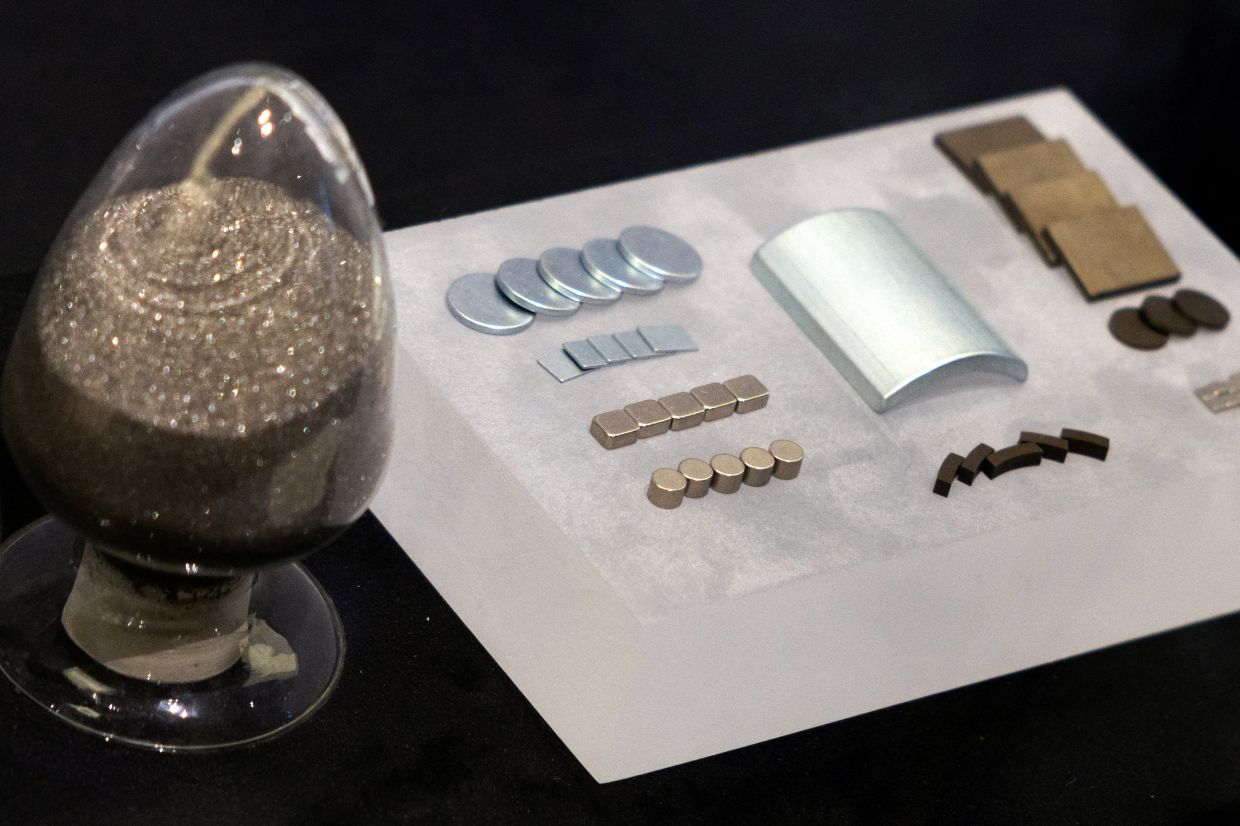
Rare earth elements occupy a singular place in global strategic competition. This group of 17 metals possesses unique magnetic and electronic properties that make them indispensable in manufacturing advanced weaponry, from intercontinental missiles and fighter aircraft to sophisticated radar systems and electronic warfare equipment. Without access to rare earth processing capabilities, no modern military power can fully equip and sustain its defence forces independently. This reality has transformed what might otherwise be considered routine scientific cooperation into a matter of national security concern across multiple capitals.
The urgency for alternative sources stems from China's near-monopoly over global rare earth production and processing. Beijing controls not merely the largest proven reserves but also dominates the industrial capacity to extract, refine, and process these materials into usable forms. Over recent years, China has intensified restrictions on exporting raw and processed rare earths, while simultaneously limiting technology transfer to overseas entities. When trade tensions escalated following former US President Donald Trump's initial tariff campaigns, Beijing weaponised its rare earth advantage by imposing export quotas that rippled through American manufacturing supply chains and laid bare Washington's strategic vulnerability.
The Trump administration has responded with urgency to this exposure. Just this month, it announced US$3 billion in targeted investments aimed at developing domestic critical mineral extraction and battery production capacity. These funds serve a dual purpose: replenishing military weapon stocks depleted by aid commitments to Ukraine and other regional allies, while simultaneously reducing America's reliance on Chinese sources for materials that Beijing can now credibly threaten to withhold during diplomatic disputes. This defensive industrial strategy acknowledges that market forces alone will not solve the rare earth sourcing problem.
Iran's own rare earth endowment remains poorly mapped and incompletely understood compared to China's extensive geological surveys and development. However, early exploration work suggests real potential. The country's geological formations, particularly iron ore and phosphate deposits in central regions, display characteristics favourable for rare earth concentrations. According to a February analysis by the Netherlands-based Hague Research Institute, rare earth anomalies have been identified across approximately 7,000 square kilometres of Iran's central plateau. If confirmed and developed at scale, Iran could eventually provide an alternative supply source outside the US sphere of influence, though significant technological and financial hurdles remain.
At present, Iran remains far from leveraging this potential. The nation's extraction and processing infrastructure operates only at early developmental stages, lacking the industrial capacity, technical expertise, and capital investment necessary to move toward commercial-scale production. This limitation explains China's willingness to invest in collaborative research and capacity-building. By positioning itself as the partner helping Iran develop rare earth capabilities, Beijing simultaneously builds strategic influence in Tehran while potentially creating a future ally in global supply chains for materials Washington increasingly views as essential to its security.
The scientific cooperation framework between the two nations stretches back to 2017, when China's and Iran's national science foundations signed an initial memorandum of understanding in Beijing. The NSFC explicitly positioned this partnership within China's Belt and Road Initiative strategy, emphasising that Iran holds importance to Beijing's regional development and influence objectives. Beyond rare earths, the two agencies have jointly funded research spanning mathematics, biology, medicine, renewable energy systems, materials science, climate change studies, and artificial intelligence applications.
The rare earth workshops represent an expansion of a joint initiative launched in 2024. The original programme distributed grants of 150,000 yuan per workshop to support collaborative projects in climate change, artificial intelligence, advanced materials, and manufacturing innovation. This year's expanded iteration maintains that funding level while broadening the thematic scope to encompass new domains. Alongside rare earth exploration and processing, the current call for proposals includes research into nanomaterials for disease detection, environmental pollution monitoring technologies, earthquake-resistant construction materials, and cleaner manufacturing processes. This diversification suggests both nations view the partnership as foundational to addressing multiple development challenges simultaneously.
For Malaysia and Southeast Asia, the implications cut across multiple dimensions. The region's growing economic interdependence with both China and Western markets makes rare earth supply security a practical concern. Several Southeast Asian nations contain modest rare earth deposits and emerging processing capabilities, yet remain caught between Beijing's capacity to absorb supplies and Washington's efforts to establish rival networks. The China-Iran partnership signals that Beijing will continue investing in relationships with nations able to provide alternative sources, potentially shifting global supply patterns away from exclusive reliance on either Chinese dominance or Western-aligned producers. Southeast Asian policymakers monitoring these developments should recognise that future access to rare earths—and thus capacity to support advanced manufacturing and defence capabilities—may depend on maintaining pragmatic balancing relationships with multiple suppliers and technological partners.

