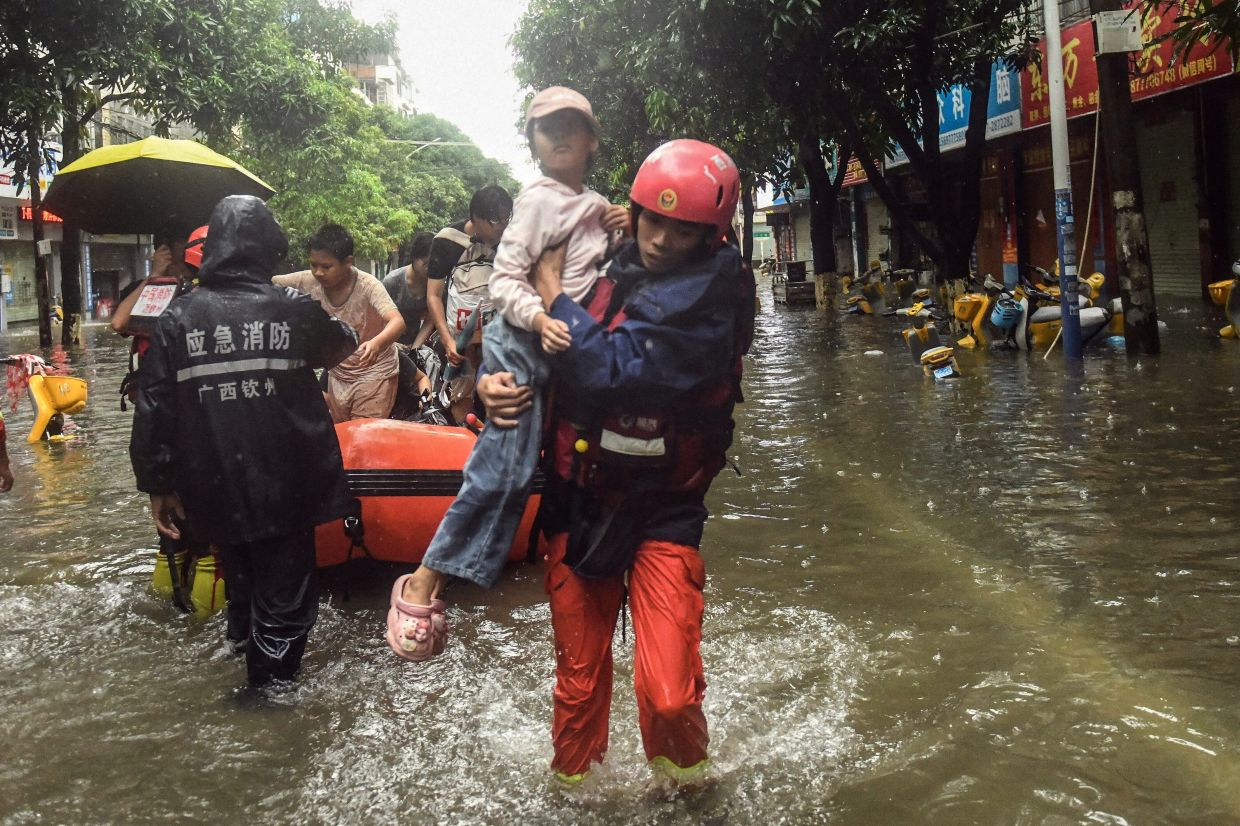
Rescue operations intensified across multiple regions of China following a catastrophic sequence of natural disasters that have claimed at least 17 lives and displaced more than 100,000 people. The crisis, triggered primarily by Typhoon Maysak, has resulted in widespread flooding across southern China, with particular devastation concentrated in Guangxi province where emergency responders continue searching for survivors among flooded communities. Authorities anticipate that severe weather conditions will persist through Wednesday, complicating both rescue efforts and efforts to prevent further damage to infrastructure and agricultural areas.
The impact on Guangxi has been especially severe, with regional officials confirming six fatalities and the forced evacuation of at least 130,000 residents. The region experienced torrential rainfall from Typhoon Maysak that overwhelmed local water management systems, causing catastrophic overflow along 40 separate rivers and waterways. The agricultural sector has sustained substantial losses, with nearly 13,000 acres of farmland damaged by the uncontrolled floodwaters. This scale of agricultural damage carries significant implications for local food production and rural economies already vulnerable to climate-related disruptions.
The physical destruction has extended to critical infrastructure, most dramatically exemplified by the breach of a reservoir dam in Guangxi. Footage distributed by state broadcaster CCTV captured the dramatic collapse of concrete dam walls as massive volumes of water surged through the rupture. Rescue teams deployed to the scene equipped themselves with inflatable boats and life vests to navigate the swiftly moving floodwaters and search for anyone trapped in affected communities. The dam failure represents not merely a single catastrophic event but rather a symptom of broader stress on China's aging water management infrastructure during extreme weather events.
Water Resources Minister Li Guoying has warned of escalating danger ahead, predicting that flood peaks at the Wuzhou Hydrological Station will exceed warning water levels by more than six metres when they arrive early Thursday morning. This forecast indicates that the crisis may intensify further before conditions stabilise. The minister emphasised that the combination of persistent heavy rainfall and prolonged periods of high water levels presents unprecedented challenges to the structural integrity of reservoirs and embankments across the affected region. These warnings underscore the cascading nature of flood disasters, where initial precipitation triggers secondary hazards that can develop days later.
Chinese authorities have mobilised substantial relief resources in response to the emergency. State news agency Xinhua reported that officials are dispatching additional supplies including food, raincoats, and rubber boats to inundated communities. The government has also maintained what it classifies as the second-highest level of flood-control emergency response within Guangxi, indicating the severity with which officials are treating the situation. This response framework coordinates disaster relief across multiple administrative levels and enables rapid deployment of personnel and resources to the most critically affected areas.
The disaster extends beyond Guangxi into neighbouring regions, with Guangdong province also bracing for continued rainfall on Wednesday. In the central province of Hubei, separate severe weather events have proven equally devastating. Thunderstorms and powerful gale-force winds killed 11 additional people and injured 331 others, while 4,800 houses sustained damage and 22 structures collapsed entirely. One person remains missing in Hubei, adding to the overall casualty toll. These secondary weather systems demonstrate how the tropical cyclone's effects have dispersed across an exceptionally broad geographical area, multiplying the cumulative human and economic costs.
Tornadoes have been reported in additional locations across China following the initial storm passage, contributing further to the destructive force of this weather system. The geographical spread of these secondary hazards—from southern Guangxi to central Hubei—indicates the enormous scale of the atmospheric disturbance. Such widespread impacts complicate disaster response efforts, as rescue teams and relief resources become stretched across multiple regions simultaneously, each requiring urgent attention and substantial logistical support.
Far from the flooded southern regions, northwestern China's Gansu province has grappled with a separate catastrophe that has claimed 21 lives. A catastrophic landslide struck Rencang village in Dangchang County at approximately 6:56 am on Tuesday, ultimately burying 33 people beneath tonnes of rock and soil. Local rescue teams mobilised rapidly to the site, and while search and rescue operations have now concluded, the final death toll of 21 reflects the severe and often deadly consequences of ground instability during periods of heavy rainfall. The causes of the landslide remain under investigation, though such incidents frequently result from geological instability exacerbated by water saturation of soil following intense precipitation.
The landslide in Gansu district represents a distinctly different but equally destructive hazard that often accompanies major storm systems across mountainous or geologically vulnerable regions of China. Water-saturated soil loses cohesion, allowing gravity to trigger sudden ground movements that can occur with little warning. The financial response to this disaster, with authorities allocating 30 million yuan (approximately US$4.4 million) in reconstruction funds, indicates official recognition of both the immediate humanitarian crisis and the longer-term recovery needs facing affected communities.
Chinese President Xi Jinping has directed rescue coordinators to proceed with maximum urgency in organising emergency operations, according to reports from state broadcaster CCTV. This high-level political directive underscores the severity with which national leadership views the unfolding crisis. Such guidance typically accelerates administrative approvals for emergency expenditures and facilitates inter-provincial cooperation in disaster response efforts, particularly crucial when disasters span multiple provinces simultaneously.
These cascading disasters highlight China's vulnerability to extreme weather events during summer months, when the country faces intense regional variations in climate patterns. Some areas experience torrential rainfall and severe flooding while others simultaneously endure extreme heat and drought conditions. The scale of the current emergency, encompassing typhoon-triggered flooding in the south, severe thunderstorms in central regions, and landslides in the northwest, demonstrates the magnitude of natural disaster risks that China confronts annually during peak summer weather season. For regional observers in Southeast Asia, where many countries share similar monsoon climates and mountain geography, China's current struggle offers important lessons about the cascading effects of extreme weather and the substantial resources required for effective disaster response at national scale.

