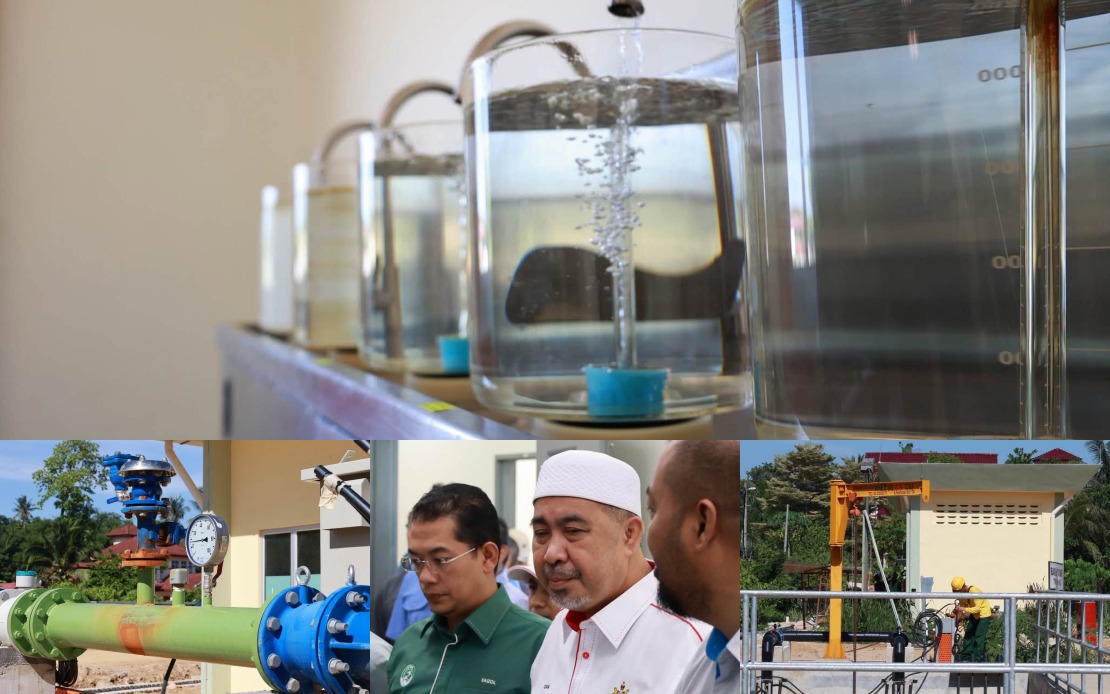
A major water infrastructure project in Kelantan is approaching completion, with authorities expecting the Chicha 2 Water Treatment Plant to commence operations next month and transform supply services for thousands of residents across the state's northern districts. Located in Pasir Hor near Kota Bharu, the RM54.98 million facility has achieved 97 per cent physical progress since its commencement in 2024, according to Datuk Dr Izani Husin, the state's Public Works, Infrastructure, Water and Rural Development Committee chairman. The plant is anticipated to directly benefit more than 13,000 consumers while simultaneously reactivating approximately 10,000 dormant accounts that currently lack access to treated water supplies.
The infrastructure addresses persistent service gaps across multiple localities in the region. Once fully operational, the treatment facility will deliver clean water to residents in Pasir Hor, Telipot, Kota Seribong, Mulong and Tunjong, covering a 1.84-hectare footprint. The installation boasts a daily production capacity of 20 million litres, positioning it as a significant contributor to Kelantan's expanding water infrastructure network. The engineering approach distinguishes itself through the adoption of an innovative aeration-based water treatment method, marking the first deployment of this particular technology in Kelantan's water management systems.
The plant's operational methodology emphasises groundwater extraction and processing efficiency. Engineers excavated to depths of 100 metres to access clean groundwater reserves, incorporating advanced aeration systems designed to eliminate contaminants and enhance water quality. This approach differs from conventional treatment methods previously utilised in the state, offering potential scalability for future installations across other regional facilities. The aeration technology represents a significant innovation within Kelantan's water sector and could serve as a blueprint for addressing supply challenges elsewhere in the state.
The project's completion timeline carries broader implications for addressing Kelantan's chronic water security challenges. The state has experienced persistent difficulties meeting consumer demand, with leakage and inefficiency plaguing the distribution network. Dr Izani highlighted that the facility will enable reconnection of thousands of previously inactive consumer accounts, substantially expanding the consumer base with access to dependable treated water. This expansion represents not merely a numerical increase but a fundamental shift in service accessibility for communities that have endured prolonged supply constraints.
Kelantan's water authorities have articulated an ambitious vision extending well beyond this single project's completion. The state government has committed to resolving water supply challenges comprehensively by 2030, incorporating the Chicha 2 facility as one component of a staged, multi-year infrastructure programme. This timeline acknowledges the complexity and scale of transformation required, encompassing additional treatment plants, expanded distribution networks, and systematic modernisation of existing infrastructure. The phased implementation strategy reflects realistic assessment of resource availability and technical deployment constraints.
A critical focus of Kelantan's water strategy involves addressing non-revenue water losses, which currently exceed 50 per cent—a figure representing substantial waste and inefficiency within the system. The state attributes these losses primarily to deteriorating pipe networks prone to ruptures, underground leakage points, and malfunctioning meters that fail to register consumption accurately. These infrastructure deficiencies have accumulated over decades, requiring systematic replacement and rehabilitation across sprawling distribution networks. The Chicha 2 project, while addressing supply capacity, operates alongside complementary initiatives targeting these loss-reduction objectives.
For Malaysian water management, the Chicha 2 facility represents meaningful progress in addressing regional disparity in service provision. Northern and eastern states have historically lagged behind more developed regions in water infrastructure investment and service reliability. Kelantan's experience exemplifies challenges faced across rural and semi-urban areas where population density, geographic terrain, and financial constraints complicate infrastructure development. The state's willingness to invest RM54.98 million in a single facility demonstrates growing recognition that water security demands substantial public investment commensurate with population needs.
The project's September operational target assumes significance given Kelantan's climate patterns and seasonal variation in water availability. Commencing operations before year-end would enable the facility to stabilise operations through critical months and demonstrate reliability to consumers accustomed to intermittent supply patterns. Early implementation also allows authorities to validate the aeration treatment technology's performance in actual operational conditions, generating data that could inform decisions regarding similar installations elsewhere in the state. The timing consequently carries both practical and strategic importance.
Local communities in Pasir Hor, Telipot, Kota Seribong, Mulong and Tunjong anticipate tangible improvement in daily water availability following the facility's activation. Residents in these areas have historically contended with rationing, intermittent supply, and water quality concerns affecting household activities and economic productivity. The prospect of consistent 24-hour supply from a modern treatment facility promises substantial quality-of-life improvements, particularly for households currently relying on boreholes, rainwater collection, or communal distribution points. Small businesses, agricultural producers, and service providers requiring reliable water access stand to benefit from enhanced supply certainty.
Dr Izani's public appeal for patience and understanding underscores the political dimensions of infrastructure delivery in states facing entrenched service deficits. Water provision ranks among citizenry's most basic expectations of government, and shortcomings generate substantial frustration and political consequences. Authorities recognise that despite genuine progress, the pace of improvement may frustrate communities accustomed to extended deprivation. The request for public forbearance reflects awareness that 2030 timelines for comprehensive resolution, while significant, still represent years of continued reliance on transitional measures for many residents.
For Kelantan's broader development trajectory, water infrastructure investment signals commitment to foundational service provision essential for attracting investment, supporting agricultural modernisation, and improving public health outcomes. Reliable water access addresses a foundational need that cascades across multiple economic and social dimensions. Manufacturing sectors requiring consistent water supplies, hospitality industries dependent on guest satisfaction, and healthcare facilities needing uninterrupted supply all benefit from expanded capacity. The Chicha 2 facility thus contributes to Kelantan's wider competitiveness and development aspirations beyond the immediate consumer base it directly serves.

