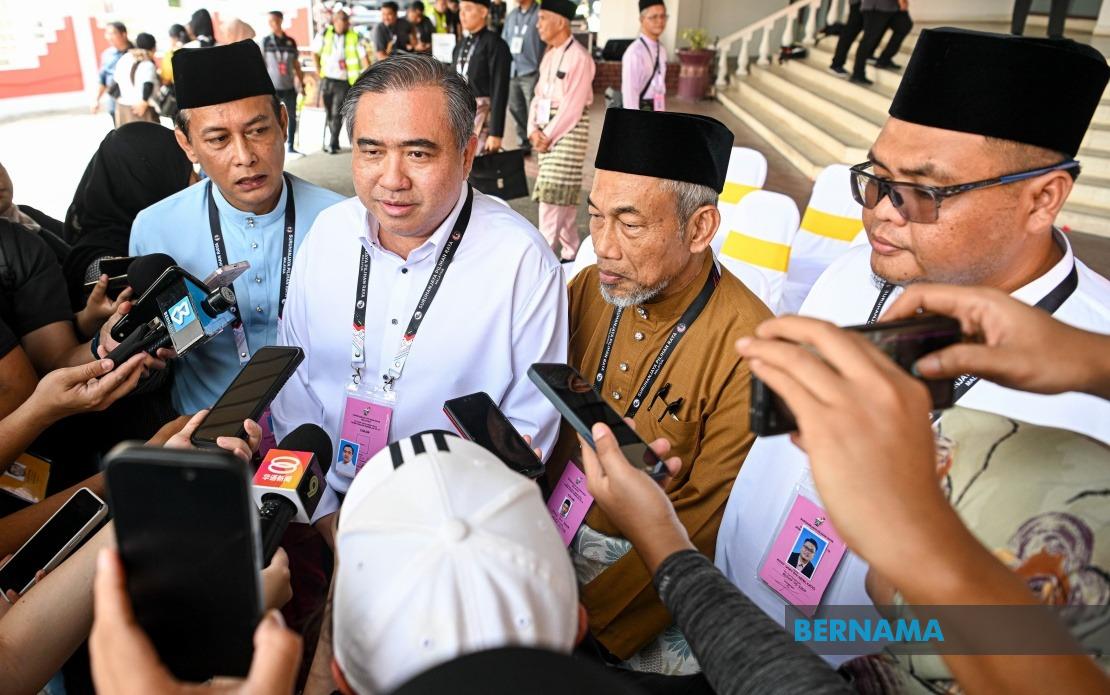
Transport Minister Anthony Loke has designated the Chennah state seat as one of the four most strategically important constituencies within the Jelebu parliamentary area as Pakatan Harapan (PH) pushes to maintain its grip on the Negeri Sembilan state government ahead of the coming electoral contest. Speaking in Jelebu after the nomination process concluded at Dewan Besar Kuala Klawang, Loke emphasized that whilst the contest will be a straight two-way race, the coalition remains assured of victory based on its administrative performance and development accomplishments across two consecutive terms in office.
The significance Loke attaches to Chennah reflects broader PH calculations about which constituencies will prove decisive in determining overall state control. The Transport Minister underscored that the Jelebu parliamentary constituency seats deserve particular attention because in the 2018 election, two state representatives from this area — specifically those representing Chennah and Kelawang — played instrumental roles in enabling PH to assemble a governing coalition in Negeri Sembilan. This historical precedent suggests that success or failure in these constituencies could potentially swing the balance of power statewide.
According to the Jelebu Parliamentary returning officer Abdul Rahim A Aziz, who made the formal announcement during the nomination proceedings, the Chennah seat contest will pit Loke against Barisan Nasional (BN) candidate Siow Kong Choon in a direct electoral confrontation. The straight fight format removes the complication of three-way splits that often characterize Malaysian state elections, streamlining the choice for voters to a binary decision between the incumbent PH representative and his principal challenger.
Loke's confidence in retaining Chennah rests substantially on PH's track record since assuming power in Negeri Sembilan following the 2018 general election. The Transport Minister contended that the coalition government has substantiated its capacity to deliver tangible progress and foster political-economic stability within the state over the intervening period. This argument anchors PH's re-election campaign in measurable administrative outcomes rather than abstract policy promises, inviting voters to evaluate the incumbent coalition on concrete deliverables.
The framing of Negeri Sembilan's 2023 state election as a referendum on PH's performance carries implications that extend beyond the state's boundaries. Negeri Sembilan represents one of several states where PH retains governmental control, making its fate consequential for the coalition's broader position within Malaysia's federal architecture. Losses in state governments have historically precluded coalitions from accessing the patronage networks and resource advantages that state-level power provides, affecting their capacity to compete effectively in subsequent national elections.
The Jelebu parliamentary constituency has emerged as a critical testing ground precisely because it encompasses multiple state assembly seats that collectively can determine parliamentary representation. Electoral mathematics in Malaysian politics frequently turn on relatively small numbers of state seats, particularly in constituencies where no single party commands overwhelming dominance. The concentration of PH's messaging around Jelebu and specifically Chennah suggests party strategists have identified this geographic area as both vulnerable to challenge and potentially decisive in determining final outcomes.
Loke's dual role as incumbent Transport Minister and Chennah state assemblyman adds personal political stakes to the electoral contest. Ministers who lose their home constituencies face particular difficulties maintaining credibility within party hierarchies, even if their parties retain overall state control. The public acknowledgment by a serving minister of a seat's criticality implicitly signals to party machinery and voters alike that resources and attention will focus intensely on this battleground.
The straight fight format between Loke and Siow Kong Choon represents a departure from the more complex electoral environments that characterize some Malaysian constituencies. Straight fights typically generate higher turnout rates and produce more decisive mandates, as voters face unambiguous choices without the strategic voting considerations that arise when multiple candidates compete. For PH, this clarity cuts both ways — it simplifies the pathway to victory but also leaves no margin for complacency or split opposition votes to work in the incumbent's favour.
Negeri Sembilan's demographic composition and economic structures lend particular importance to the administrative narrative that Loke advanced. As a state with significant urban and semi-urban populations concentrated around its capital Seremban and surrounding areas, voter evaluations tend to emphasize infrastructure development, public service efficiency, and economic opportunity. PH's invocation of its two-term performance record appeals directly to these voter priorities, positioning the coalition as the experienced administrator against potential instability that electoral change might introduce.
The broader context of Malaysia's contemporary political landscape adds weight to Negeri Sembilan's electoral significance. With PH facing challenges in retaining support across multiple state-level constituencies and federal parliamentary seats, preserving control over Negeri Sembilan becomes symbolically important for demonstrating continued electoral viability. State election victories validate national political narratives and provide morale boosts to grassroots party machinery, whereas losses generate momentum that opposition coalitions can leverage in subsequent contests.
Loke's emphasis on the Chennah seat's importance also reflects calculation regarding which voter cohorts will prove decisive. State assembly constituencies typically possess more homogeneous demographic profiles than federal parliamentary areas, allowing targeting of specific voter concerns through tailored messaging. The identification of Chennah as crucial suggests PH strategists have identified particular demographic or geographic factors within this constituency that will determine not only the local race but broader patterns across Negeri Sembilan.
Moving forward, the intensity with which both PH and BN contest the Chennah seat will likely set the tone for competition across other Jelebu-area constituencies. Loke's high-profile involvement, combined with his ministerial standing and explicit public statements about the seat's importance, signals that voters should anticipate significant campaign investment from both coalitions. The electoral competition in Chennah will ultimately provide early indicators regarding whether PH's administrative record resonates sufficiently with Negeri Sembilan voters to justify another term in government.

