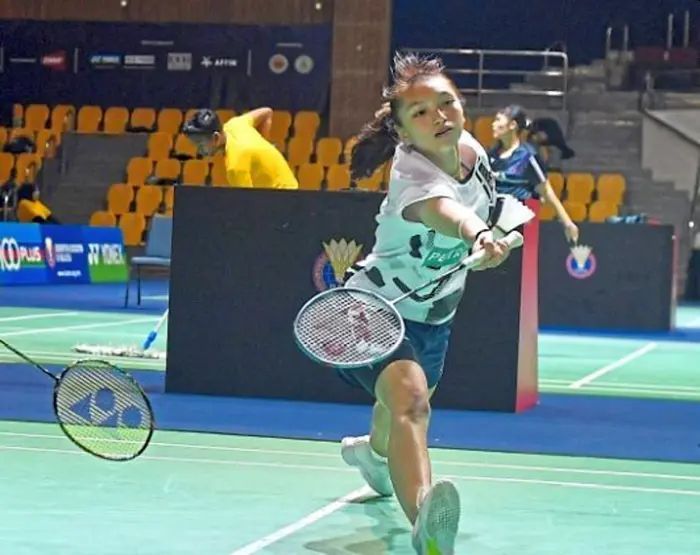
Mixed doubles coach Nova Widianto has offered a sobering assessment of rising Malaysian badminton talent Noraqilah Maisarah Ramdan's trajectory, arguing that while the 19-year-old possesses undeniable skill on court, her sustained success will hinge critically on psychological maturity and character discipline. Despite her recent impressive performances across both women's and mixed doubles formats, Nova has signalled that the coaching staff are deliberately tempering expectations and managing her ascent rather than accelerating it, recognising that raw talent alone rarely sustains elite careers in the sport.
Noraqilah's technical credentials are beyond dispute. Nova, who has tracked her development since childhood, emphasises that her exceptional natural ability and court versatility are rarely found among young Malaysian players. The teenager has demonstrated an impressive capacity to transition seamlessly between different doubles disciplines, a quality that increasingly sets apart elite international competitors from merely competent ones. Yet it is precisely this early success that Nova identifies as a potential vulnerability, one requiring careful navigation by her support team.
The coaching philosophy underlying Nova's comments reflects a hard-earned lesson within Malaysian badminton circles. Young players who receive early praise and competitive success often struggle with the psychological pressures that accompany elevated expectations. Nova warns that this mental fragility can manifest in loss of focus, inflated confidence, or conversely, paralysing self-doubt. The presence of well-meaning supporters offering constant affirmation, while well-intentioned, can inadvertently destabilise a player's mental equilibrium. This is particularly acute in Malaysia, where badminton success often generates immediate media attention and public interest.
Noraqilah's recent achievements underscore her potential. Partnering with Low Zi Yu, she reached the Australian Open quarter-finals, propelling their women's doubles pairing to a career-high world ranking of No. 70. In a separate demonstration of her adaptability, she captured the women's doubles title at the second leg of the Under-21 National Championship in Kuantan alongside scratch partner Ong Xin Yee. In mixed doubles, she and partner Loo Bing Kun progressed to the second round at the Sydney tournament, with the pairing currently sitting at world No. 115. These results, achieved within a compressed timeframe, highlight her competitive maturity beyond her years.
Yet Nova's emphasis on character development over pure performance metrics offers a counterintuitive perspective on athlete development. The coach recognises that Malaysia possesses considerable depth of badminton talent, with numerous players possessing outstanding technical and physical attributes. What differentiates those who eventually reach world-class status from those who plateau or regress, Nova suggests, is psychological resilience and an unwavering commitment to continuous improvement. The ability to maintain humility despite success, to absorb criticism constructively, and to resist complacency when results are positive, are qualities that cannot be taught through conventional training but must be cultivated through deliberate mentorship.
The question of Noraqilah's event specialisation looms as another critical decision point. Nova acknowledges that competing in multiple doubles formats offers developmental benefits for younger players, exposing them to diverse tactical situations and partnership dynamics. However, he introduces a realistic constraint: reaching the highest echelons of international badminton, particularly for Olympic qualification and medal contention, typically demands singular focus on one discipline. This represents a fork in Noraqilah's career path that will eventually become unavoidable, though Nova suggests there is no urgency to force this choice prematurely.
The mixed doubles environment presents particular challenges and opportunities. This format, increasingly crucial to Malaysia's international representation, requires a specific blend of aggressive shot-making and tactical court positioning. Noraqilah's current partnership with Loo Bing Kun is nascent, and the ranking of No. 115 suggests room for considerable progression. Should the coaching staff determine that mixed doubles offers her superior prospects—whether due to partnership chemistry, tactical fit, or competitive depth considerations—then a gradual transition from women's doubles would become strategically prudent.
Nova's cautious approach to Noraqilah's development reflects broader coaching philosophy within Malaysian badminton, where investment in junior talent often spans multiple years with deliberate plateaus to prevent burnout and injury. The decision to avoid rushing her progression, despite obvious potential, acknowledges that sustainable careers at elite level require careful pacing. Early burnout and mental fatigue have derailed many promising Malaysian players whose initial talent suggested world-class futures.
The coaching staff's responsibility, as Nova articulates it, extends well beyond technical instruction into psychological guardianship. Managing external expectations, insulating young players from excessive media scrutiny, and maintaining realistic assessment of their position within the global rankings hierarchy all fall within the coach's remit. This holistic approach to development has proven particularly important in Malaysian badminton, where domestic success can rapidly inflate public perception of a player's world ranking status.
Looking forward, Noraqilah faces a multi-year development window during which her character formation will prove as consequential as any refinement to her forehand or footwork. Should she navigate this phase successfully—maintaining humility, absorbing coaching guidance, and resisting the complacency that sometimes accompanies early success—her technical talents may yet translate into sustained international competitiveness. Conversely, should she falter psychologically during this critical period, her exceptional natural ability may ultimately prove insufficient to sustain an elite career. For Malaysian badminton, the trajectory of this talented teenager will offer valuable lessons about athlete development in the modern era.

