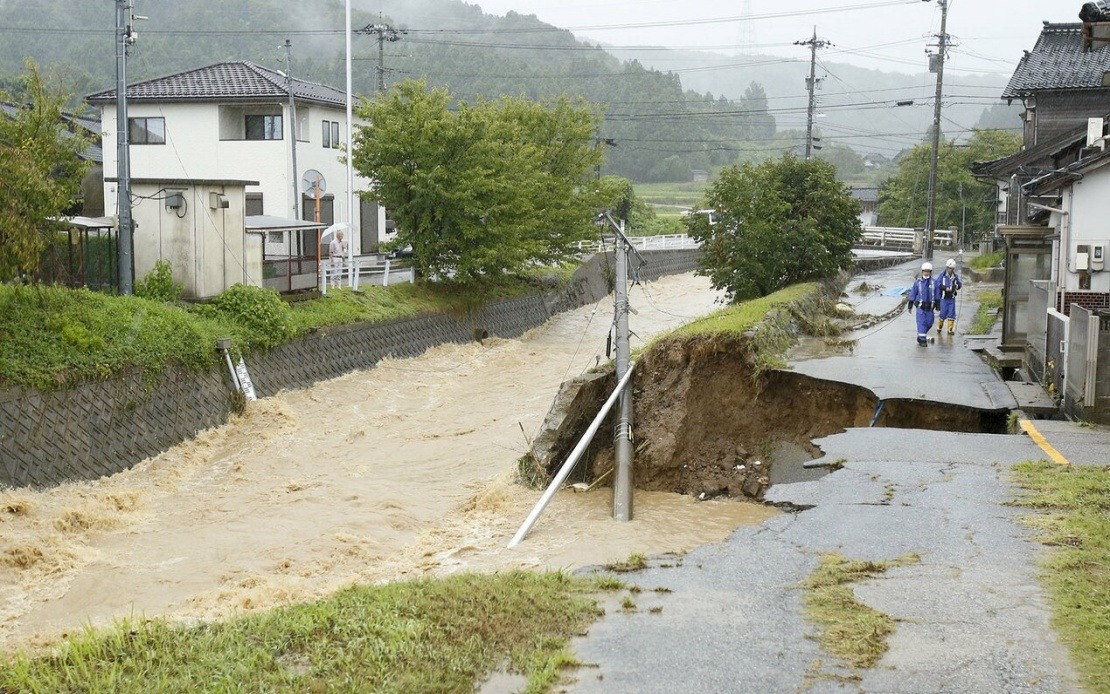
Central Japan confronted a meteorological emergency on Thursday as intense precipitation systems swept across key regions, unleashing a cascade of natural disasters including widespread flooding and terrain destabilization. The Japan Meteorological Agency escalated alert protocols to their most severe classification, signalling that destructive conditions had either already manifested or were imminently likely to develop across vulnerable municipalities in Ishikawa and Toyama prefectures.
The Level 5 alert—representing the pinnacle of Japan's weather warning hierarchy—covered five municipalities experiencing the most acute danger: Himi in Toyama Prefecture alongside Hakui, Shika, Hodatsushimizu, and Nakanoto across Ishikawa. This designation carries profound implications, as it reflects official acknowledgement that catastrophic events were occurring or stood on the precipice of occurrence. Approximately 180,000 individuals inhabiting these areas received urgent directives from regional authorities, instructing them to either relocate to designated safe zones or implement immediate protective measures to shield themselves and their families from life-threatening hazards.
The precipitation intensity shattered historical records in multiple locations. Within a twelve-hour window concluding at 7:20 am, Himi and Hakui each registered more than 300 millimetres of rainfall, whilst Hodatsushimizu measured over 200 millimetres—each location establishing new precipitation benchmarks in its weather record. These figures underscore the extraordinary magnitude of the atmospheric disturbance, reflecting conditions substantially beyond typical heavy rain scenarios that communities in this region ordinarily experience.
Fieldwork reports from affected zones painted a picture of rapid environmental transformation and human vulnerability. A firefighting corps member in his 50s, stationed in Himi, provided eyewitness testimony to news agencies describing river embankment failures and the submersion of multiple vehicles beneath floodwaters. The phenomenon of submerged automobiles became sufficiently widespread that rescue coordination units received numerous distress calls from motorists stranded by unexpected inundation. Such incidents highlight the speed with which flood conditions can deteriorate, overwhelming roadways and trapping individuals with minimal warning.
The Ishikawa prefectural administration reported an encouraging initial assessment: no confirmed fatalities had occurred as of Thursday afternoon. However, officials cautioned that comprehensive damage surveys remained ongoing, and casualty figures could potentially shift as rescue operations proceeded and isolated regions were accessed by emergency personnel. This provisional status underscores the incomplete picture authorities still possessed regarding the full extent of the disaster's human toll.
The meteorological conditions driving this event originated from a broad atmospheric architecture extending from the Sea of Japan eastward through northern and eastern portions of the nation. A frontal boundary traversed this region whilst simultaneously positioning to advance southward throughout Friday. Simultaneously, a polar air mass and an upper-level pressure trough created profoundly unstable atmospheric conditions—a combination that meteorologists recognized as capable of sustaining and intensifying precipitation systems far beyond the Thursday deluge already experienced.
Forecasters issued precipitation projections for the subsequent 24-hour period through midday Friday, predicting additional rainfall accumulations of up to 200 millimetres across the Hokuriku region and up to 150 millimetres in both the Kanto-Koshin and Tokai districts. These projections suggested that communities across a broad geographic expanse faced prolonged exposure to dangerous weather conditions, with cumulative precipitation potentially reaching levels that would compound hydrological stress already inflicted by Thursday's downpour.
Neighbouring Niigata Prefecture, situated adjacent to Toyama, also experienced significant rainfall impacts, indicating that the weather system's geographic footprint encompassed an extensive territory containing millions of residents. The spatial breadth of the affected region complicated emergency response coordination and stretched resources across multiple prefectural jurisdictions simultaneously.
This event follows a preceding rainfall disaster merely weeks earlier when Level 5 warnings were similarly activated in portions of Chiba Prefecture east of Tokyo. That episode resulted in fatalities numbering 13 individuals and the inundation of transportation networks so severe that approximately 2,500 vehicles became immobilized across the prefecture's roads at the incident's peak. The recurrence of maximum-level weather warnings within such a compressed timeframe raises questions about precipitation pattern shifts potentially linked to climate variability, though meteorologists stopped short of drawing definitive long-term conclusions from discrete events.
For Malaysian observers, these incidents in Japan illuminate the escalating severity of extreme weather phenomena across East Asia. Southeast Asian nations, many of which experience monsoon systems and typhoon exposure, recognize Japan's sophisticated early-warning infrastructure and emergency management frameworks as operational models worthy of consideration. The Japanese meteorological system's capacity to issue granular warnings at municipal levels and to mobilize coordinated evacuation operations across hundreds of thousands of individuals represents institutional sophistication that developing Southeast Asian nations continue working toward achieving.
The rapid succession of these catastrophic weather events also resonates with regional climate resilience discussions. As precipitation patterns potentially intensify or destabilize due to broader climatic shifts, both Japan and Southeast Asian countries face mounting imperatives to invest in upgraded forecasting capabilities, enhanced drainage infrastructure in vulnerable urban and rural zones, and community-based disaster preparedness programs. Thailand, the Philippines, Indonesia, and Malaysia each manage significant populations residing in flood-prone terrain, rendering these Japanese experiences directly pertinent to regional policy considerations.
As the Japanese government activated its comprehensive emergency response apparatus and residents heeded evacuation guidance, the unfolding situation underscored once more the formidable destructive capacity inherent in extreme hydrometeorological events and the critical importance of institutional preparedness in mitigating human suffering and economic losses in vulnerable geographic zones.

