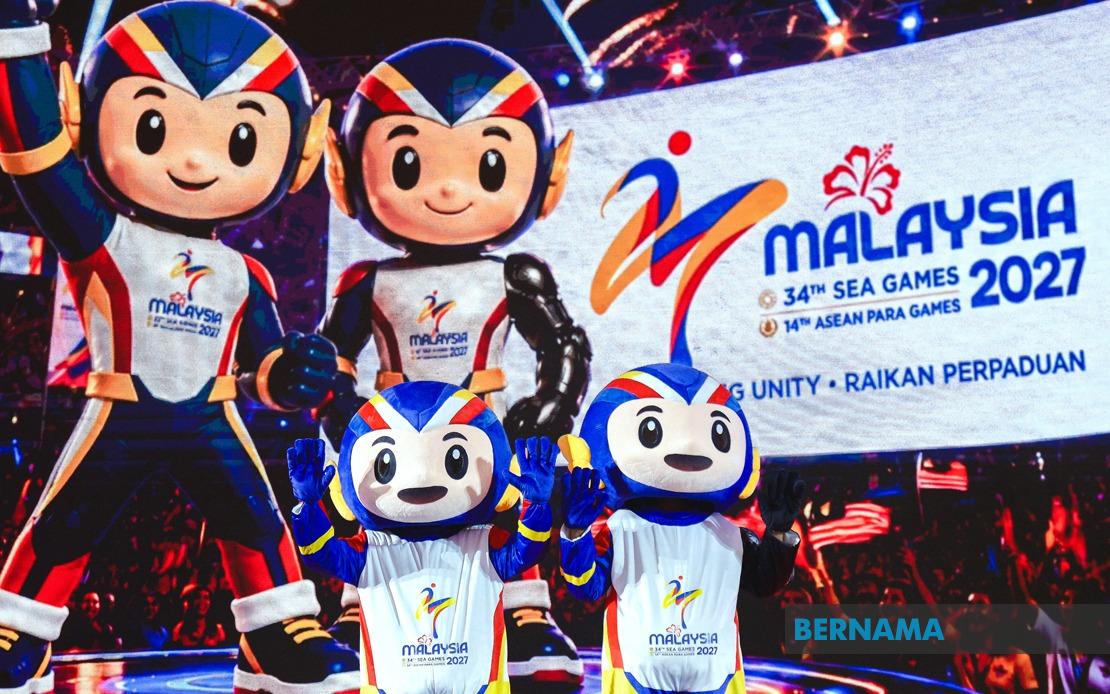
Malaysia's hosting of the 2027 SEA Games and ASEAN Para Games took on a clearer identity on July 13 as Youth and Sports Minister Dr Mohammed Taufiq Johari unveiled the official theme, logo, and mascot in Putrajaya. The selection of "Celebrating Unity" as the central motif reflects organisers' determination to position the Games as more than a sporting competition, instead framing the event as a celebration of regional cohesion and shared sporting values across Southeast Asia. The theme carries particular significance for Malaysia, which will shoulder the responsibility of bringing together athletes from across the Association of Southeast Asian Nations during a period when regional cooperation remains a priority for member states.
The mascot, christened TUAH, represents a deliberate departure from the animal-based mascot traditions that have characterised previous editions of the SEA Games. Instead of adopting a creature or fantastical beast, organisers have opted for a human figure—described as embodying the characteristics of a dynamic, confident, and approachable modern-day hero. This shift reflects contemporary thinking about sports mascots and mascot engagement, particularly in appealing to younger audiences who may relate more readily to humanoid characters than to stylised animals. The figure's design integrates the colours of the Malaysian national flag, the Jalur Gemilang, embedding national symbolism into an inherently regional character.
Dr Mohammed Taufiq articulated the philosophical underpinning of these choices, emphasising that the theme will serve as both an inspirational message to athletes and a unifying symbol for the broader public. He suggested that "Celebrating Unity" carries resonance beyond the competitive arena, framing the Games as an opportunity for Southeast Asian nations to reinforce their collective identity and commitment to collaborative regional development. For athletes themselves, the minister indicated that the theme is intended to motivate competitors to transcend their individual limitations and pursue excellence, recognising that the SEA Games provide a crucial stepping stone towards higher echelon competition at the Asian and global levels.
The mascot's incorporation of the Jalur Gemilang is not merely decorative but carries strategic intent. By embedding Malaysia's national symbols into a character designed to represent regional unity, organisers are subtly asserting Malaysia's role as custodian and champion of ASEAN sporting values during the Games period. The minister expressed hope that TUAH would function as a lucky charm, potentially bringing fortune to Malaysian athletes competing on home soil—a sentiment that connects to deeper cultural beliefs about mascots and talismans whilst simultaneously reflecting the government's ambition for the national team to achieve overall medal supremacy.
The hosting arrangement itself reflects the Games' regional scope and Malaysia's logistical capabilities. Rather than concentrating all venues in a single city, the 2027 edition will utilise sporting facilities distributed across four distinct clusters: Sarawak, Penang, Johor, and Kuala Lumpur. This decentralised approach presents both opportunities and challenges, spreading the economic and infrastructural benefits of the Games across multiple states whilst requiring sophisticated coordination and transportation logistics. Dr Mohammed Taufiq reported that facility development has proceeded without significant obstacles, though organisers are now intensifying focus on technical specifications and operational readiness to ensure seamless execution according to predetermined timelines.
The choice to host across multiple clusters aligns with Malaysia's broader regional development objectives, potentially catalysing sports infrastructure investment in secondary and tertiary urban centres beyond the capital. Each cluster will require specialised facilities tailored to specific sports, necessitating careful planning to avoid duplicative investment whilst ensuring that each venue meets international competition standards. The four-cluster model also reflects Malaysia's geographical span and the practical reality that consolidating all competition venues in one location would impose unrealistic construction and accommodation demands within the typical Games preparation window.
National Sports Council director-general Jefri Ngadirin has established a challenging benchmark for Malaysian athletic performance, targeting that 70 per cent of the nation's competitors will finish on the podium at Asian-level competitions by year's end. This ambitious metric serves as a barometer for Malaysia's competitive positioning heading into the 2027 Games and represents an internal assessment tool for evaluating the effectiveness of the country's elite athlete development programmes and training infrastructure. Achieving this standard across Asian competitions would provide reasonable confidence that Malaysia possesses sufficient depth and quality in its athlete pool to genuinely contend for overall Games supremacy when competing on home turf.
The prospect of Malaysia becoming overall champions at the SEA Games carries substantial national prestige and is explicitly identified as a strategic objective guiding the country's sporting investments and policy directions. Home advantage typically confers significant benefits to host nations, encompassing everything from familiar training environments and minimal travel fatigue to enthusiastic crowd support and tailored competition scheduling. Yet converting these advantages into actual medal success requires sustained investment in athlete development, training facilities, coaching quality, and sports science infrastructure—investments that the government appears committed to making in preparation for 2027.
The scheduling of the Games reflects logistical and climate considerations characteristic of Southeast Asian sporting calendars. The main SEA Games competition will run from September 18 through September 29, positioning the event in the transitional period between Malaysia's southwest monsoon season and the onset of the northeast monsoon. The ASEAN Para Games will follow sequentially from October 17 to October 23, allowing venues and organisational infrastructure to transition from able-bodied to Paralympic competition formats whilst maintaining operational continuity and public engagement momentum. This consecutive scheduling maximises media attention and sponsorship value whilst minimising the infrastructure dormancy that would result from separating the events by extended periods.
For Malaysia and the broader Southeast Asian region, the 2027 Games represent an opportunity to showcase sporting development progress and regional cooperation achievements during a period of evolving geopolitical dynamics. The Games will provide a platform for demonstrating ASEAN's capacity to organise major international events, reinforcing the bloc's relevance and cohesion. The emphasis on unity through the official theme resonates with ASEAN's foundational principles, particularly the concept of non-interference and respect for national sovereignty whilst promoting mutual benefit and regional harmony. By framing the Games around celebrating unity, Malaysia is positioning the event as both a sporting competition and a diplomatic statement regarding regional integration.
The unveiling of the theme, mascot, and logo serves as a substantive milestone in the Games' preparation trajectory, transforming abstract planning into tangible public-facing symbols. These visual and thematic elements will now feature across marketing campaigns, merchandise, venue signage, and media coverage, becoming the unifying aesthetic for all Games-related communications over the coming months. The selection of a human mascot figure rather than an animal also signals organisers' confidence in contemporary design and their willingness to innovate beyond established convention—an approach that may influence how future Games in the region conceptualise their brand identity and public engagement strategies.

