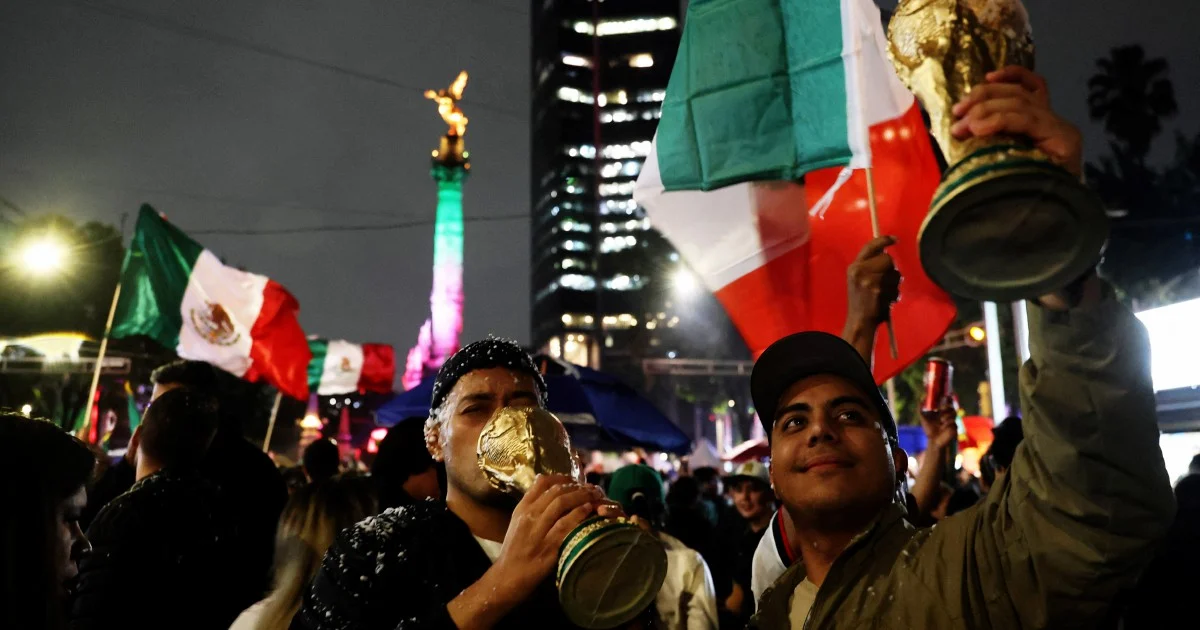
A celebratory gathering in Cabo San Lucas descended into chaos on Wednesday evening when a black car accelerated directly into a cluster of Mexico national football team supporters, leaving 17 people requiring medical attention, municipal authorities confirmed. The incident occurred in the popular Pacific coast resort destination during festivities following Mexico's World Cup victory, transforming what should have been a moment of national pride into a scene of injury and distress.
Footage circulating on social media platforms and verified by Reuters captured the moments leading up to the collision, showing the vehicle surrounded by jubilant spectators dressed in Mexico's characteristic green and white football kit. What followed was sudden and violent—the driver pressed the accelerator, propelling the car through the crowd with enough force to send multiple people airborne before the vehicle struck protective bollards installed along the street.
Local emergency services treated all 17 injured individuals at medical facilities in the municipality. The driver, who was also among those receiving treatment, was taken into custody by Cabo San Lucas authorities following the incident. Preliminary investigations are underway to determine the circumstances that led to the collision, though no immediate statement regarding motive or whether mechanical failure played a role has been released.
Social media documentation of the aftermath showed a turbulent scene with bloodied victims on the ground whilst bystanders attended to the wounded. In other verified video recordings, members of the crowd physically confronted the driver after extracting him from the vehicle, reflecting the shock and anger generated by the sudden violence amidst festive celebrations.
Cabo San Lucas, situated at the southern tip of the Baja California Peninsula where the Pacific Ocean meets the Sea of Cortez, attracts hundreds of thousands of tourists annually. The resort destination is known for its beaches, water sports, and vibrant nightlife, drawing international visitors and domestic travellers seeking holiday relaxation. The incident represents a tragic disruption to one of Mexico's premier recreational destinations.
The attack occurred against a backdrop of the World Cup, one of the most significant sporting occasions in the global calendar and particularly momentous for Mexico's football culture. Major sporting victories typically prompt spontaneous public celebrations across Mexican cities, with fans gathering in squares, streets, and entertainment districts to commemorate their nation's achievements. These celebrations, whilst ordinarily joyful occasions for community gathering, occasionally create congested settings where crowd safety becomes a concern.
Similar incidents of vehicles being driven into crowds have occurred in various countries and contexts over recent years, raising ongoing questions about public safety infrastructure in densely populated areas. Many municipalities have implemented vehicle barriers, security protocols, and crowd management strategies to mitigate risks during large public gatherings, though the effectiveness of such measures varies considerably across different jurisdictions and event types.
The status and severity of injuries sustained by the 17 affected individuals remained unclear as of the latest available reports. Authorities have not provided detailed medical assessments, and the age range of victims—whether primarily adults or including younger supporters—has not been disclosed. Such information would be relevant for understanding the full human impact of the incident.
Mexico's World Cup performance generates immense national enthusiasm and pride, with football serving as a powerful unifying cultural force throughout the country. The sport commands substantial viewership, commercial investment, and emotional engagement from the general population. Events celebrating Mexican sporting success typically draw diverse crowds across different socioeconomic and demographic backgrounds, united temporarily in shared patriotic sentiment.
Investigations by Cabo San Lucas municipal authorities and potentially state-level law enforcement agencies will focus on establishing whether the collision resulted from intentional action, mechanical malfunction, or other circumstances. The psychological impact on witnesses and victims of such unexpected violence within a celebratory context typically extends beyond immediate physical injuries, affecting community trust and sense of safety in public spaces.
The incident has prompted reflection within Mexican safety and security circles regarding crowd management protocols during major sporting events and subsequent celebrations. Authorities may review current barrier placement, event monitoring systems, and emergency response procedures to prevent recurrence of similar tragedies. International comparisons with how other nations manage public celebrations following major sporting occasions could inform policy adjustments.
Cabo San Lucas tourism officials will likely monitor the situation closely, given potential implications for the destination's reputation during peak travel seasons. The resort town's economy depends substantially on visitor confidence and safety perceptions, making such incidents matters of significant concern for local business operators and municipal economic interests.

