Cape Verde's remarkable World Cup journey reaches a critical juncture on Friday when the island nation faces reigning champions Argentina in the round of 32, but their coaching staff shows no signs of intimidation despite the mountainous task ahead. The African underdogs, playing in only their second World Cup appearance, have already exceeded expectations by advancing from a group containing former winners Spain and Uruguay, results that have transformed perceptions of the squad's capabilities at the highest level of international football.
The narrative surrounding this encounter extends far beyond the ninety minutes on the pitch. Cape Verde represents the smallest nation by population ever to reach the knockout rounds of a World Cup, a distinction that carries profound significance for an island nation with a population of roughly half a million. The squad's mere presence in the knockout stage has achieved something tangible for the country itself — placing Cape Verde on the world's sporting consciousness and delivering a source of national pride that transcends football statistics and rankings.
Assistant coach Humberto Bettencourt articulated the team's philosophical approach during preparation at their Tampa base, rejecting the notion that numerical predictions should influence their tactical preparation or psychological approach. When odds makers assigned Cape Verde just one percent probability of reaching the knockout stage before the tournament and now offer only four percent for an upset victory, the coaching staff frames these figures as irrelevant abstractions that bear no relationship to the intensity of competitive sport. Bettencourt's emphasis on what unfolds within the boundaries of the pitch rather than computer models reflects a conscious rejection of fatalism that might otherwise paralyse a less experienced international squad.
The assistant coach confirmed that Cape Verde intends to maintain their established playing style rather than implement defensive-focused adjustments designed specifically to counter Argentina's superiority. This strategic choice demonstrates either genuine tactical confidence or a recognition that attempting to suppress their natural football approach against a technically superior opponent might backfire more dramatically than playing their football on their own terms. The decision not to implement man-marking strategies against Lionel Messi specifically suggests an understanding that the Argentine forward's influence extends beyond his immediate positioning, requiring a more holistic defensive structure.
Bettencourt's comments regarding Messi acknowledged the player's exceptional quality whilst pivoting the discussion toward collective team organisation. Rather than obsessing over neutralising one individual, Cape Verde recognises that Argentina's strength derives from coordinated movement, spatial awareness, and the creation of opportunities for their star player to operate. This perspective reflects a maturity in tactical thinking that observers might not have anticipated from a nation in only their second World Cup tournament.
The composition of Cape Verde's squad itself tells a story of global migration patterns and diaspora communities stretching across multiple continents. Players developed in the Netherlands, Portugal, France, the United States, and Ireland represent a team assembled from distant geographic locations, yet unified through heritage and national representation. Notably, a sizeable Cape Verdean community exists in Argentina itself, creating a complex emotional landscape where some opponents may have personal or family connections to both nations involved in the fixture.
Injury concerns threaten to complicate Cape Verde's preparations, with midfielder Telmo Arcanjo rated as doubtful for Friday's encounter following a leg injury that prevented his participation in midweek training sessions. Arcanjo's technical skills have proven valuable throughout their campaign, particularly in controlling possession and creating chances for attacking players. However, the return of left back Sidny Lopes Cabral after serving a suspension suspension offers some relief, as his combative presence addresses defensive depth concerns that might otherwise weaken Cape Verde's structure.
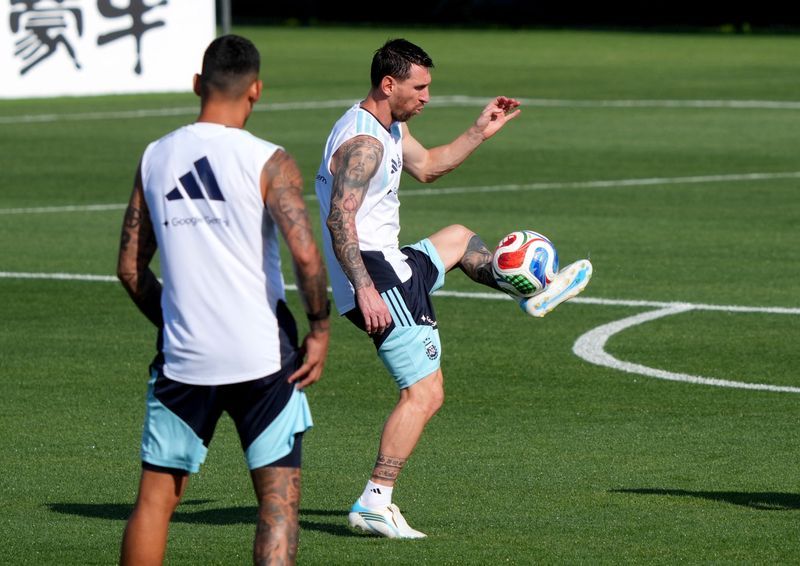
Argentina enters the fixture with distinct tactical considerations of their own, with coach Lionel Scaloni preparing to restore Messi to the starting lineup after utilising him as a substitute in their final group match against Jordan. The Albiceleste's perfect record through the group stage — three victories from three matches — establishes them as legitimate tournament contenders, particularly given their balanced approach combining defensive stability with attacking flair. Messi's goal in the Jordan victory extended his tournament tally to six, underscoring his continued capacity to influence matches through individual brilliance despite his advancing age in professional football terms.
Scaloni must determine which combination of Argentina's numerous world-class players provides the most effective approach to dismantling Cape Verde's defence, a process complicated by the relative inexperience that opponents might possess at this elite level. The danger inherent in dismissing unfamiliar opponents has been demonstrated repeatedly throughout World Cup history, with several stunning upsets occurring when established powerhouses underestimated less-fancied nations.
The broader context of this fixture reflects shifting dynamics within international football, where traditional hierarchies face increasing challenge from nations investing significantly in player development despite limited resources. Cape Verde's progress from the preliminary qualifying rounds to competition against the world's elite represents validation of their strategic approach to football development over multiple years. Whether Friday's match produces another fairytale chapter or confirms Argentina's superiority remains uncertain, but Cape Verde's journey has already altered the tournament narrative in meaningful ways.
For Malaysian and Southeast Asian observers, this fixture demonstrates how smaller football nations can compete at the highest level through systematic planning, technical development, and psychological resilience. The contrast between pre-tournament predictions assigning Cape Verde minimal probability and their actual performance provides valuable context for regional teams aspiring toward greater prominence in international competition. The match offers lessons in refusing to accept predetermined narratives and maintaining confidence despite overwhelming external doubt.

