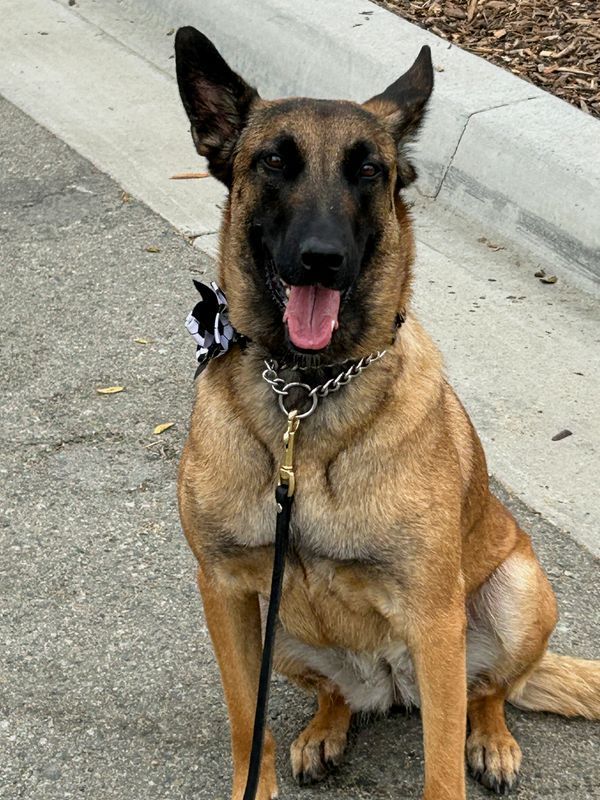
The 2026 FIFA World Cup co-hosted across the United States, Canada, and Mexico has required an unprecedented deployment of canine security personnel to safeguard fans and venues across the sprawling continental tournament. Dogs have become a visible frontline defence mechanism at stadiums, training facilities, hotels, and transport corridors, tasked with identifying explosives, firearms, and other contraband that could pose threats to this globally significant sporting event. The scale of the operation—with matches spread across 16 cities and involving three nations—has necessitated marshalling security resources on a magnitude rarely seen in sports event management, drawing animals from federal agencies, local police departments, and private security contractors working in coordinated but sometimes parallel efforts.
The geopolitical context surrounding this World Cup has intensified security concerns in ways that distinguish it from previous tournaments. The United States was in a state of active hostility with Iran at the time of the competition, yet Iran's national team participated in group-stage matches held in Los Angeles, creating a scenario where opposing nations and their supporters converged within the same venue. Beyond US-Iran tensions, the Trump administration had strained diplomatic relationships with numerous countries participating in the tournament, a factor that security planners had to account for when assessing potential flashpoints. Regional instability compounded these international dynamics; Mexico experienced cartel violence triggered by government enforcement operations in the months preceding the tournament, generating concerns about spillover effects into major sporting events. These overlapping tensions transformed the World Cup from a purely sporting occasion into a security challenge requiring layered precautions and constant vigilance.
At Los Angeles Stadium and other venues hosting Iran's matches, the presence of large-scale political protests added tangible complications to security operations. Kali, a five-year-old Labrador Retriever stationed near stadium entrances, exemplified the approach taken to manage these pressures. As an explosives detection dog belonging to the Federal Bureau of Alcohol, Tobacco, Firearms and Explosives, she represented one component of a multifaceted security apparatus. Neighbouring her were additional animals from the LA County Sheriff's Department, including a dog named Buck and his handler Anthony Meyers, while private security teams positioned themselves at perimeter checkpoints with further detection dogs inspecting vehicles. Every attendee entering the stadium passed within close proximity to at least one working dog, a deliberate architectural choice designed to communicate that a sophisticated screening process was underway.
The employment of detection dogs on this scale has required coordination across multiple security entities. Allied Universal Enhanced Protection Services, the largest private provider of canine security in the United States, deployed approximately 300 of its 1,000 dog teams specifically for World Cup assignments, according to Glen Kucera, the company's president. This represented a substantial mobilisation of private sector security resources, yet it still proved insufficient to cover all venues and requirements independently. Federal agencies, state and local law enforcement, and Canadian authorities each contributed their own dog teams, creating a somewhat diffuse but comprehensive network. The coordination challenges were considerable, given that different agencies operate under distinct protocols, training standards, and operational doctrines. However, the shared objective of preventing security breaches provided sufficient common ground for largely effective collaboration across institutional boundaries.
Dogs serve a dual purpose in World Cup security that extends beyond their actual detection capabilities. As Kucera emphasised, approximately ninety-five percent of the value that security dogs provide operates at the psychological and deterrent level rather than through active threat identification. The visible presence of trained animals with their handlers sends an unmistakable signal to any person contemplating violent or criminal action that surveillance is constant and sophisticated. A would-be attacker contemplating bringing explosives, firearms, or other prohibited materials into a stadium confronts the reality that detection dogs will assess virtually every entrance and many internal pathways. This visibility creates a deterrent effect that may prevent incidents before they commence, a preventative rather than reactive security strategy. The efficacy of this approach depends substantially on public perception; if attendees and potential threats alike believe that the dog security presence is genuine and capable, the deterrent value increases accordingly.
The selection of dog breeds employed in World Cup security reflected strategic thinking about how to balance threat prevention with public comfort and cultural sensitivity. Most security dogs deployed were Labradors and similar friendly-appearing breeds rather than German Shepherds or more physically intimidating varieties. Kucera explained that this choice was deliberate; Labradors do not trigger the same fear responses that more aggressive-looking dogs might provoke. This consideration held particular importance given the international composition of spectators, many of whom come from countries where dogs are not common as household pets and where security dogs may carry associations with oppressive state security apparatus. By employing breeds perceived as gentle and approachable, security organisers attempted to create an environment where fans from diverse cultural backgrounds would accept the security measures as reasonable precautions rather than experiencing them as threatening or oppressive displays of state power.
Iran's matches presented uniquely complex security challenges that required customised operational responses. The Iranian national team was required to remain based in Mexico rather than travelling freely throughout the host countries, flying into Los Angeles only shortly before their scheduled matches and departing immediately afterwards. This imposed scheduling created fluid operational requirements, as security personnel needed to adapt to changing timelines and movements rather than working from fixed, predictable patterns. The matches themselves occurred amid political protests outside the stadium, particularly during contests against New Zealand and Belgium, with similar pressures anticipated for Iran's final group-stage match against Egypt in Seattle. These circumstances forced security planners to maintain heightened alert levels throughout Iran-related matches, with canine teams deployed with particular intensity during these fixtures. The combination of geopolitical tension, fan activism, and fluid operational circumstances created a security environment substantially more complex than that surrounding matches between teams without active diplomatic hostilities.
The geographic distribution of matches across the North American continent required security planning that extended well beyond individual stadiums. With competitions held simultaneously in Los Angeles, Vancouver, Mexico City, Guadalajara, and numerous other locations, security resources could not be concentrated in a single location but instead had to be distributed and sometimes duplicated across vast distances. Training facilities, team hotels, transportation routes connecting airports to hotels and stadiums, and spectator parking areas all required security screening. This sprawl tested the capacity of security organisations to maintain consistent standards across numerous sites operating under varying local conditions and jurisdictional frameworks. Different cities and countries implemented distinct canine security approaches; Guadalajara incorporated robotic dogs equipped with explosive-detection capabilities, while Vancouver developed a multi-layered strategy that positioned canine detection as a central component within a broader security architecture. These variations reflected both local capabilities and the necessity of adapting security protocols to regional conditions and resources.
Fan behaviour and cultural practices related to celebration also factored into the security calculus. In many nations with strong soccer traditions, supporters commonly mark goals and victories with fireworks, a practice that creates obvious security complications when such items are brought into enclosed stadiums where explosives pose hazards. Security personnel operating with detection dogs were tasked not merely with identifying threatening materials but also with preventing enthusiastic supporters from inadvertently introducing fireworks or similar celebratory items into venues. This required security staff to educate fans about regulations while simultaneously maintaining vigilance against genuinely malicious actors. The dogs' ability to identify chemical signatures associated with explosives and pyrotechnic materials became essential to this dual objective, allowing security teams to distinguish between confiscatable but non-threatening items and actual weapons or explosives.
The North American World Cup represented the largest sporting event for which this particular generation of security dogs would be deployed, establishing a new benchmark for canine security operations. Sporting events of comparable scale occur only occasionally, and the operational lessons learned from coordinating hundreds of dog teams across three nations and sixteen cities will likely inform security planning for future mega-events. The dogs themselves, having performed their assigned duties without major incidents, became minor celebrities in their own right; handler-dog teams cooperated readily when approached for photographs, demonstrating the approachable demeanour that security planners had deliberately cultivated through breed selection and training protocols. While quantifying the precise impact that the dogs' presence exerted on security outcomes remains difficult—successful prevention of incidents does not generate the same clear measurement as successful apprehension of wrongdoers—the absence of major security breaches or attacks during the tournament suggests that the comprehensive deployment of canine detection resources contributed meaningfully to achieving security objectives. The World Cup demonstrated that in an era of diffuse security threats and geopolitical tensions, working dogs continue to represent an irreplaceable component of comprehensive event security strategy.

