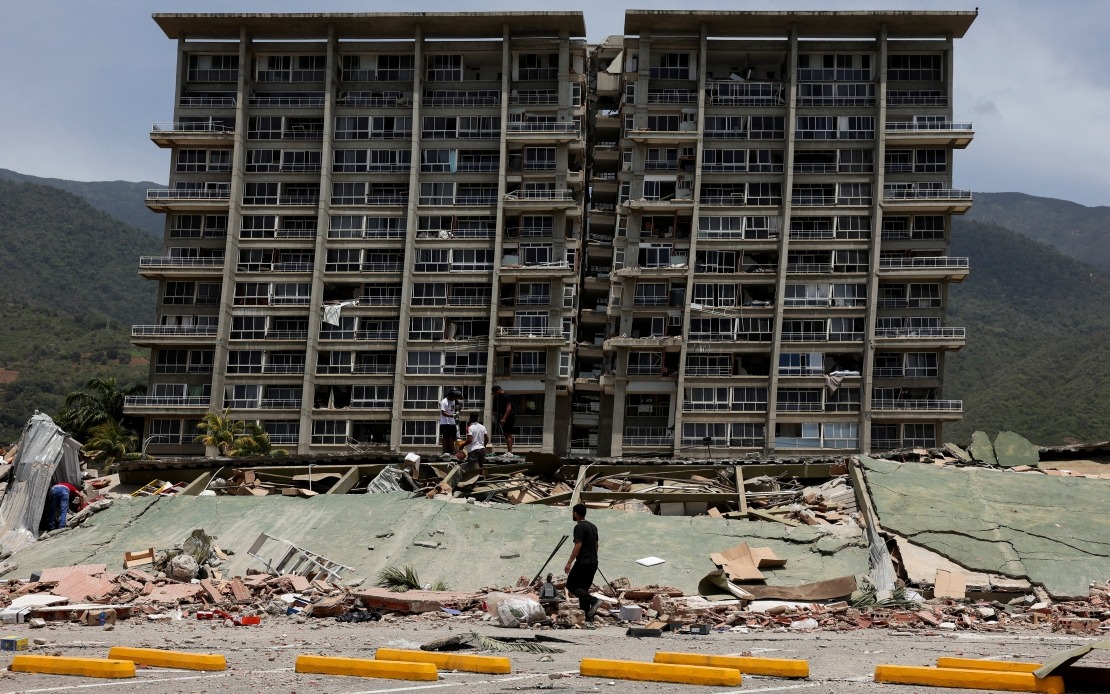
Canada has mobilized US$5 million in emergency humanitarian assistance to support Venezuela's recovery efforts following a series of devastating earthquakes that have left the country reeling from one of its most severe natural disasters in recent years. The announcement, made through Canada's Foreign Ministry, underscores the international community's recognition of the catastrophic scale of the disaster and the urgent need for coordinated relief operations across the affected regions.
The earthquakes have inflicted what officials describe as "immense loss of life and widespread damage" across Venezuelan territory, though humanitarian organizations and governments are still compiling comprehensive assessments of the full extent of the destruction. The unpredictability of casualty figures and infrastructure damage estimates reflects the challenge faced by relief coordinators operating in areas where communications infrastructure has been severely compromised. Preliminary indications suggest that hundreds of thousands of individuals across multiple provinces have been impacted, with many facing acute shortages of food, clean water, and medical care in the immediate aftermath.
Canadian Foreign Minister Anita Anand characterized the humanitarian crisis in starkly human terms, emphasizing that families have been separated and communities torn apart by the natural disaster. Her remarks highlighted Canada's commitment to standing alongside the Venezuelan people during this extraordinarily difficult period. The statement reflects a broader diplomatic engagement, with Canadian officials maintaining active communication with regional partners and international humanitarian organizations to coordinate a comprehensive response strategy that addresses both immediate emergency needs and longer-term reconstruction requirements.
The newly announced funding will be channeled through established humanitarian partners with proven experience in delivering emergency services in crisis situations. These organizations will utilize the resources to provide critical interventions including emergency food distribution, safe drinking water supply systems, sanitation infrastructure, and healthcare services to the most vulnerable populations. Beyond these immediate survival needs, the funding will also support protection services for displaced persons and vulnerable groups, as well as the logistical frameworks necessary to transport aid to remote or isolated communities cut off by earthquake damage.
This latest allocation represents a continuation of Canada's existing humanitarian commitment to Venezuela. Earlier in the year, the Canadian government had already designated nearly US$4.5 million for addressing humanitarian needs within Venezuela, reflecting ongoing concerns about the country's capacity to meet basic social needs prior to these earthquakes. The cumulative contribution now exceeds US$9.5 million when combining previous allocations with this emergency response, demonstrating sustained Canadian engagement with Venezuela's humanitarian challenges even amid bilateral diplomatic complexities and broader geopolitical considerations affecting international relations with Caracas.
The timing of this announcement coincides with urgent appeals from international humanitarian organizations that have warned of a potentially exponential escalation in humanitarian needs in the coming weeks. As displaced populations move to emergency shelters and the true scope of infrastructure damage becomes clearer, demand for coordinated international assistance will intensify significantly. Medical facilities in many affected areas have themselves suffered damage, creating a cascading crisis where demand for healthcare services rises precisely as the capacity to deliver such services diminishes.
Canada's approach emphasizes the importance of working through experienced humanitarian intermediaries rather than attempting direct government-to-government assistance, a strategy that reflects international best practices in emergency response and ensures that aid reaches intended beneficiaries efficiently. This model also provides flexibility for rapid adjustments as ground conditions evolve and new priorities emerge. Canadian officials have indicated that additional details regarding how the new funding will be allocated across specific sectors and geographic regions will be communicated in the coming days as coordination mechanisms with humanitarian partners are finalized.
For Malaysian observers and Southeast Asian policymakers, this situation underscores several broader considerations. Natural disaster response at the international level increasingly involves middle-income countries like Canada mobilizing resources for vulnerable populations in distant regions, reflecting an emerging norm of shared responsibility for global humanitarian crises. The scale and nature of Venezuela's earthquake response also provides instructive parallels for Southeast Asian nations considering their own disaster preparedness frameworks, particularly regarding how international assistance complements domestic response capacities and how coordination mechanisms function during the critical early hours and days following major seismic events.
The Venezuelan earthquakes and international response also highlight infrastructure vulnerabilities common to many developing nations across Latin America and Southeast Asia. Humanitarian organizations responding to Venezuelan disasters must contend with pre-existing challenges including limited healthcare access, infrastructure deficits, and constrained government resources—conditions that Venezuelan earthquakes have now acutely exacerbated. Regional governments across Southeast Asia, many of which operate in seismically active zones, may find relevant lessons in how international coordination mechanisms mobilize and deliver assistance during such crises.

