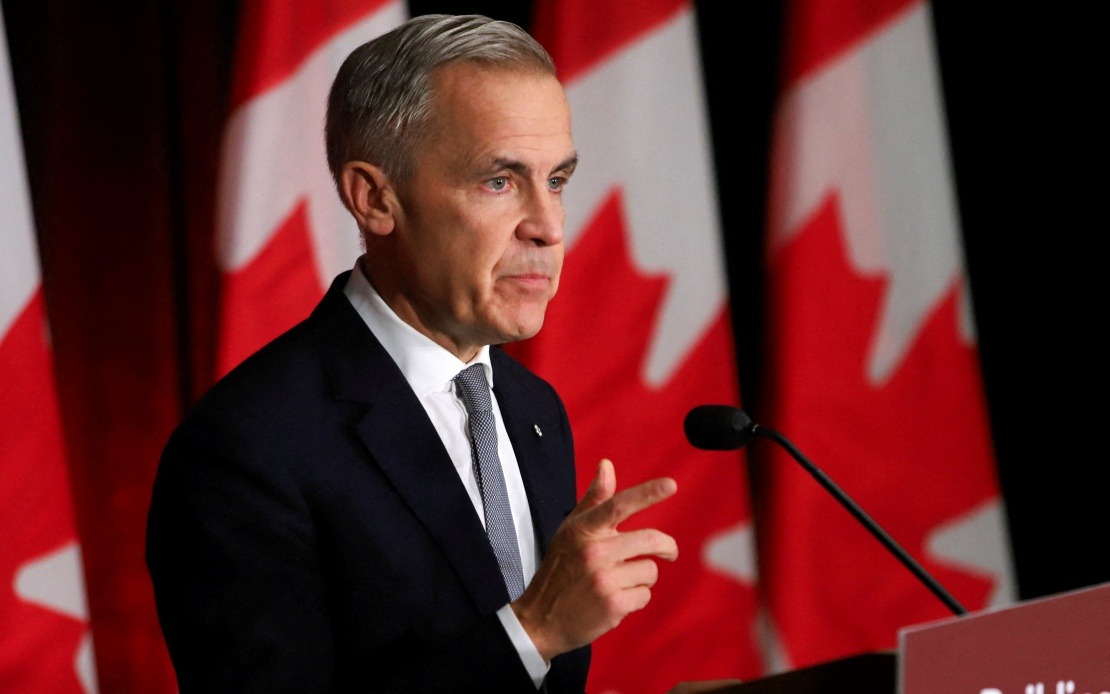
Canadian Prime Minister Mark Carney announced on Tuesday that he and US President Donald Trump had agreed to accelerate trade negotiations in the coming weeks, following a direct telephone conversation earlier that day. The commitment to intensify discussions marks an attempt to resolve mounting tensions between the two nations over tariff impositions that threaten to disrupt long-established cross-border commerce. Carney indicated that both governments would engage constructively with their teams to explore pathways toward resolution during the critical period ahead.
The timing of the agreement comes in the immediate aftermath of Trump's decision on Monday to sign three separate proclamations authorizing an additional 50 per cent tariff regime targeting specific Canadian exports. Trump's administration justified the action by asserting that Canada had engaged in discriminatory practices against American commercial interests. The levies will apply to dairy products, alcoholic beverages, motor vehicles and related automotive components, representing significant categories within bilateral trade flows. These duties are scheduled to become effective on August 19, providing a window of less than four weeks for negotiators to reach an accommodation.
Notably, Trump's tariff announcement included exemptions for certain strategic sectors including energy products, potash, fish and critical minerals. This selective approach suggests that some sectors retain preferential status, potentially offering space for negotiations to proceed along sectoral lines. The distinction between targeted and exempted goods reflects calculated policy choices that may serve as leverage points in forthcoming discussions. Malaysia and other Southeast Asian economies should monitor this closely, as changes to Canada-US trade dynamics could have ripple effects across regional supply chains and alternative sourcing arrangements.
Carney acknowledged on Monday that the newly imposed tariffs represented "the latest in a series of unilateral US trade actions in direct violation of the Canada-United States-Mexico Agreement," the trilateral pact that replaced the North American Free Trade Agreement. This explicit invocation of treaty violations underscores Ottawa's legal position and suggests the Canadian government views the tariff action as contractually problematic. By framing the dispute within the formal agreement's provisions, Carney positioned Canada to potentially pursue remedies through established dispute resolution mechanisms if negotiations do not yield results.
The Canadian Prime Minister also indicated that his government was examining a comprehensive range of response measures should the tariffs proceed as scheduled. This statement implies contingency planning for retaliatory action, including potential counter-tariffs on American products. Such responses could encompass sectors where Canadian exporters hold particular advantages or where American exporters maintain substantial exposure to the Canadian market. The mention of "all options" signals that Ottawa is not limiting itself to narrow responses but rather considering the full spectrum of trade policy instruments available under international law and bilateral agreements.
From a regional perspective, the Canada-US trade friction carries implications extending beyond North America. Southeast Asian nations including Malaysia have developed sophisticated supply chains that often intersect with North American production networks. Automotive suppliers, food processors and technology manufacturers operating across the region could face disruptions if tariffs disrupt integrated manufacturing systems. Additionally, any sustained deterioration in Canada-US relations might encourage protectionist sentiment elsewhere, potentially affecting market access for developing economies.
The dispute also reflects broader tensions within the Trump administration's trade policy approach. The assertion that Canada discriminates against US commerce represents a characterization that Ottawa disputes, suggesting fundamental disagreement over trade relationship baseline assumptions. This gap in perception makes resolution more challenging, as the parties are not simply negotiating tariff levels but also the underlying factual premises justifying trade restrictions. Such disagreements often require high-level political engagement to overcome, which the agreement to intensify negotiations signals is now occurring.
The August 19 deadline provides a concrete timeframe within which both governments must demonstrate progress. Markets typically respond to such defined deadlines by adjusting expectations and pricing in risk premiums. Canadian exporters in affected sectors face significant uncertainty regarding their access to American markets in weeks ahead, potentially prompting them to seek alternative buyers or adjust production decisions. This commercial uncertainty underscores the importance of achieving negotiated settlement rather than allowing tariffs to take effect as planned.
Historically, trade disputes between Canada and the United States have sometimes been resolved through negotiations conducted at both political and technical levels. The current commitment to intensify discussions suggests both sides recognize the mutual costs of prolonged tariff conflict. However, the underlying structural disagreements about trade fairness and market access suggest that quick resolution may prove elusive. Both governments must navigate domestic political pressures from affected industries while maintaining constructive engagement at the negotiating table.

