Cambodia's highest court is expected to deliver its verdict on Thursday on an appeal filed by two journalists whose convictions for treason have intensified scrutiny into the independence of the kingdom's judicial system. The decision comes as international media watchdogs and human rights organisations continue to voice alarm about the government's use of national security legislation to prosecute news gathering activities that ought to be protected under press freedom principles.
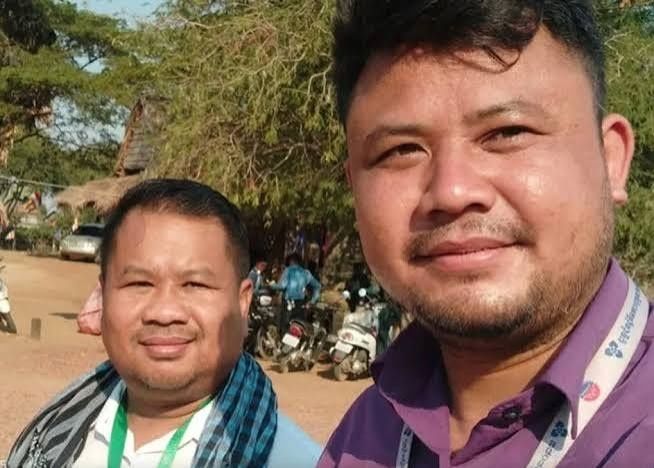
Phorn Sopheap, a reporter with Battambang Post TV Online, and Pheap Pheara of TSP 68 TV Online were apprehended in July of last year while returning from assignments covering military operations along Cambodia's contested frontier with Thailand. Authorities alleged the pair had unauthorised access to a designated military zone and subsequently shared images through Facebook. Both men have consistently maintained they held proper clearance to operate in the area where the photographs were taken and have mounted a vigorous legal challenge to the charges against them. Their appeal seeks a complete exoneration and the removal of their substantial prison sentences.
The underlying incident occurred against the backdrop of escalating tensions between Cambodia and Thailand along their shared border. Cross-border clashes erupted in July and December, displacing hundreds of thousands of residents in both nations and resulting in approximately 100 deaths among military personnel and civilians. Thailand subsequently cited the journalists' photographs—particularly an image depicting land mines—as evidence supporting its contention that Cambodia had deployed new mines in violation of international treaties. Phnom Penh has consistently rejected such allegations, contending that any mines present along the border are remnants from Cambodia's prolonged civil conflict rather than recent placements. The country has officially declared its adherence to international conventions prohibiting land mine use. A ceasefire established in December has largely held, though underlying animosities persist in the region.
In December, the Siem Reap Provincial Court found both journalists guilty under vague treason statutes, specifically convicting them of "supplying a foreign state with information prejudicial to national defense," and imposed identical 14-year sentences. When a lower appellate tribunal upheld the convictions in March, the case attracted additional international attention. More than a dozen journalism and press freedom organisations subsequently issued a coordinated statement urging the Cambodian government to abandon prosecution, citing fundamental principles of press liberty and the legitimate nature of the journalists' reporting work.
The Supreme Court's imminent decision arrives at a particularly sensitive juncture for Cambodia's human rights record. Just days earlier, the same court validated the incitement conviction of Rong Chhun, a 56-year-old opposition figure who was originally prosecuted after advocating for villagers displaced by state-sponsored development initiatives. Legal observers characterised that ruling as emblematic of what they view as a broader governmental campaign to suppress political dissent and silence critical voices. Human Rights Watch directly attributed the outcome to the "lack of independence from the ruling party" within Cambodia's judicial apparatus, though government officials have steadfastly denied such allegations, insisting the Supreme Court operates with complete autonomy.
Cambodia's trajectory on press freedom remains deeply concerning, particularly under the administration of Prime Minister Hun Manet, who assumed power in August 2023 following his father Hun Sen's nearly four-decade tenure. Whilst Hun Manet's American education initially raised hopes among international observers that substantive democratic reforms might materialise, the subsequent eighteen months have demonstrated minimal movement toward meaningful liberalisation. Authoritarian governance structures remain largely intact, and journalists continue to face substantial legal jeopardy when pursuing investigative reporting deemed sensitive by authorities.
The Committee to Protect Journalists, headquartered in New York, has characterised Cambodia's legal framework as deliberately weaponised against journalism. The organisation specifically condemned the government's exploitation of "vague national security laws to criminalise legitimate reporting" in the cases of Pheap Pheara and Phorn Sopheap. This weaponisation of security legislation represents a common enforcement mechanism employed by states seeking to curtail press scrutiny whilst maintaining façades of legal propriety. By framing journalistic activity as threats to national defence, authorities avoid the reputational costs of explicit censorship whilst achieving identical suppressive outcomes.
Cambodia's international standing on press liberty has deteriorated markedly. The 2025 Reporters Without Borders World Press Freedom Index ranked Cambodia 161st among 180 countries and territories assessed, positioning it squarely within the category of jurisdictions facing "very serious" threats to journalistic freedoms. This placement reflects the cumulative impact of prosecutions like those targeting Pheap Pheara and Phorn Sopheap, as well as broader patterns of harassment, intimidation, and legal persecution affecting Cambodian newsrooms.
For Malaysian readers and broader Southeast Asian observers, the Cambodian case carries sobering implications. It exemplifies how national security frameworks ostensibly designed to protect state interests can be recalibrated to serve regime interests in suppressing independent reporting. The journalists' prosecution demonstrates the fragility of press freedom protections in the region and highlights how judicial systems, even in their highest forums, may fail to serve as counterweights to executive overreach. The Supreme Court's imminent decision will furnish a crucial test of whether Cambodia's judiciary retains any meaningful independence or has become thoroughly subordinated to political objectives of the ruling establishment.

