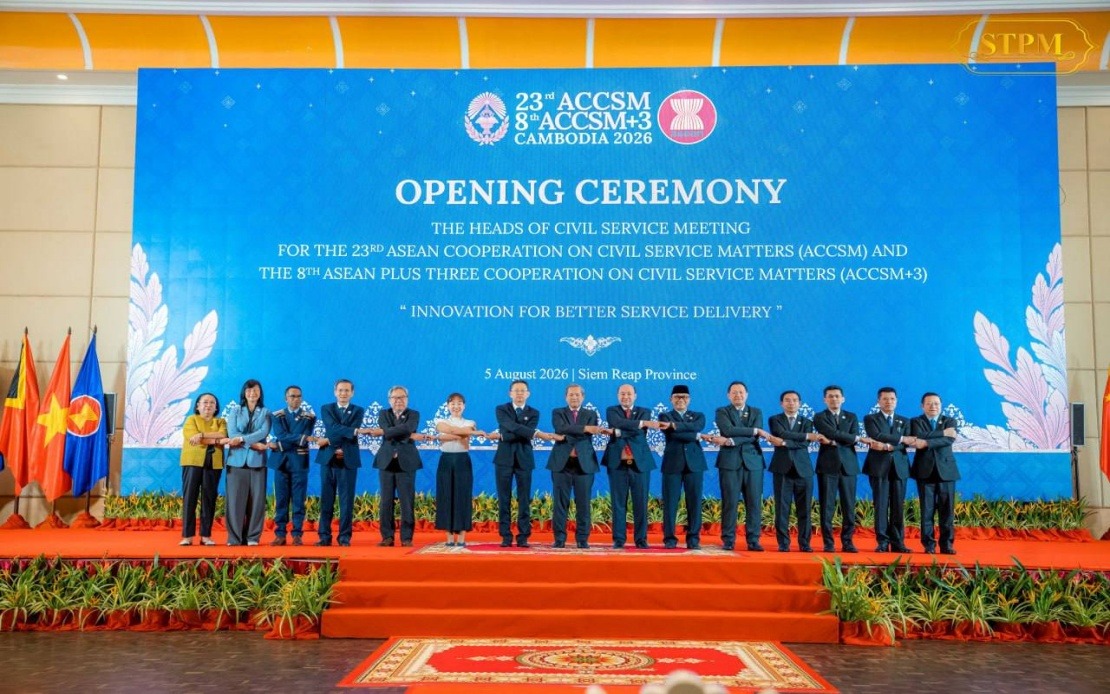
Cambodia's Prime Minister Hun Manet has issued a powerful call for ASEAN nations to embrace artificial intelligence and digital innovation as tools for delivering better public services, though he has cautioned that technological advancement alone is insufficient without first establishing strong institutional foundations and human capacity. Speaking at a regional civil service conference in Siem Reap, Hun Manet articulated a vision for transformation that places citizens' needs at the centre of digital initiatives, moving beyond the mere technical adoption of new technologies to create meaningful improvements in how governments serve their populations.
The remarks were delivered during the 23rd ASEAN Cooperation on Civil Service Matters (ACCSM) and the 8th ASEAN Plus Three Cooperation on Civil Service Matters (ACCSM+3), a four-day gathering held from August 3 to 5 that brought together civil service leaders from across the region. The conference theme, "Innovation for Better Service Delivery," reflected growing recognition among Southeast Asian governments that digital transformation represents both an opportunity and a necessity in an increasingly competitive global environment. For Malaysian observers, the forum underscores how regional peers are grappling with similar pressures to modernise bureaucracies while managing the social and economic disruptions such change entails.
Hun Manet's emphasis on inclusive innovation carries particular significance given ASEAN's substantial development disparities. He stressed that member states must adopt new technologies, particularly AI systems, at a pace appropriate to their existing capabilities rather than attempting rapid, potentially destabilising transformations. This nuanced approach acknowledges that while Vietnam, Thailand, and Singapore possess more advanced technological infrastructure, other member states require sustained capacity-building and institutional strengthening before they can effectively deploy sophisticated digital systems. The Cambodian leader's framing suggests that sustainable regional integration depends on no nation being left behind technologically, a principle with profound implications for Malaysia's own positioning as a relative technology leader within ASEAN.
Central to Hun Manet's vision is the recognition that successful innovation requires building institutional capacity and developing human resources in tandem with technological deployment. This perspective challenges the common pitfall of purchasing advanced systems without ensuring civil servants possess the skills, training, and organisational structures necessary to operate them effectively. He cautioned that innovation must rest upon strong foundations rather than being imposed from above, suggesting that hasty digitisation efforts risk creating new problems rather than solving existing ones. For Malaysia, which has invested substantially in e-government initiatives and digital public services, this reinforces lessons learned through years of implementation experience.
The prime minister articulated a vision extending beyond operational efficiency to encompass broader regional resilience and cooperation. In his view, ASEAN faces interconnected challenges—including climate-related disasters, uneven economic development, and persistent poverty—that transcend national borders and cannot be addressed by individual countries acting in isolation. He proposed that innovation should strengthen the region's collective capacity to respond to these shared threats, positioning technological advancement as a tool for regional cohesion rather than merely domestic administrative improvement. This framing resonates with Malaysia's own experiences managing transboundary environmental issues and economic integration within ASEAN frameworks.
Hun Manet called for ACCSM to evolve into a vital platform for mutual learning and policy harmonisation among member states. He envisioned the forum facilitating systematic knowledge exchange about successful digital initiatives, enabling governments to learn from each other's experiences and avoiding costly mistakes through shared understanding of what works in different contexts. By emphasising collaborative adaptation and harmonised policies, he positioned regional civil service cooperation as essential infrastructure for managing the disruptions accompanying technological change. This collaborative emphasis reflects growing recognition that ASEAN's strength lies in its collective problem-solving capacity when properly coordinated.
The timing of these remarks coincides with accelerating adoption of AI and digital technologies across ASEAN governments, driven by competitive pressures and citizen expectations for more efficient, responsive public administration. Regional governments increasingly view digital modernisation as essential for improving competitiveness and service quality, yet most remain in relatively early stages of systematic AI deployment. Hun Manet's call for thoughtful, capacity-conscious adoption provides a counterweight to more aggressive digitisation agendas that risk creating implementation failures. For Malaysia, which continues refining its digital government strategy, his emphasis on sustainable pacing and institutional readiness offers valuable validation of approaches balancing ambition with realistic capability assessment.
The conference setting itself—bringing together civil service leaders from ASEAN and major regional partners including China, Japan, and South Korea—underscores how public administration modernisation has become a central feature of regional governance competition. The inclusion of ASEAN Plus Three partners reflects understanding that technological challenges transcend Southeast Asia, with Northeast Asian experiences offering relevant lessons. Malaysian civil servants participating in such forums benefit from exposure to diverse approaches and can assess how their own nation's digital government initiatives compare with regional peers pursuing similar objectives.
Hun Manet's articulation of people-centred innovation reflects emerging consensus that public sector digital transformation must ultimately serve citizen needs rather than merely modernising government operations for their own sake. This human-centred perspective addresses common frustrations with e-government systems that are technically sophisticated yet fail to address actual citizen problems or remain inaccessible to populations with limited digital literacy. By insisting that innovation remain grounded in real needs assessment and institutional capacity, he positioned the ACCSM forum as a space where governments can collectively develop implementation approaches more likely to succeed in Southeast Asia's diverse contexts.
The emphasis on narrowing development gaps through technology transfer and capacity building carries significant implications for Malaysia's role within ASEAN. As a relatively advanced economy with substantial digital government experience, Malaysia potentially positions itself as a knowledge source for less-developed neighbours while remaining attentive to its own ongoing modernisation needs. Hun Manet's framework suggests that leadership in ASEAN's digital transformation will accrue to nations that effectively share expertise and support collective capability-building rather than pursuing isolated advancement. This collaborative vision may influence how Malaysian authorities approach regional technology partnerships and civil service training initiatives in coming years.
Looking forward, Hun Manet's call for sustainable, inclusive, people-centred AI adoption provides important strategic direction as ASEAN governments navigate complex decisions about digital investments and institutional reforms. His warnings against adopting technology without adequate preparation echo lessons learned across the region from earlier waves of e-government implementation. The emphasis on ACCSM as a platform for mutual learning suggests that regional governments increasingly recognise value in coordinated approaches to shared challenges, potentially leading to greater policy alignment and shared standards for digital public services. For Malaysia, these developments suggest opportunities for expanded regional cooperation while reinforcing the importance of continued investment in the institutional capacity and human resources that digital government systems ultimately depend upon.

