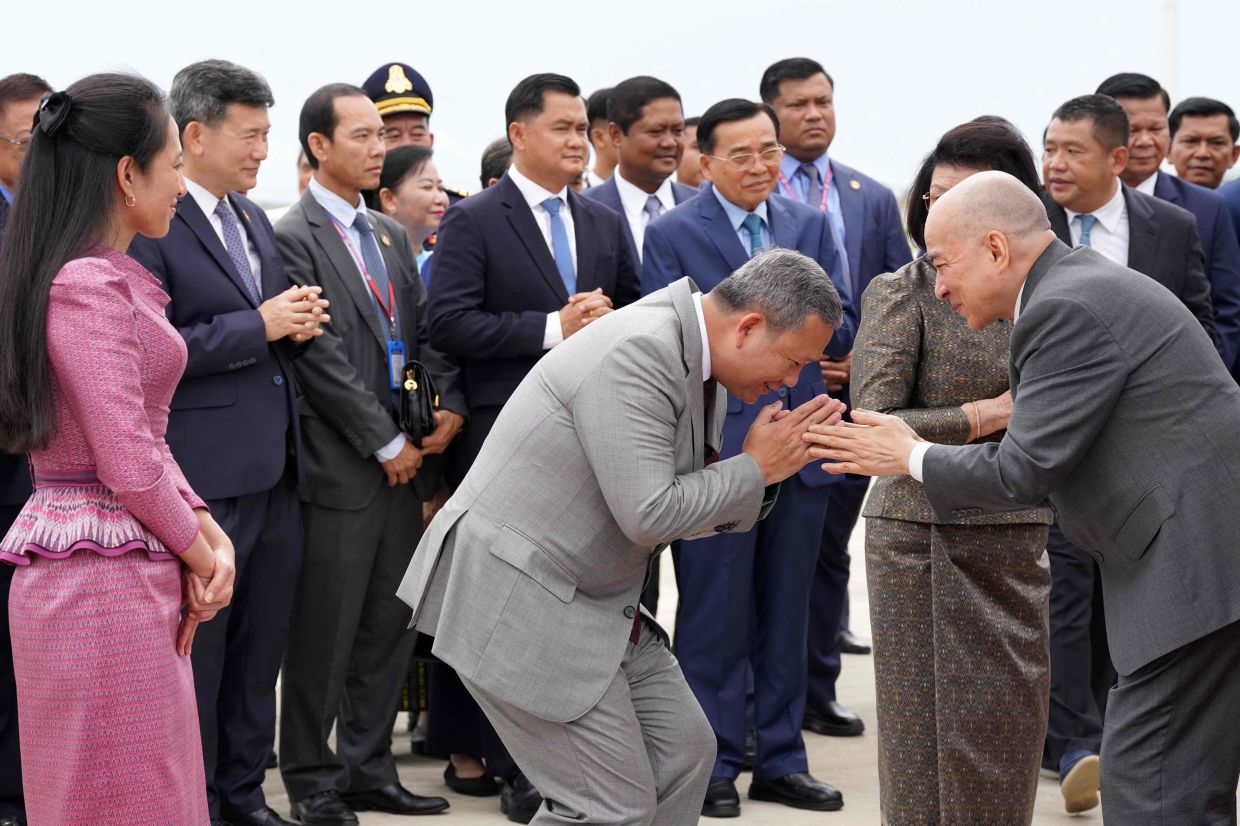
Cambodia's King Norodom Sihamoni arrived in Phnom Penh on Friday afternoon after spending several months in China receiving medical treatment for prostate cancer, marking a significant moment for the kingdom's leadership and its stability. The 73-year-old monarch touched down at the capital's airport to a welcoming reception from senior government officials, underscoring the importance placed on his recovery and safe return by Cambodia's political establishment. State media confirmed his arrival, with the Royal Palace having previously announced that his health had substantially improved following extended treatment at medical facilities in Beijing.
Sihamoni's health journey began earlier this year when he initially travelled to China for routine medical examinations. During those check-ups in April, he received a diagnosis of prostate cancer, a condition that required immediate and extended intervention. The decision to pursue treatment in Beijing rather than elsewhere reflects Cambodia's long-standing medical and strategic relationship with China, a pattern that has defined much of the kingdom's modern governance. Chinese physicians undertook what the Royal Palace characterised as successful surgical procedures, followed by a comprehensive treatment regimen that continued over the subsequent months.
The three-month recovery period witnessed the palace maintaining regular communication with the Cambodian public regarding the monarch's condition. A statement released on Tuesday prior to his return noted that the king's wellbeing was "getting better," providing reassurance to citizens and the international community about the continuity of Cambodia's constitutional framework. This measured approach to health transparency balanced the need for privacy with the monarch's constitutional role as the national symbol and head of state, matters of considerable importance to Cambodia's institutional functioning.
Among those greeting the king at Phnom Penh International Airport were influential figures from Cambodia's political hierarchy, most notably former Prime Minister Hun Sen and his son Hun Manet, who currently holds the premiership. Hun Sen, who dominated Cambodian politics for three decades before stepping aside for his son, took to social media to announce the king's safe arrival, demonstrating the personal investment of the country's leading political figures in the monarch's return. This ceremonial reception and public acknowledgment reflected both the symbolic significance of the king's homecoming and the apparent harmony between the palace and the current government structure.
The king's medical situation carries historical echoes within Cambodia's royal lineage. Sihamoni himself assumed the throne in 2004 following the abdication of his father, King Norodom Sihanouk, who similarly had travelled to Beijing for cancer treatment decades earlier. That succession, while constitutionally smooth, established a precedent for Cambodian royalty seeking advanced medical care in China rather than elsewhere. Sihanouk's reign profoundly shaped modern Cambodia, and his 2012 death marked the end of an era that spanned much of the nation's independence and tumultuous twentieth century history.
Before his ascension to the throne, Sihamoni led an unconventional life for a future monarch. He spent most of his adult years living abroad, pursuing a career in the performing arts and cultural work rather than preparing for the succession. Fluent in multiple languages—Khmer, French, Czech, and English—he brought an international perspective and cultural sophistication to the role. This background distinguished him from typical royal candidates and reflected Cambodia's openness to engagement with the wider world, particularly the artistic and cultural domains.
The king's return to active duties comes at a time when Cambodia navigates complex domestic and regional challenges. The Southeast Asian nation continues to manage its international relationships while addressing internal governance matters and economic development priorities. The smooth transition of power from Hun Sen to his son Hun Manet had already been a significant constitutional moment, and the confirmation of the king's recovery provides stability to Cambodia's institutional framework during this period of political evolution.
From a regional perspective, the episode reinforces Cambodia's deepening ties with China across multiple dimensions beyond traditional diplomatic channels. Medical tourism and healthcare cooperation represent increasingly important vectors of bilateral engagement throughout Southeast Asia, and Cambodia's reliance on Chinese medical expertise and facilities exemplifies this trend. The relationship reflects both practical considerations regarding available medical facilities and the broader geopolitical alignment that has characterised Cambodian foreign policy in recent years.
The Royal Palace's careful management of health information throughout Sihamoni's treatment demonstrated the delicate balance required in communicating about a reigning monarch's wellbeing. Too much transparency might invite international scrutiny or domestic anxiety, while complete opacity could fuel speculation and rumour. The palace's periodic updates that culminated in the announcement of successful surgery and improved health struck an appropriate middle ground, maintaining public confidence without excessive detail about the monarch's private medical situation.
Looking forward, Sihamoni's recovery and return signal continuity in Cambodia's institutional leadership. The king has served for two decades in his constitutional role, and his restoration to full health reassures both the Cambodian public and international observers about the stability of the nation's governance structures. While the monarch's powers are largely ceremonial under Cambodia's constitutional framework, the symbolic and unifying role of the crown remains deeply important to national cohesion and the legitimacy of governmental institutions.

