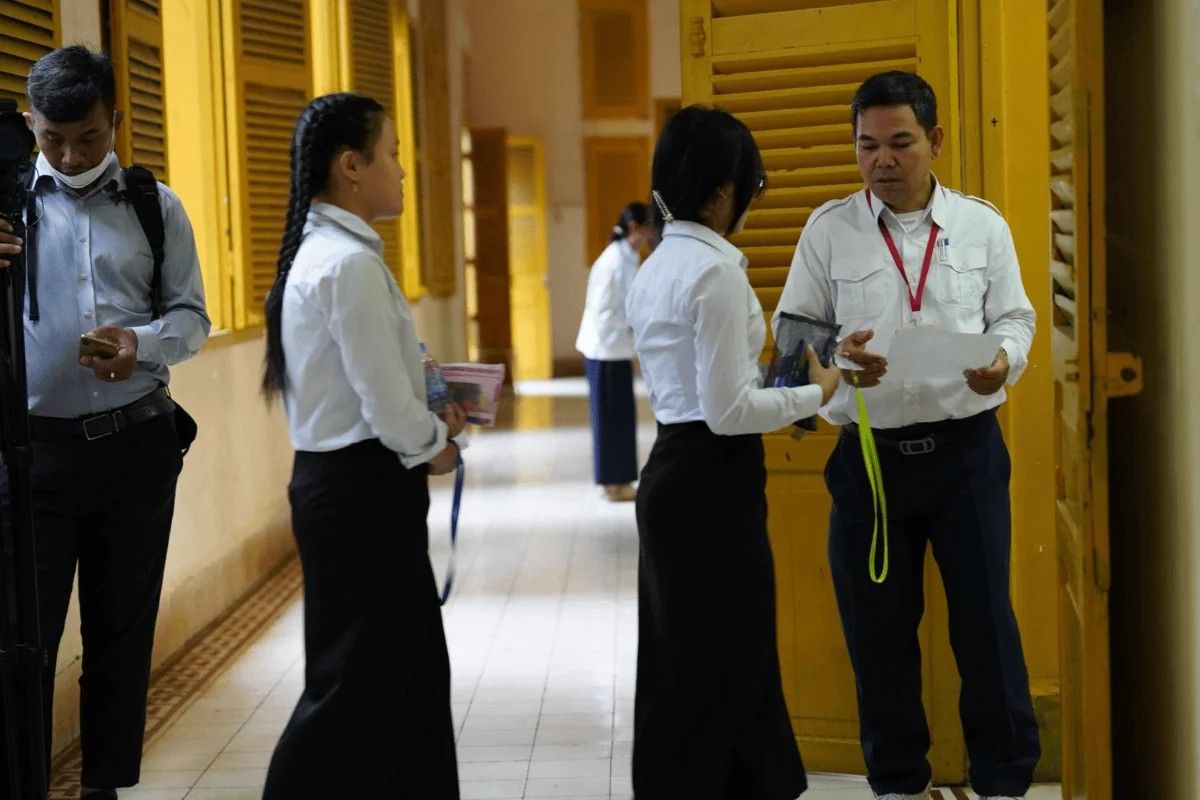
Cambodia commenced its Grade 12 examination cycle on August 10, welcoming over 150,000 candidates across the country despite lingering disruptions from last year's border conflict with Thailand. The nation's education system faces a complex backdrop: whilst most students can access their classrooms normally this year, the territorial dispute continues to displace learners in several provinces, underscoring how regional tensions directly threaten educational continuity in Southeast Asia's most vulnerable populations.
Education Minister Hang Chuon Naron addressed the opening ceremony in Phnom Penh, drawing a stark contrast between this year's examination environment and the chaotic circumstances that prevailed twelve months earlier. Last year's Grade 12 exams took place on August 28, merely one month after armed clashes erupted along the Cambodia-Thailand border—a timing that magnified the psychological strain on students already reeling from conflict. The minister acknowledged that this year's cohort benefits from a comparatively calmer backdrop, though the underlying territorial dispute remains unresolved.
The examination body is structured across two distinct academic tracks. Science-stream candidates comprise over 37,000 of the total cohort, whilst social science students account for the remaining 130,000-plus participants. This distribution reflects Cambodia's educational priorities and labour market demands, with the overwhelming majority pursuing humanities-oriented pathways. The sheer scale of simultaneous testing across the kingdom requires substantial logistical coordination and resource allocation, making examination administration particularly vulnerable to disruption during periods of national instability.
The Thai military occupation of Cambodian territory has created an unprecedented educational crisis in border communities. Twenty-five educational institutions across Oddar Meanchey and neighbouring provinces remain inaccessible, their campuses either directly occupied or situated within conflict zones where civilian access is impossible. This geographical displacement has fractured the learning environment for thousands of Cambodian students who should rightfully attend school in their home districts. The Royal Government has formally demanded Thai withdrawal to permit these students to resume normal classroom instruction, yet the diplomatic impasse continues unabated.
The human impact of this conflict manifests in compelling individual narratives that Minister Hang Chuon Naron highlighted during his remarks. He recounted meeting a student whose family had been forced to flee attacks by Thai forces in Oddar Meanchey province, compelling the child to study whilst sitting on tractors during family displacement. Despite these extraordinary hardships, the student achieved an 'A' grade and successfully enrolled in a quality higher education institution—a testament to educational resilience amidst chaos. Yet such success stories cannot obscure the systematic disadvantage imposed on thousands of border-area learners.
Currently, only one displaced school community has achieved temporary relocation. Students formerly attending Banteay Mean Rith Lower Secondary School in Oddar Meanchey are conducting classes in makeshift camps, allowing at least partial continuity of instruction. However, this solution remains makeshift and inadequate for the remaining 24 institutions and their tens of thousands of displaced pupils. The Educational Ministry's inability to secure classroom access for the majority of affected students represents a significant governance challenge and raises questions about whether Cambodia's commitment to educational equity extends to conflict-affected populations.
Minister Hang Chuon Naron emphasised that examination integrity would be maintained through rigorous oversight mechanisms and transparency protocols. This assurance directly responded to last year's examination paper leakage scandal involving mathematics assessments, which undermined public confidence in assessment credibility. The ministry's determination to prevent recurrence reflects broader recognition that educational legitimacy depends upon fair, transparent examination administration that treats all candidates equitably regardless of geographic location or socioeconomic status.
The Anti-Corruption Unit (ACU) has mobilised extensive supervisory resources to prevent irregularities. The organisation deployed over 4,000 observers across examination centres nationwide, matching deployment figures from the previous year and signalling institutional commitment to examination security. These monitors serve dual functions: they deter potential misconduct whilst also providing independent verification of proper procedure implementation. Such comprehensive oversight infrastructure is essential in contexts where confidence in state institutions may already be compromised by conflict and displacement.
Beyond the immediate examination logistics, this situation illuminates broader Southeast Asian patterns of how territorial disputes intersect with developmental priorities. Cambodia's education sector remains vulnerable precisely because border regions typically experience chronic underfunding and infrastructure deficits even during peacetime. The Thai occupation compounds these pre-existing inequalities, creating a two-tier educational experience where urban, central-region students navigate examination pressures relatively normally whilst border-area peers struggle against displacement, trauma, and institutional disruption. For Malaysian policymakers observing this situation, the experience demonstrates how regional security challenges inevitably cascade into humanitarian and development consequences.
The resumption of Grade 12 examinations represents both continuity and acknowledgment of disruption. Most Cambodian students will sit their assessments in familiar institutional settings, yet 25 schools symbolise the educational collateral damage of the unresolved border dispute. Minister Hang Chuon Naron's remarks characterised this year's examinations as comparatively successful relative to last year's conflict-tinged administration, yet this framing potentially minimises the ongoing crisis affecting border communities. True educational normality would require complete Thai withdrawal, restoration of access to all 25 affected schools, and comprehensive psychological support for traumatised learners—objectives that remain distant amid diplomatic stalemate.

