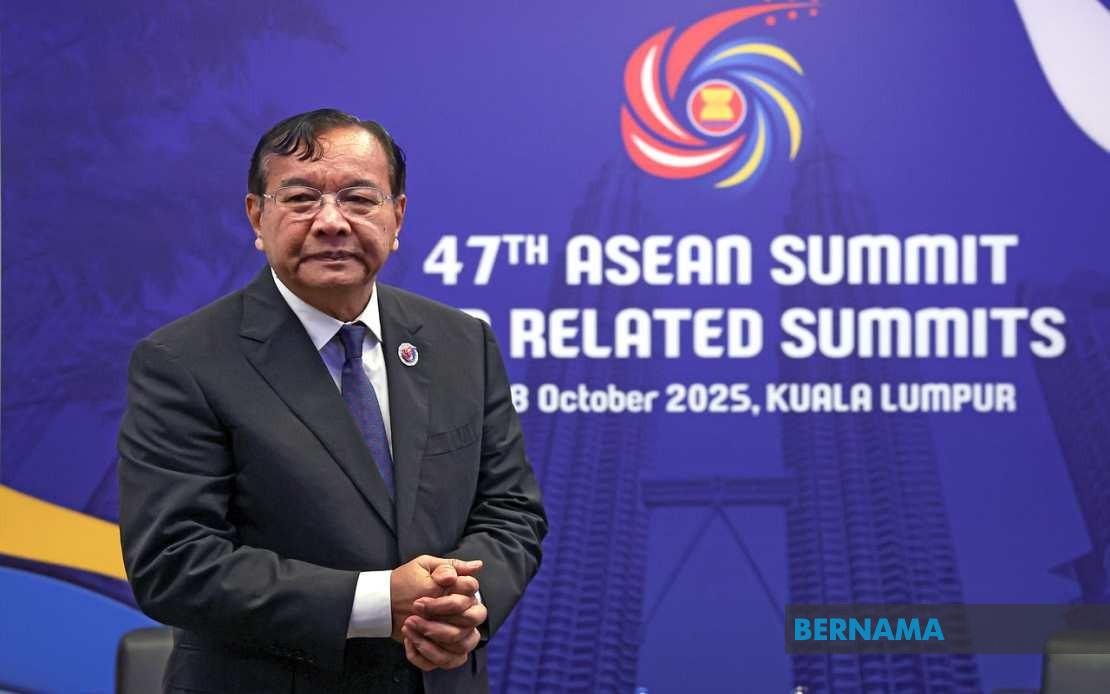
Cambodian Deputy Prime Minister and Foreign Minister Prak Sokhonn has arrived in Malaysia for an official two-day visit that marks a significant turning point in regional diplomacy. The centrepiece of his trip is the third Malaysia-Cambodia Joint Commission for Bilateral Cooperation (JCBC), a high-level mechanism that will reconvene on Tuesday in Kuala Lumpur after spending two decades in abeyance. The restoration of this commission signals renewed political will from both nations to deepen their partnership and coordinate on matters of shared concern across Southeast Asia.
The visit comes at a strategically important moment, as Malaysia and Cambodia prepare to commemorate seven decades of diplomatic relations in 2027. By reactivating their premier bilateral cooperation framework now, both countries are positioning themselves to build momentum ahead of that milestone anniversary. The timing also reflects broader regional efforts to strengthen intra-ASEAN ties at a moment when geopolitical dynamics across Asia continue to shift. Prak Sokhonn's presence underscores Cambodia's commitment to engaging constructively with its neighbours beyond the tensions that have occasionally characterised relationships within the bloc.
On his first day in the capital, Prak Sokhonn is scheduled to meet Prime Minister Datuk Seri Anwar Ibrahim, during which the two leaders will engage in a courtesy call that extends beyond mere formality. Such encounters between senior figures typically involve candid discussions on regional security, economic cooperation, and diplomatic coordination. For Malaysia, the meeting represents an opportunity to reaffirm its role as a stabilising force in Southeast Asia while also exploring how Cambodia might align with Malaysia's broader strategic objectives in the region.
The actual JCBC proceedings, overseen jointly by Prak Sokhonn and Malaysian Foreign Minister Datuk Seri Mohamad Hasan, will address the full spectrum of bilateral relations. The gap since the commission's last meeting in Siem Reap during 2006 is striking—two decades during which both nations experienced significant domestic changes, economic evolution, and shifting regional alignments. That the mechanism lay dormant for so long suggests previous disagreements or shifting priorities may have constrained cooperation, making its revival meaningful evidence of reconciliation and renewed focus.
The economic dimension of Malaysia-Cambodia relations has grown substantially and provides concrete foundation for institutional cooperation. Trade between the two countries surged dramatically in 2025, expanding 27.4 percent year-on-year to reach RM5 billion in combined value. Malaysian exports to Cambodia totalled RM4.13 billion, while the reverse flow of Cambodian goods into Malaysia reached RM880 million. These figures demonstrate that despite the commission's dormancy, commercial ties have flourished, suggesting significant untapped potential exists to deepen economic integration further through structured bilateral dialogue.
Malaysia's investment footprint in Cambodia is equally impressive, underscoring the country's confidence in Cambodia's economic prospects. As of 2024, Malaysian companies had channelled US$3.20 billion into Cambodia across 162 registered projects, positioning Malaysia as the kingdom's third-largest foreign investor. This substantial capital deployment spans diverse sectors and creates employment for thousands of Cambodian workers while generating significant tax revenues for Phnom Penh. The investment relationship reflects Malaysian business confidence in Cambodia's stability and growth trajectory, even as other investors have shown hesitation about the region.
The Agreed Minutes that will emerge from the JCBC meeting will serve as the formal blueprint for cooperation going forward. These documents typically establish working groups, identify priority sectors for collaboration, set timelines for initiative implementation, and create accountability mechanisms for tracking progress. By formalising outcomes in this manner, both countries create a structure that can survive changes in individual leadership while maintaining institutional continuity. The minutes will likely address trade facilitation, labour mobility, infrastructure connectivity, and possibly security cooperation matters.
From Malaysia's perspective, reinvigorating ties with Cambodia aligns with broader ASEAN cohesion objectives at a time when the bloc faces external pressures. Cambodia's geographic position as a buffer between Thailand and Vietnam, combined with its role as a regular ASEAN chair holder, makes it strategically significant. By strengthening bilateral mechanisms with Phnom Penh, Malaysia subtly reinforces its influence within the regional grouping while demonstrating commitment to multilateral cooperation principles that underpin ASEAN's founding philosophy.
The timing also carries implications for Malaysian businesses seeking to expand into Cambodia. Enhanced bilateral cooperation frameworks typically lead to reduced barriers, improved dispute resolution mechanisms, and better coordination on regulatory matters. Malaysian investors in sectors ranging from manufacturing to services will benefit from clearer institutional pathways for addressing concerns and negotiating favourable conditions with Cambodian authorities. The revival of the JCBC thus opens doors that have remained closed for twenty years.
Cambodia's perspective on restarting the commission reflects its desire to balance relationships across the region and demonstrate openness to engagement. For Phnom Penh, Malaysia represents not only a significant economic partner but also a voice within ASEAN whose diplomatic weight carries influence. By giving priority to bilateral mechanisms with Malaysia, Cambodia signals that it values pragmatic cooperation over ideological positioning, a message relevant to how it manages relationships with other major partners.
The visit also comes as Southeast Asian nations navigate increasingly complex great power competition between the United States and China. Malaysia and Cambodia, despite their different political orientations, share interest in maintaining strategic autonomy and preventing the region from becoming a theatre for external power struggles. Bilateral cooperation frameworks, by focusing on concrete economic and social benefits, help insulate relationships from geopolitical volatility that might otherwise threaten regional stability.
Looking ahead, the successful conclusion of this JCBC meeting should establish patterns for regular engagement. If the commission meets regularly—preferably annually or biannually—it will create consistent opportunities for senior officials to coordinate across all dimensions of the relationship. Such regular rhythm prevents the kind of two-decade gaps that previously marked Malaysia-Cambodia relations and ensures institutional memory and continuity in bilateral affairs.
The visit represents a watershed moment in Malaysia-Cambodia relations, transforming a dormant partnership into an active one grounded in institutional frameworks. Success here could set a model for how Malaysia engages with other ASEAN neighbours, demonstrating that patient diplomacy and structured cooperation yield tangible benefits for all parties involved.

