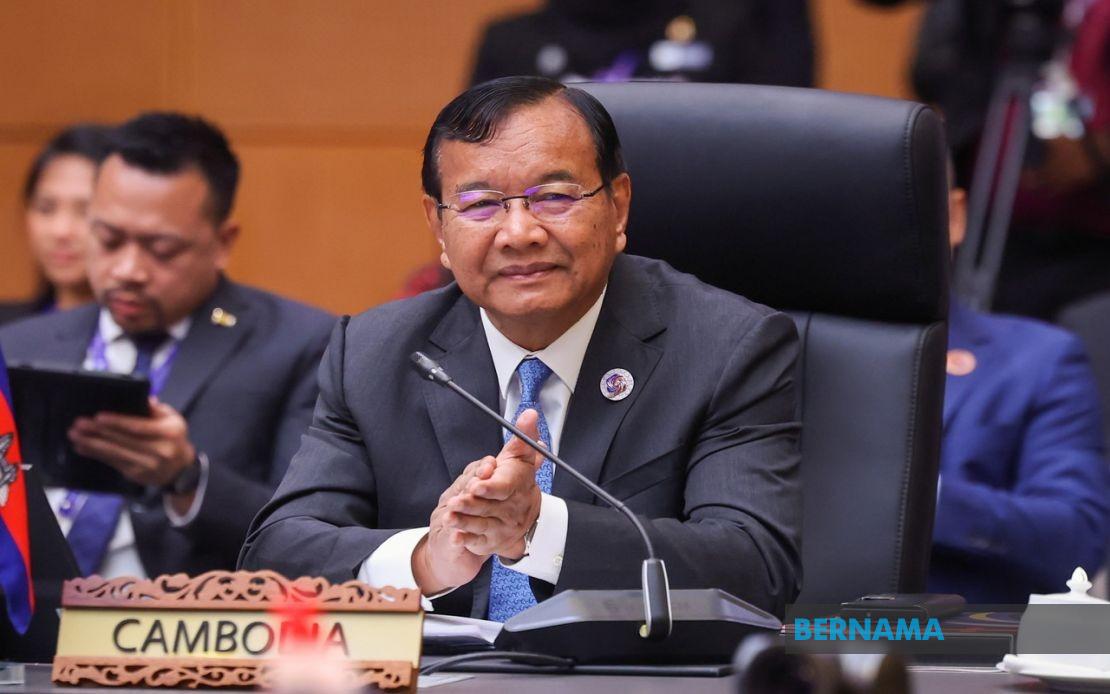
Deputy Prime Minister and Foreign Affairs Minister of Cambodia Prak Sokhonn touched down at Kuala Lumpur International Airport Terminal 1 on August 3 at 1.48 pm for a two-day official visit expected to reinvigorate bilateral relations between Phnom Penh and Kuala Lumpur. The visit underscores the strategic importance both nations place on their partnership at a time when Southeast Asia is navigating complex geopolitical and economic shifts.
Sokhonn's arrival was marked by a formal reception involving Cambodian Ambassador to Malaysia Ouk Chandara and Datuk Rozainor Ramli, Malaysia's chief ceremony officer. The diplomatic protocol surrounding his arrival signals the significance Kuala Lumpur accords to strengthening ties with one of its ASEAN neighbours, particularly as regional integration efforts accelerate under the ASEAN framework.
Immediate upon arrival, the Cambodian delegation will engage in high-level engagements with Malaysian leadership. Sokhonn is scheduled to pay a courtesy call on Prime Minister Datuk Seri Anwar Ibrahim, a customary diplomatic gesture that provides an opportunity to discuss broader strategic partnership initiatives and regional concerns. This bilateral engagement at the apex level typically sets the tone for substantive discussions at lower government tiers and provides political direction for ongoing cooperation efforts.
The centrepiece of the visit is the third meeting of the Cambodia-Malaysia Joint Commission for Bilateral Cooperation scheduled for tomorrow in Kuala Lumpur. This institutional mechanism represents the formal architecture through which both nations operationalise their bilateral relationship. The agenda encompasses a comprehensive review of implementation progress from the second JCBC meeting and an assessment of previously agreed bilateral accords, enabling both sides to evaluate successes and identify areas requiring renewed attention or modified approaches.
Following the JCBC proceedings, Sokhonn will hold separate bilateral discussions with Malaysia's Foreign Minister Datuk Seri Mohamad Hasan. These talks typically extend beyond items covered in the joint commission to encompass broader foreign policy coordination, regional security matters, and emerging transnational challenges. The bilateral format allows for more candid exchanges on sensitive issues and enables both foreign ministries to align their positions on regional and international developments.
Economic dynamism characterises the Malaysia-Cambodia relationship. During 2025, bilateral trade demonstrated robust performance, expanding 27.4 per cent year-on-year to reach RM5 billion, equivalent to USD1.17 billion. This growth trajectory reflects deepening commercial integration and suggests Malaysian exporters have successfully identified and captured market opportunities within Cambodia's growing economy. The expansion outpaces many regional trade relationships and indicates substantive business engagement beyond traditional sectors.
Malaysia's investment footprint in Cambodia underscores the confidence Malaysian enterprises place in Cambodia's business environment. As of 2024, accumulated Malaysian foreign direct investment in Cambodia totalled USD3.20 billion across 162 registered projects. This substantial commitment positions Malaysia as Cambodia's third-largest foreign investor, a distinction reflecting years of sustained commercial and industrial engagement. Malaysian firms operate across diverse sectors including manufacturing, infrastructure, and services, contributing to employment and technology transfer within Cambodia.
The economic dimension of this visit carries particular relevance for Malaysian stakeholders. Trade expansion and investment growth create employment in both nations and facilitate industrial integration within the broader ASEAN economic framework. For Malaysian manufacturers and service providers, Cambodia represents an expanding market and a production base offering competitive advantages, whilst Cambodian policymakers benefit from Malaysian capital, expertise, and business networks.
The timing of this visit coincides with broader regional economic integration efforts. ASEAN economies are increasingly pursuing bilateral and multilateral arrangements to enhance market access and investment flows. Malaysia-Cambodia cooperation, particularly through mechanisms like the JCBC, contributes to the regional bloc's cohesiveness and economic dynamism. As individual Southeast Asian nations navigate competition from larger regional powers and evolving global supply chains, strengthening bilateral economic ties becomes strategically imperative.
From a regional perspective, robust Malaysia-Cambodia relations demonstrate the resilience and depth of ASEAN partnerships. Despite diverse political systems, development levels, and strategic priorities, member states maintain institutional frameworks and diplomatic channels that sustain cooperation. This visit exemplifies that tradition whilst addressing contemporary bilateral interests. It also signals that neither nation views its ties exclusively through the prism of great power competition, instead focusing on pragmatic mutual benefit.
The visit's implications extend beyond bilateral economics. Enhanced Malaysia-Cambodia cooperation can contribute to regional stability, facilitate dispute resolution through established channels, and create interdependencies that discourage unilateral actions. In an era characterised by geopolitical tensions in Asia, such relationship-building exercises serve as stabilising forces. The investments Malaysian companies have made in Cambodia create constituencies within both societies favouring continued cooperation.
Looking forward, the third JCBC meeting provides an opportunity for both nations to recalibrate their partnership to address evolving challenges. Transnational issues including labour migration, environmental management, and cybersecurity increasingly require bilateral coordination. Trade and investment frameworks may require updating to reflect technological change and shifting global supply chains. The institutional platform provided by the joint commission enables systematic addressing of these emerging concerns.
For Malaysian policymakers, sustaining strong relations with Cambodia aligns with Malaysia's broader regional strategy of deepening ASEAN solidarity whilst protecting national interests. Cambodia's geographic position, natural resources, and growing economy make it a valuable partner. The reciprocal nature of the relationship—mutually beneficial trade and investment—provides a durable foundation for continued cooperation extending beyond the tenure of particular leaders or administrations. This visit represents another chapter in a partnership that, despite occasional tensions, remains fundamentally robust and forward-looking.

