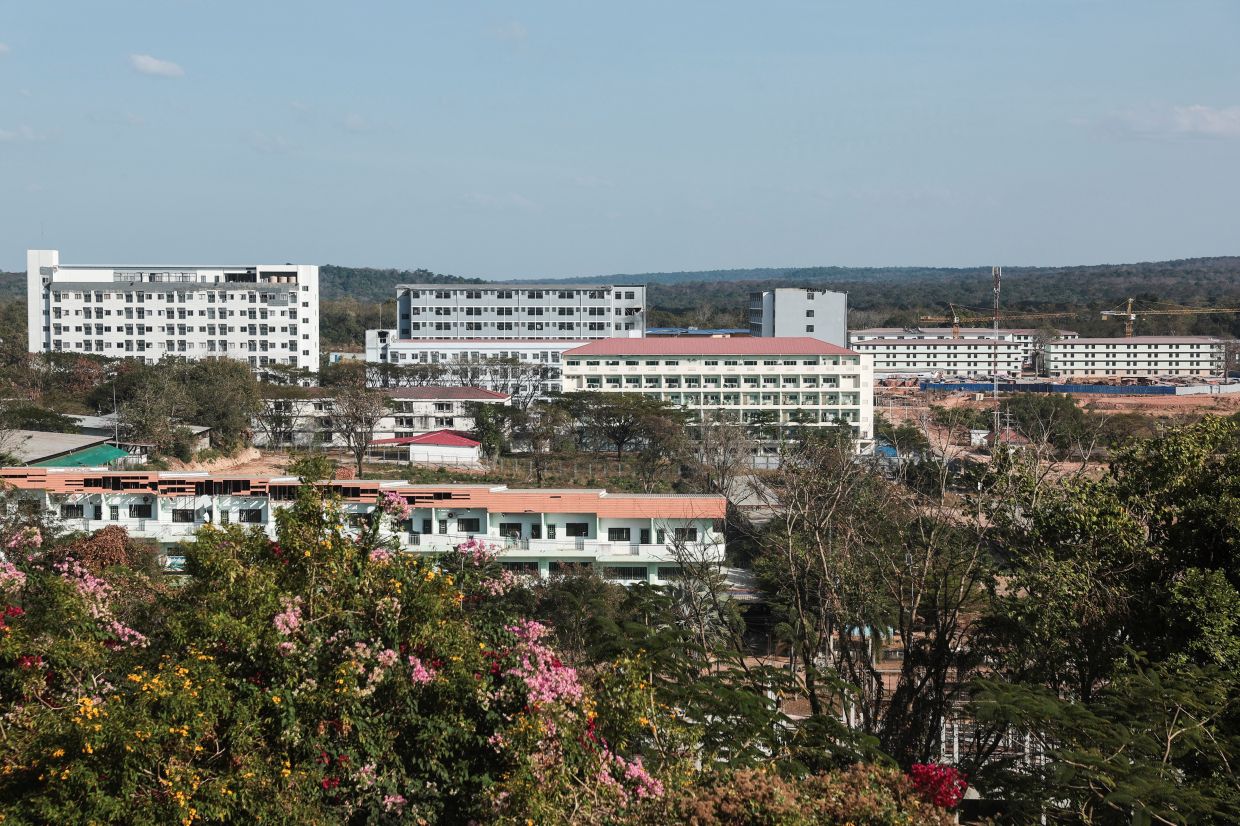
A sprawling investigation by Reuters has uncovered extensive links between a casino controlled by influential Cambodian businessman Lim Heng and an industrial-scale fraud and human trafficking operation, shedding light on how transnational criminal syndicates exploit Southeast Asia's porous borders and weak enforcement. The compound, known as Royal Hill, sits mere metres from the Thai frontier in O'Smach and served as both a gambling venue and landlord to criminal enterprises that victimised people worldwide through elaborate impersonation scams and forced labour schemes.
Documents obtained by Reuters, including a lease agreement dated March 2024, show that Royal Hill rented out multiple structures within its premises at substantially inflated rates to operators running what amounted to scam factories. The three buildings in question commanded a monthly rental of US$200,000 for a two-year period—a figure dramatically out of line with comparable commercial property in Cambodia's capital Phnom Penh, where similar-sized mixed-use buildings in upscale neighbourhoods were listed at around US$25,000 monthly. This pricing disparity underscores the premium criminals were willing to pay for proximity to a casino operation and its attendant money-laundering infrastructure.
Inside these rented structures, investigators discovered rooms painstakingly designed to mimic police stations and banking offices from numerous countries across the globe. These elaborate backdrops were essential theatre for scammers who impersonated law enforcement and financial institution representatives, manipulating victims into transferring funds or revealing personal information. The operation appears to have been orchestrated primarily by Chinese-affiliated criminal networks, according to interviews conducted by Reuters with Thai military personnel and former workers at the facility. This criminality operated virtually in the shadow of a casino whose neoclassical columns and gold-trimmed spires dominated the border landscape.
The geopolitical context of Southeast Asia's scam epidemic cannot be overlooked by Malaysian observers. The region has become notorious as a manufacturing hub for fraud, where predominantly Chinese-led criminal syndicates maintain sprawling detention centres in which trafficking victims—many recruited from vulnerable populations across Asia—are coerced into perpetrating romance scams and police-impersonation fraud against targets primarily in developed nations. The United States government estimates that American citizens alone lost approximately US$10 billion to fraudsters operating from Southeast Asian bases during 2024 alone. This criminal infrastructure has become deeply embedded within the regional economy, particularly in border zones where jurisdiction remains contested and enforcement sporadic.
What distinguishes the Royal Hill case is the apparent accommodation of such operations by a businessman with deep political connections. Lim Heng is no ordinary property owner; he holds a royal title equivalent to ducal rank and has been photographed at social gatherings alongside senior military generals. Business records indicate he donated US$20,000 to Cambodia's military in the previous year, reflecting a relationship that transcends mere commerce. Academic observers specialising in Cambodian politics note that casino ownership in Cambodia typically concentrates among individuals with explicit political connections, suggesting that such ventures often enjoy protection from the highest levels of government. The intersection of gambling, organised crime, and political patronage creates an environment where accountability becomes virtually impossible.
Cambodia's government has publicly committed to eliminating scam centres and has taken some enforcement actions, including the extradition of alleged scamming kingpin Chen Zhi to China and the passage of legislation targeting online fraud perpetrators. However, these efforts appear performative when set against official descriptions of Royal Hill as merely a hotel facility, even as images of the fake police stations and banking offices found within the compound circulated globally via international media coverage. This rhetorical sleight of hand reveals the tension between Cambodia's international pledges to combat trafficking and fraud, and the domestic political realities that protect connected businesspeople from meaningful prosecution.
Legal experts consulted by Reuters note that landlords can face criminal charges if investigations establish that they possessed knowledge of illegal activities occurring on their property and permitted such activities to continue. The Cambodian Human Rights Action Coalition and business law specialists in Phnom Penh have outlined the potential liability framework. However, successfully prosecuting landlord liability requires not merely suspicion but substantiated evidence of knowledge and acquiescence—a high evidentiary bar that becomes formidable when the landlord enjoys political protection. In September 2024, Lim Heng Group filed legal complaints against Cambodian media outlets that had reported on foreign nationals being confined within the Royal Hill compound, a strategic move that may have served to suppress further investigative reporting rather than address the underlying criminal activity.
The relationship between casinos and fraud operations has become structural within Southeast Asian organised crime. International experts from the Global Initiative Against Transnational Organized Crime observe that casino operators frequently utilise their gaming infrastructure to convert illicit proceeds into ostensibly legitimate funds, enabling money laundering on an industrial scale. Many Chinese-affiliated scam syndicates maintain direct operational control over casinos in the region, creating vertically integrated criminal enterprises that combine fraud generation with financial laundering and recreational gambling. This integration makes disaggregating the criminal elements from the commercial ones nearly impossible without determined law enforcement intervention.
Among the most troubling revelations emerging from the Reuters investigation is the apparent knowledge that Lim Heng Group possessed regarding possible trafficking activities at Royal Hill. By September 2024, the company had received notice of such allegations through the media coverage it subsequently sought to suppress through legal action. Under any reasonable interpretation of liability standards, this notification should have triggered a duty to investigate and remediate. Instead, the company's response was to pursue legal intimidation of the journalists who had exposed the criminality. The Phnom Penh court complaints filed by Lim Heng Group, dated September 16 and citing alleged incitement to discrimination, conspicuously failed to specify which factual claims in the reporting the company objected to—a telling omission that suggests the complaints were intended to silence rather than contest inaccurate reporting.
Thailand's military, which currently occupies the Royal Hill compound following a brief border conflict in December, has provided researchers with access to evidence of the scam operations. Thai security agency reports prepared in 2024 explicitly identified Lim Heng as the property owner, and Thai military officials confirmed that Chinese criminal syndicates perpetrated large-scale fraud at the site. However, the precise mechanisms by which Thai authorities will coordinate with Cambodian counterparts to prosecute Lim Heng or other senior figures remain opaque. Chhay Sinarith, a senior Cambodian minister responsible for combating online fraud, responded to Reuters by expressing commitment to international cooperation and disclosed that Cambodia was investigating alleged fraud operations in the Royal Hill vicinity—though notably, he suggested that Thai forces should return custody of seized locations to facilitate Cambodian investigations, potentially signalling reluctance to allow international scrutiny of domestic political figures.
For Malaysian readers and policymakers, the Royal Hill case exemplifies a critical vulnerability within Southeast Asia's broader criminal enforcement architecture. The investigation demonstrates that major transnational fraud and trafficking operations can persist openly in sovereign states when the operators enjoy political protection and when national governments prioritise diplomatic relationships with connected businesspeople over victim protection. Malaysia's own geographic proximity to such border zones, combined with documented instances of trafficking through Malaysian territory, suggests that similar vulnerabilities may exist domestically. The Royal Hill revelations underscore the necessity for strengthened mechanisms of transnational cooperation that can bypass or override domestic political impediments to prosecution.
The broader implications extend beyond individual accountability. The endemic nature of casino-based fraud in Cambodia suggests systemic corruption within regulatory and enforcement institutions, a pattern that threatens the entire region's stability and reputation. When major international fraudsters can operate from fixed locations with apparent state tolerance, the message transmitted to criminal networks globally is unambiguous: Southeast Asia remains a jurisdiction of choice for organised crime. Only through decisive action against well-connected operators like Lim Heng can governments credibly demonstrate commitment to dismantling these networks. Until then, victims worldwide will continue funding the lifestyles of Cambodian tycoons whose political protection renders them untouchable.

