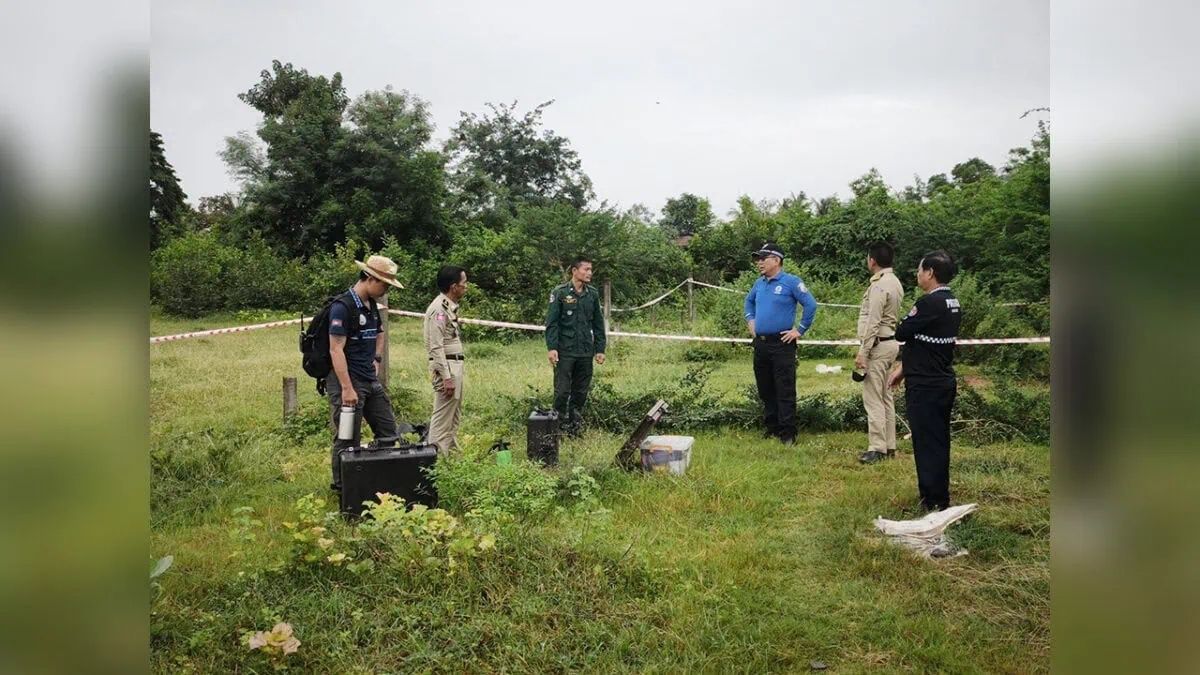
Cambodia's law enforcement apparatus has mobilised a coordinated response to two tragic deaths in Banteay Meanchey province, with the National Police and Child Protection Unit (CPU) launching investigations after the discovery of two young victims within hours of each other on July 28. The simultaneous emergence of these cases has sparked heightened vigilance among authorities, though investigators have determined that the incidents appear unrelated to one another. Each death is being pursued as a separate homicide investigation, drawing substantial resources from multiple government agencies operating at provincial and national levels.
The first discovery occurred in Mongkol Borei district early on July 28, when a 15-month-old child's body was recovered from a pond at approximately 8 in the morning. Hours later in the same province, authorities located the remains of a five-year-old child in Teuk Thla commune. This second victim had been the subject of a missing persons alert issued three days prior, on July 25, intensifying the circumstances surrounding her death. The rapid succession of discoveries raised immediate concerns about child safety across the province and prompted swift action from investigative teams.
The response reflects Cambodia's emerging institutional architecture for handling crimes against children. The CPU's homicide investigation team mobilised within the immediate aftermath, working alongside provincial police forces and the Minister of Interior's Department of Technical and Scientific Police. This multi-agency approach represents a more sophisticated investigative framework than existed in Cambodia just a decade ago, signalling evolving institutional capacity to address serious crimes. Forensic examination teams descended on both crime scenes to gather evidence, with preliminary investigations swiftly concluding that homicide charges would be appropriate in both instances.
James McCabe, the CPU director, articulated the commitment of partner organisations to conducting rigorous investigations. He pledged that authorities would deploy comprehensive investigative resources and pursue the cases to their fullest extent, with particular emphasis on ensuring that those responsible face prosecution. McCabe's statement underscored a public reassurance component, signalling to families and the broader public that child deaths would not be treated as peripheral matters but would receive investigative priority. This messaging carries significance in a regional context where institutional capacity for serious crime investigation has historically varied considerably across Southeast Asia.
The independent nature of the two investigations required authorities to distinguish between potentially different perpetrators, motives, and circumstances. Rather than treating them as part of a potential pattern or serial incident, investigators determined early that each case possessed distinct characteristics warranting separate evidentiary and prosecutorial approaches. This analytical separation, while potentially limiting to investigative efficiency if patterns did exist, reflects proper procedure and prevents premature theories from contaminating evidence evaluation.
Child protection and safety have emerged as increasingly prominent policy priorities across Southeast Asia in recent years, driven by both regional initiatives and international pressure. Cambodia's CPU represents one institutional manifestation of this evolving focus, though questions persist regarding resourcing and investigative capacity in provincial settings distant from Phnom Penh. The Banteay Meanchey cases test these systems in real terms, with outcomes potentially influencing perceptions of institutional effectiveness. For Malaysian readers with regional engagement, such developments illustrate the varied institutional maturity of neighbouring countries and the sometimes uneven implementation of child protection frameworks across the region.
The deliberate withholding of operational details from public disclosure represents standard investigative protocol, preventing contamination of evidence and protecting judicial processes. Authorities indicated that no further information would be released during the active investigation phase, a constraint that often frustrates public demand for transparency but serves legitimate investigative purposes. This approach recognises the tension between accountability and operational effectiveness, prioritising the latter to protect evidentiary integrity.
The extension of condolences to the families reflects formal recognition of the profound loss while simultaneously reinforcing institutional commitment to justice. Such messaging carries particular weight in Cambodian cultural contexts where family ties remain foundational to social structure. By directly addressing bereaved families through official statements, authorities acknowledge both the human tragedy and their obligation to pursue accountability, articulating a justice framework centred on victim recognition rather than purely procedural outcomes.
These investigations arrive within a broader regional context of evolving child protection mechanisms. Cambodia has faced persistent challenges regarding child welfare, trafficking, and exploitation, necessitating sophisticated institutional responses. The CPU's mobilisation in Banteay Meanchey represents the organisation attempting to operationalise its mandate at provincial scale, demonstrating how international partnerships and institutional development initiatives translate into practical investigative capacity. The outcome of these cases may establish precedents for how similar incidents are subsequently investigated and prosecuted.
For Southeast Asian observers, the Banteay Meanchey investigations underscore the ongoing professionalisation of law enforcement approaches to serious crimes. Cambodia's engagement with international partners, reflected in organisational structures like the CPU, indicates receptiveness to external expertise and standards. Yet genuine effectiveness requires sustained institutional commitment, adequate resourcing, and integration with local police capabilities—challenges that remain inconsistently addressed across Cambodia's provinces. These two cases will ultimately serve as markers of whether capacity building initiatives translate into improved investigative outcomes and accountability.

