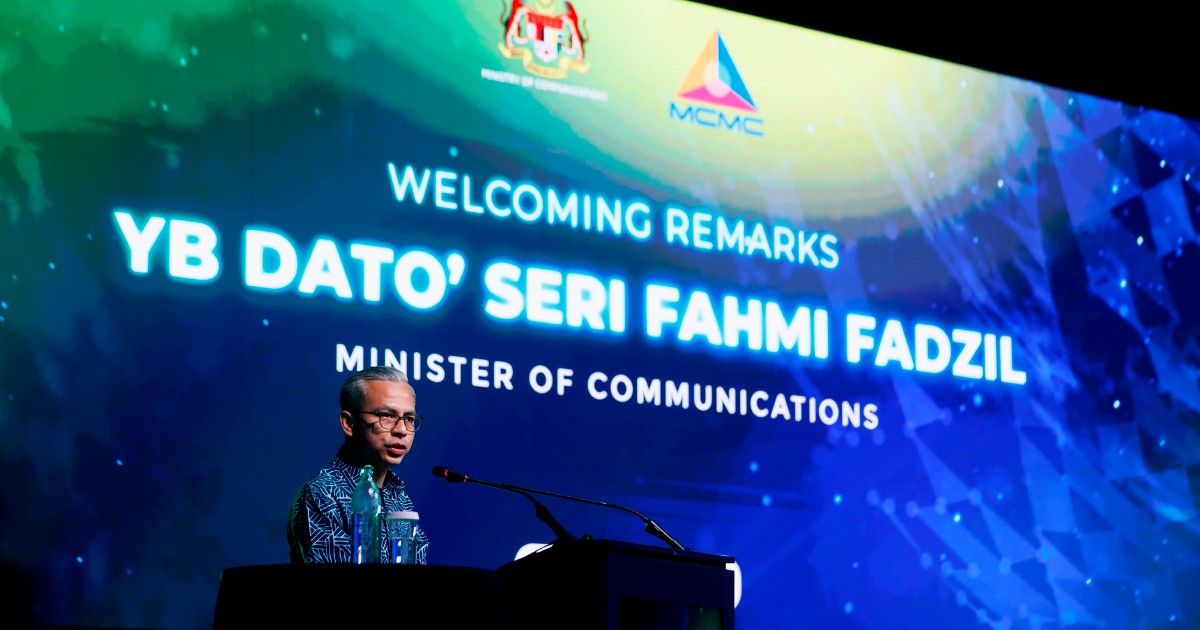
Communications Minister Datuk Seri Fahmi Fadzil has moved swiftly to dampen concerns about potential fractures within Malaysia's Cabinet, reiterating the government's unity in the face of recent public sparring over ministerial conduct. Speaking in Kuala Pilah, the minister brushed aside mounting speculation that internal divisions had emerged following exchanges between senior figures regarding discipline standards during the Negri Sembilan state election campaign.
The timing of Fahmi's reassurance carries significance in Malaysia's complex political landscape, where perceptions of Cabinet harmony directly influence investor confidence and public support for the government. Any suggestion of serious internal strife can rapidly destabilize political consensus and embolden opposition figures seeking to exploit perceived weaknesses. By addressing the matter personally, the Communications Minister sought to project an image of a governing coalition functioning effectively despite occasional disagreements on specific policy matters.
Fahmi's statement appears designed to reframe what some observers had characterized as pointed criticism between ministers as nothing more than routine governance discussions. He emphasized that senior officials regularly engage in frank exchanges about departmental priorities and procedural matters, and that such interactions, whilst occasionally visible to the public, do not indicate deeper rifts within government structures. The minister's casual reference to ministers meeting over lunch suggested these are ordinary professional interactions rather than crisis consultations.
The Negri Sembilan election campaign had evidently triggered questions about how Cabinet members conduct themselves during electoral periods, with some ministers apparently voicing concern about their colleagues' public statements and campaign activities. Such discipline questions periodically surface in Malaysian politics as the government balances collective responsibility with individual ministerial autonomy. Different perspectives on how ministers should present themselves during elections can create temporary friction, particularly when certain officials believe their colleagues have overstepped appropriate boundaries.
Maintaining Cabinet cohesion remains crucial for any Malaysian government, given the multi-party coalition structures that typically characterize the country's ruling arrangements. The Pakatan Harapan administration depends on cooperation across several distinct political parties with sometimes competing interests and agendas. When Cabinet ministers visibly disagree on matters of principle or procedure, questions inevitably arise about whether the broader coalition remains functional. Fahmi's intervention effectively sought to prevent minor disagreements from being magnified into perceptions of systemic dysfunction.
The Communications Minister's approach reflects a broader strategic imperative within Malaysian governance: acknowledging differences whilst simultaneously affirming unity. Rather than denying that exchanges had occurred, Fahmi normalized them as expected elements of Cabinet operations. This framing acknowledges the reality of political disagreement whilst removing the inflammatory implications that some media coverage and speculation had attached to these exchanges.
For Southeast Asian observers, Malaysian Cabinet dynamics carry relevance beyond internal politics. The region's largest economies depend on governments capable of implementing coherent policy frameworks and maintaining political stability over extended periods. When ruling coalitions appear fragile or divided, foreign investors and trade partners become cautious about long-term commitments. Fahmi's reassurance served partly to signal to regional and international audiences that Malaysia's government retains the structural integrity necessary for sustained economic governance.
The Negri Sembilan election itself illustrated broader tensions that periodically emerge within Malaysian coalitions. State-level contests often expose divergences between coalition partners regarding campaign messaging, resource allocation, and acceptable conduct boundaries. What happens in Negri Sembilan reverberates through federal structures, particularly when tensions become publicly visible. The episode had apparently caused sufficient concern that the Communications Minister felt compelled to make explicit reassurances about Cabinet functionality.
Looking forward, Fahmi's intervention may prove effective in dampening immediate speculation, but underlying questions about ministerial discipline standards during elections likely remain unresolved. Different coalition partners may continue harbouring distinct views about appropriate conduct, even as their senior figures project unity at press conferences. These tensions, if managed carefully, need not threaten government stability. However, they require ongoing attention and periodic recalibration as new electoral cycles approach.
The broader context involves Malaysia's evolution as a multi-party democracy where multiple competing interests must coexist within governing structures. The Pakatan Harapan coalition represents an attempt to construct such arrangements, but doing so successfully demands constant negotiation and compromise among partners with genuine policy differences. Fahmi's reassurance reflected this reality: cabinets in modern Malaysia must simultaneously acknowledge internal diversity and project external unity for effective governance to proceed.

