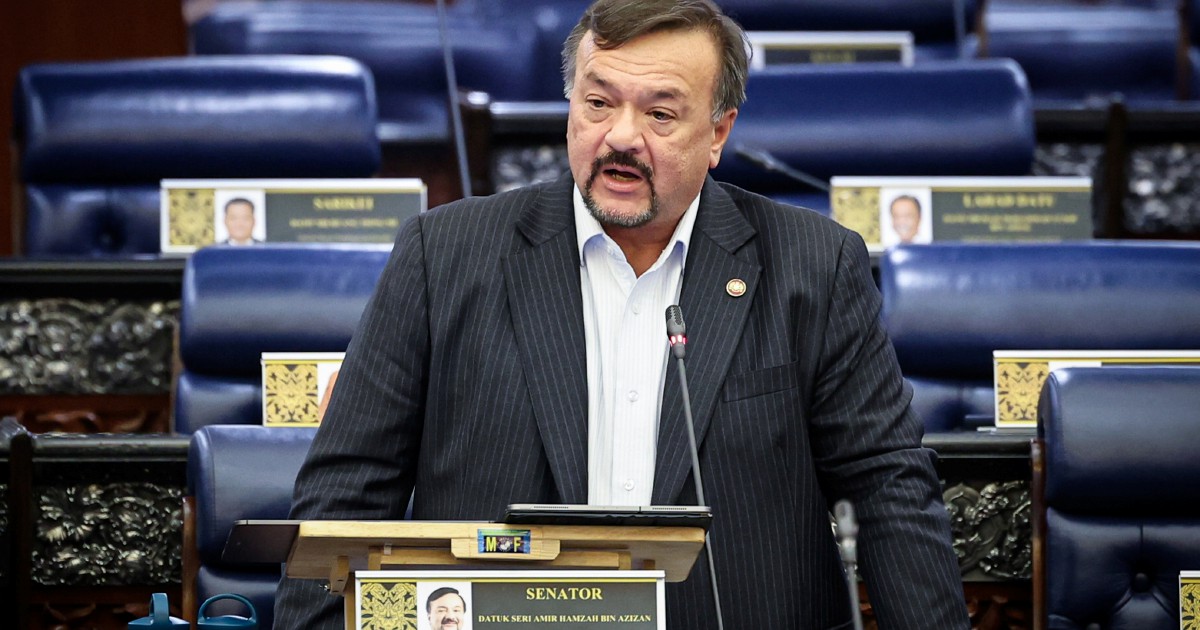
The Malaysian government is weighing plans to establish a multi-agency task force designed to coordinate investigations into suspected impropriety at Tabung Haji, according to Finance Minister II Datuk Seri Amir Hamzah Azizan. The proposed initiative reflects growing concern over the conduct of the nation's largest Islamic financial institution, which manages savings and investment funds for Muslim pilgrims undertaking the hajj to Mecca.
Tabung Haji has faced mounting scrutiny over recent years as allegations of financial irregularities and management lapses have accumulated. The institution, which operates under federal oversight and holds the savings of hundreds of thousands of Malaysian Muslims, has become a focal point of public and political attention. The potential establishment of a coordinated task force signals the severity with which authorities now regard the situation and the complexity of unravelling the various strands of alleged misconduct.
A task force bringing together multiple government agencies would represent a departure from investigations conducted by individual authorities. Such coordination typically involves representatives from the Malaysian Anti-Corruption Commission (MACC), the Finance Ministry, the police, and potentially bank regulators and auditing bodies. The approach is commonly deployed for large-scale institutional probes where financial complexity, systemic risk, and institutional credibility are all at stake.
The Tabung Haji scandal carries particular resonance in Malaysia's political and social landscape. As a Sharia-compliant institution managing billions of ringgit in pilgrim savings, any substantive wrongdoing carries implications beyond corporate governance—it touches questions of Islamic financial integrity, public trust in state institutions, and the security of everyday Malaysians' retirement and religious aspirations. A comprehensive investigation could therefore attract intense political attention and test the government's commitment to accountability.
Establishing such a task force would likely extend the investigation timeline considerably, as multiple agencies coordinate methodology, share intelligence, and pursue parallel lines of inquiry. The coordination process itself—determining jurisdiction, preventing redundancy, and ensuring evidence meets multiple investigative standards—can be time-consuming. However, it also potentially produces more robust findings by subjecting allegations to scrutiny from investigators with different expertise and institutional mandates.
The decision to consider rather than immediately implement a task force suggests the proposal is still in preliminary discussion stages. Amir Hamzah's public acknowledgement of the idea indicates the Finance Ministry has elevated the matter through government deliberations, but no formal announcement of establishment appears imminent. Such phrasing typically precedes cabinet consideration or coordination with other relevant ministries.
For Malaysian savers and their families, the investigation's scope and rigour carry direct consequences. Tabung Haji holds savings for pilgrims at various stages of their hajj journey—from first-time account holders building savings to those approaching their religious obligation. The security and integrity of these funds, accumulated often through years of modest contributions, depends on institutional trustworthiness. Any investigation that clarifies the scale of problems and identifies responsible parties serves both accountability and restoration of confidence.
The broader context of Tabung Haji's difficulties reflects structural challenges within Malaysia's Islamic finance sector and government oversight mechanisms. Rapid expansion, overseas investments, complex financial instruments, and bureaucratic governance structures have sometimes outpaced the regulatory frameworks designed to contain risk. The potential task force would therefore carry significance beyond the immediate institution, possibly prompting broader examination of how Malaysia supervises large Islamic financial entities.
International dimensions may also feature in a comprehensive investigation. Tabung Haji's investments have extended across multiple continents, and any misconduct investigation of sufficient scope would likely need to trace transaction trails through multiple jurisdictions. This adds investigative complexity but also heightens the importance of coordinated approach, as gathering evidence from overseas and establishing causation across borders requires sustained inter-agency cooperation and often international legal channels.
The political arithmetic surrounding such an investigation also merits consideration. High-profile probes of major institutions inevitably attract scrutiny of whether investigations are sufficiently impartial and whether results are perceived as credible across Malaysia's diverse political spectrum. The multi-agency approach potentially insulates findings from accusations that any single agency or political faction steered the investigation, though it equally distributes responsibility if results later prove inadequate or contested.
For Malaysian business and civil society, the decision sends signals about government commitment to investigating institutional misconduct at senior levels. If a task force does materialize and conducts a thorough examination, it could reinforce expectations that accountability reaches beyond ordinary corporate entities to major state-linked institutions. Conversely, if proposals stall without concrete action, it may feed perceptions that institutional favouritism protects entities with political connections.
The timeline for cabinet consideration and any subsequent formal announcement remains unclear. Finance Ministry deliberations on this scale typically take weeks or months, involving consultation with relevant agencies, legal review, and resource allocation discussions. Malaysian observers will likely scrutinize government statements for clearer indication of which specific allegations the task force would investigate and what investigative powers and timeline it would command.

