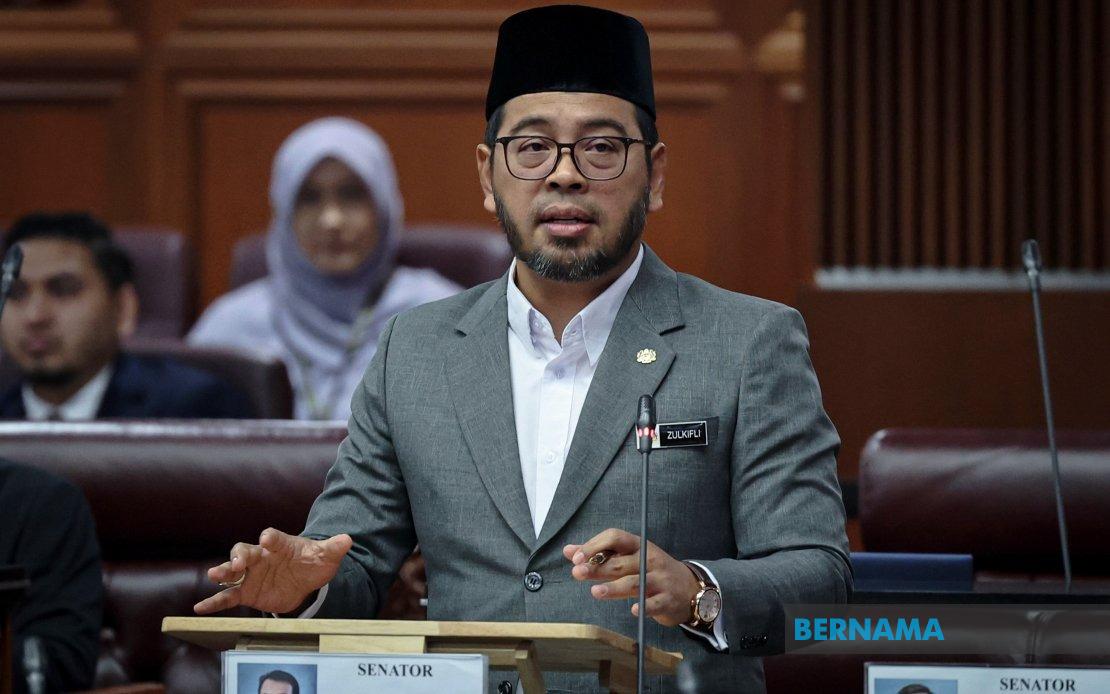
The Cabinet is expected to examine a proposal for disclosing the Royal Commission of Inquiry's final report concerning Tabung Haji before reaching a determination on the matter, according to Minister in the Prime Minister's Department (Religious Affairs) Dr Zulkifli Hasan. The minister's remarks come as public discourse has intensified around allegations that Tabung Haji's valuable strategic holdings were disposed of by a former Treasury secretary-general, a narrative that has generated considerable confusion and concern among stakeholders.
Zulkifli moved swiftly to refute the narrative surrounding the alleged sale of assets, characterising such claims as fundamentally inaccurate. Rather than a disposal of holdings, he explained, what transpired was an intervention designed to stabilise a financial organisation serving the Muslim community that had fallen into distress due to substantial fund misappropriation occurring prior to 2018. This distinction between a rescue operation and an asset liquidation carries significant implications for understanding the government's handling of the institution's crisis and for restoring public confidence in the decision-making process.
The transfer of underperforming and problematic assets from Tabung Haji to Urusharta Jamaah Sdn Bhd, a government-owned special purpose vehicle, represented a deliberate Cabinet decision made in 2018, Zulkifli clarified. This strategic maneuver was undertaken in response to findings revealed by both the Auditor-General and Bank Negara Malaysia, which exposed the depth of Tabung Haji's financial deterioration. By mid-2018, the institution's asset-liability deficit had swollen to RM10.9 billion, a troubling figure that demanded immediate intervention.
The severity of the crisis extended beyond accounting deficits. Depositors, sensing vulnerability in the institution, withdrew approximately RM6 billion within a compressed timeframe, precipitating a genuine confidence crisis. Simultaneously, efforts to secure emergency financing from international sources collapsed, leaving the government with limited options. The financial mathematics of inaction were stark: had Tabung Haji been allowed to fail, the government would have faced potential liabilities totalling RM74.5 billion, given that all deposits within the institution carried full government guarantees. This guarantee created a fiscal sword of Damocles that made intervention not merely prudent but fiscally essential.
The rescue operation, viewed through the lens of subsequent performance, appears to have achieved its primary objectives. Deposit levels, which had languished at RM69.4 billion in 2019 as the crisis unfolded, have recovered substantially to exceed RM95.1 billion as of mid-2025. This recovery signals renewed depositor confidence and suggests that the intervention strategy, whatever its controversial elements, succeeded in preventing systemic collapse. For Malaysian Muslims who depend on Tabung Haji for hajj financing and savings services, this stabilisation holds considerable personal significance.
The financial indicators tell a story of restoration. The profit distribution rate, a crucial metric for depositors, has climbed from 1.25 per cent in 2018 to 3.5 per cent projected for 2025, reaching its highest level in eight years. Simultaneously, the pilgrimage costs for Malaysian Muslims have remained frozen at their 2024 levels through 2026, an achievement rendered remarkable by the persistent inflationary pressures affecting global travel and services. This pricing stability provides tangible relief to Muslim families planning their religious obligations during a period of rising costs across most economic sectors.
The proposal to publish the Royal Commission report represents a transparency initiative that reflects evolving standards for government accountability. In Malaysia's context, where public trust in institutions has fluctuated, disclosure of investigative findings can either reinforce confidence or fuel further speculation depending on the report's contents and accompanying explanation. The Cabinet's deliberation signals recognition that the Tabung Haji episode requires greater public understanding, particularly given the scale of government intervention and the large population directly affected by the institution's operations.
Publishing the report could serve multiple purposes within Malaysia's governance landscape. It would provide citizens with documented evidence regarding decision-making processes during the crisis, potentially closing informational gaps that permit unfounded allegations to circulate. For policymakers elsewhere in Southeast Asia monitoring Malaysia's institutional resilience, such transparency demonstrates sophisticated crisis management and commitment to accountability standards. However, selective or inadequate explanation of the report could equally prompt renewed scrutiny, making the manner of disclosure as consequential as the disclosure itself.
The timing and framing of any public release will prove significant for several constituencies. Muslim depositors need assurance that their funds were protected through sound judgment rather than circumstantial decisions. The broader Malaysian public deserves understanding of how government resources were deployed during a critical moment. International observers assessing Malaysia's financial stability and institutional governance will interpret the decision as indicative of the nation's commitment to transparency and rules-based administration. Opposition voices and civil society watchers will inevitably scrutinise both the report's contents and the government's response to its findings.
Moving forward, the Cabinet's consideration of disclosure demonstrates responsiveness to public concern, though the substance of what gets released and how it gets contextualised will determine whether transparency actually builds confidence or merely shifts the nature of debate. The core facts—that intervention prevented catastrophic failure, that deposits have recovered, and that service quality has improved—provide a foundation for defending the government's role. Yet the inquiry report itself presumably contains details about conduct during the crisis that may invite questions or criticism regardless of ultimate outcomes. For Tabung Haji itself, institutional recovery appears genuine, but the question of historical accountability remains unresolved pending the Cabinet's decision on disclosure.

