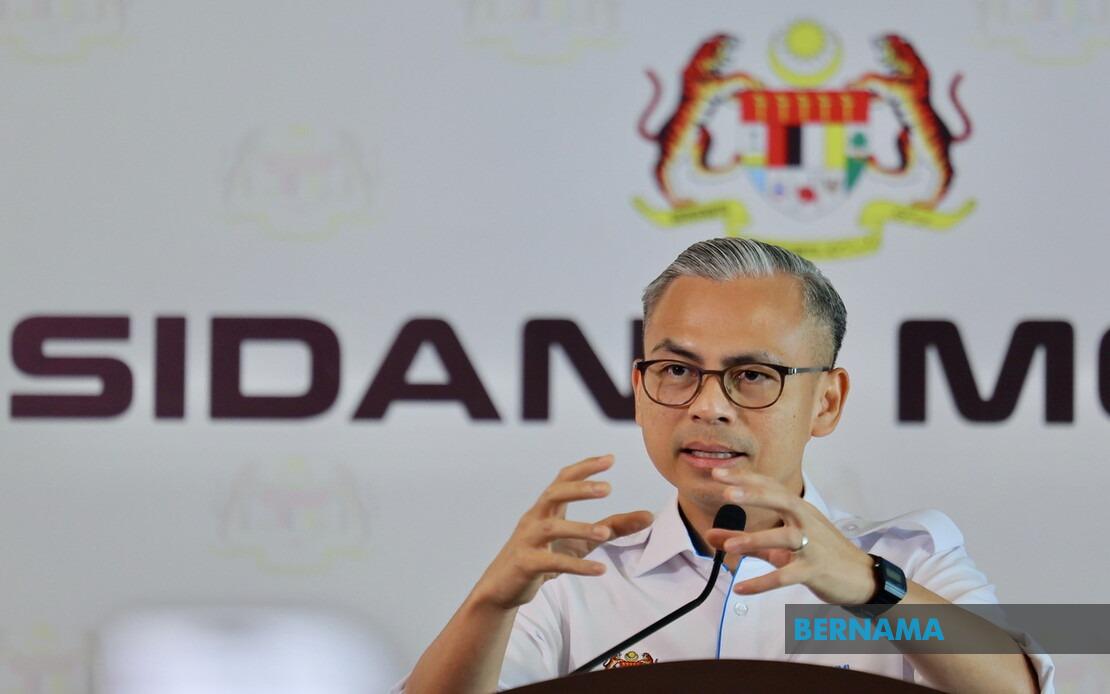
The MADANI government has scheduled a high-level Cabinet Committee meeting for next week to tackle mounting concerns surrounding foreign workers across various industries, with Deputy Prime Minister Datuk Seri Dr Ahmad Zahid Hamidi confirmed as chair. Communications Minister Datuk Fahmi Fadzil revealed the decision during a weekly press briefing in Putrajaya on June 26, emphasising that the government has prioritised the issue following deliberations at a full Cabinet meeting chaired by Prime Minister Datuk Seri Anwar Ibrahim.
The convening of this dedicated committee represents a significant escalation in the government's response to longstanding labour challenges that have intensified across Malaysia's economy. Rather than relying on routine departmental coordination, the assignment to the Deputy Prime Minister underscores the administration's view that foreign worker management requires high-level political attention and cross-sector policy synchronisation. The inclusion of the food and beverage sector—a major employer of migrant labour—signals particular concern about operational disruptions in this essential industry segment.
Fahmi articulated that the committee's mandate extends beyond addressing immediate labour shortages to developing comprehensive solutions that balance sectoral needs with broader governance considerations. By framing the meeting as enabling "managed and resolved" outcomes, the government signalled its intent to move beyond crisis management toward structured policy frameworks. The deliberate use of language emphasising comprehensiveness suggests recognition that ad-hoc responses to foreign worker issues have proven inadequate, necessitating a whole-of-government strategic approach.
Multiple Malaysian sectors face genuine labour constraints that have become more acute in the post-pandemic period. The food and beverage industry, in particular, has struggled with staffing as domestic workers gravitate toward positions offering better conditions or career progression. Foreign workers fill critical gaps in kitchen operations, food preparation, and hospitality roles, yet their management involves intricate compliance, wage, and social integration considerations that individual employers struggle to navigate alone. The Cabinet's recognition of these pressures reflects feedback from industry associations and business leaders who have flagged the urgency of resolving bureaucratic bottlenecks.
The timing of the announcement carries implications for Malaysia's broader labour market trajectory. As the nation pursues higher-value manufacturing and service sector expansion, competition for skilled and semi-skilled workers intensifies. Foreign labour policies directly influence production costs, service delivery capabilities, and ultimately export competitiveness. The F&B sector's particular vulnerability stems from its labour-intensive nature and limited automation potential, making reliable access to migrant workers essential for business sustainability and employment for Malaysian supervisory and management personnel.
Policymakers face a complex balancing act that extends beyond simple labour supply and demand calculations. Allowing unrestricted foreign worker recruitment risks displacing domestic job opportunities and depressing wages for Malaysian workers in lower-income brackets. Conversely, overly restrictive policies that artificially constrain labour availability may force businesses to relocate operations to more accommodating jurisdictions, ultimately reducing employment and tax revenue in Malaysia. The Cabinet Committee's mandate likely encompasses evaluating these competing pressures through an evidence-based lens.
Regional considerations also feature prominently in foreign worker policy formation. Malaysia competes with Thailand, Vietnam, and Indonesia for migrant labour from source countries including Bangladesh, Nepal, and Myanmar. Recruitment practices and working conditions significantly influence a nation's ability to attract and retain capable workers. Should Malaysia develop unduly restrictive or exploitative policies, source countries may redirect their diaspora toward competing destinations, tightening Malaysia's labour market further. Conversely, the nation's relatively developed infrastructure and institutional frameworks offer advantages in attracting quality migrant talent if policies remain competitive.
The Cabinet Committee structure under Zahid's chairmanship likely incorporates representation from human resources, trade and industry, home affairs, and labour ministry stakeholders. This ministerial coordination prevents siloed decision-making that has historically characterised Malaysian foreign worker governance. Departmental rivalries and conflicting mandates have sometimes produced contradictory regulations or enforcement inconsistencies, creating compliance confusion for employers and exploitation vulnerabilities for workers. Elevating discussions to the Deputy Prime Minister's level signals intent to impose policy coherence across previously fragmented institutional territories.
Fahmi's statement inviting sectors facing foreign labour challenges to await the committee's deliberations suggests the government anticipates formal submissions from industry bodies and employer associations. The F&B sector will likely articulate specific staffing gaps, certification requirements for migrant workers, and proposed modifications to existing quotas or recruitment procedures. Other labour-intensive sectors including hospitality, agriculture, and domestic work may similarly present evidence supporting expanded foreign worker access. The committee's information-gathering phase will prove crucial in establishing factual baselines for policy recommendations.
International labour standards and Malaysia's commitments under UN conventions on migrant worker rights will shape the committee's parameters. While the government must address domestic labour shortages, it simultaneously bears obligations to ensure migrant workers receive adequate protections against exploitation, wage theft, and unsafe conditions. Balancing business flexibility with worker safeguards represents the central tension in foreign worker policymaking. Evidence from other nations suggests that transparent recruitment processes, accessible complaint mechanisms, and meaningful enforcement against exploitative employers ultimately benefit both workers and responsible businesses by eliminating unfair competition from unscrupulous operators.
The Cabinet's decision to hold this meeting reflects mounting pressure from affected sectors and growing public consciousness about foreign labour's role in Malaysia's economy. Media coverage of labour disputes and worker welfare incidents has heightened awareness among policymakers and the public. By demonstrating responsiveness through immediate scheduling and high-level oversight, the government aims to reassure businesses of its commitment to pragmatic solutions while signalling to civil society that worker protections will factor into deliberations. The committee's findings and subsequent policy announcements will reveal whether the administration prioritises business flexibility or worker safeguards when these imperatives collide.

