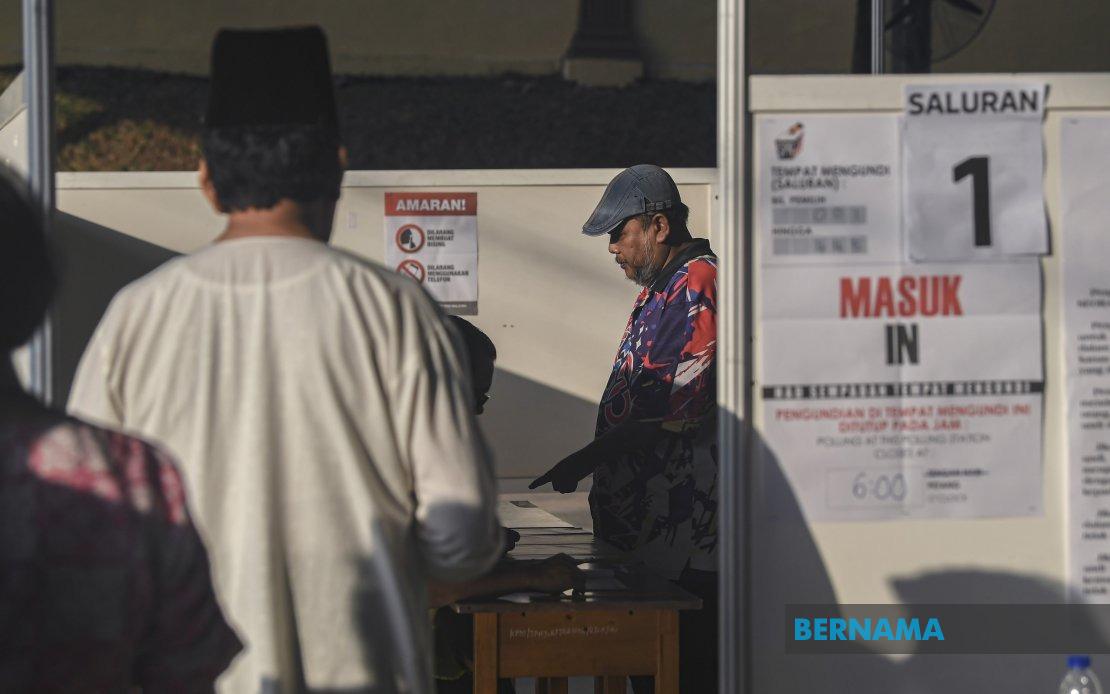
The 16th Johor State Election proceeded smoothly on July 11 as federal ministers and deputy ministers fulfilled their civic duties alongside millions of ordinary citizens, underscoring the democratic participation of the nation's leadership in the state's electoral process. The election drew participation from several high-ranking government officials who demonstrated their commitment to the voting system by casting ballots across different constituencies within the state.
Datuk Seri Azalina Othman Said, who serves as Minister in the Prime Minister's Department overseeing Law and Institutional Reform, was among the first to participate, arriving at Sekolah Kebangsaan Bandar Penawar in Pengerang at 8.15 am. Her early participation set the tone for the day, signalling the importance government leadership places on voter engagement. Defence Minister Datuk Seri Mohamed Khaled Nordin voted approximately 15 minutes later at Sekolah Kebangsaan Rinting 1 in Masai, exercising his franchise in his home state.
Other cabinet representatives joined the electoral process throughout the morning. Plantation and Commodities Minister Datuk Seri Dr Noraini Ahmad cast her ballot at Sekolah Menengah Kebangsaan Dato' Onn in Batu Pahat by 8.50 am, while Deputy Works Minister Datuk Seri Dr Ahmad Maslan voted at Sekolah Kebangsaan Seri Bahagia in Benut at 8.40 am. These staggered voting times reflected the geographical spread of their constituencies across Johor's diverse landscape, from Pengerang in the east to Batu Pahat in the west.
Deputy Communications Minister Teo Nie Ching participated by voting at Sekolah Jenis Kebangsaan Cina (SJKC) Kulai Besar at 9.30 am, just ten minutes after arriving at the polling station. Her participation was particularly notable given her diverse constituency, which encompasses a significant Malaysian Chinese population, highlighting the inclusive nature of the state's electoral exercise. The choice of polling venues by these officials ensured representation across different communities and regions within Johor.
The scale of the electoral operation was substantial, with authorities opening precisely 1,076 polling centres operating across 4,889 individual polling streams simultaneously at 8 am. This logistical coordination demonstrated the Electoral Commission's preparedness to manage a complex state-wide election spanning Johor's extensive geography and diverse population demographics. The infrastructure was designed to provide equitable access to voting facilities for citizens across urban and rural areas alike.
Approximately 2.7 million registered voters were eligible to participate in determining Johor's government composition for the coming term. This substantial electorate represents a significant portion of Malaysia's voting population and reflects Johor's position as one of the nation's most populous states. The turnout and participation rates would influence the political complexion of the state assembly for years ahead.
The voting period extended from the 8 am opening until 6 pm, providing a ten-hour window for citizens to cast their ballots. This timeframe followed the conclusion of a intensive 14-day campaign period that ended at midnight the previous night, allowing candidates and political parties sufficient opportunity to present their platforms and visions to voters. The transition from campaigning to voting represented the culmination of weeks of political activity and public engagement.
Johor's electoral significance extends beyond the state itself, given its economic importance and strategic location in Malaysia's southern region. The outcome would have implications for state-federal relations and could influence broader political dynamics within Peninsular Malaysia. The strong showing of cabinet participation reflected the federal government's investment in the state's governance outcomes and its commitment to democratic processes at the state level.
The participation of ministers across different portfolio areas—defence, communications, plantations, works, and legal affairs—demonstrated that election engagement transcended individual ministerial responsibilities or political alignments. This cross-portfolio participation underscored the universal expectation that government representatives should actively participate in electoral processes. Their visible engagement also served as an implicit message to the broader electorate about the importance of voting participation and democratic citizenship.

