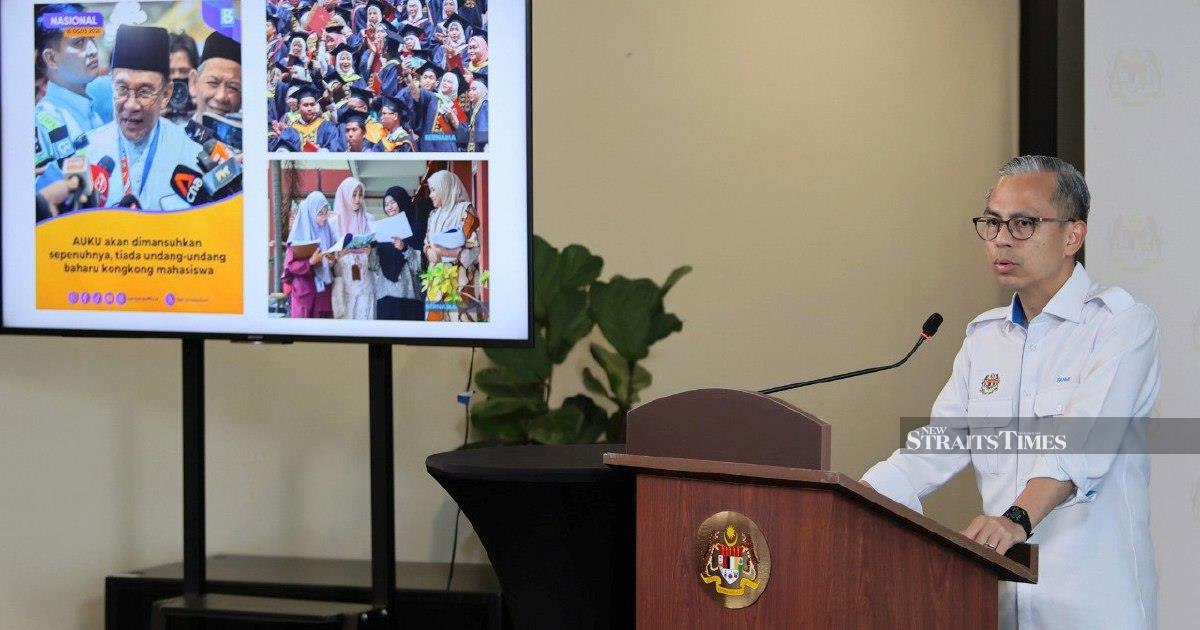
The Malaysian cabinet has not formally deliberated on Prime Minister Datuk Seri Anwar Ibrahim's recent comments regarding Taiwan, according to government spokesman Datuk Seri Fahmi Fadzil. His statement came after the remarks triggered a notably critical response from Taipei, highlighting the sensitivity surrounding any public utterance on the self-governed island from senior Malaysian officials.
The clarification from Fahmi underscores the careful diplomatic posture Malaysia maintains on cross-strait issues. As a Southeast Asian nation with significant economic ties to both the People's Republic of China and Taiwan, Malaysia navigates a delicate balance in bilateral relationships. Any official comment on Taiwan carries potential ramifications across the region and beyond, making the apparent absence of formal cabinet discussion notable.
Anwar's statements had drawn sharp criticism from Taiwanese authorities, signalling that the remarks had been perceived as departing from Malaysia's established diplomatic protocols or expectations. In the context of Malaysia's foreign policy, such a response typically suggests the comments may have strayed from the carefully calibrated language normally employed when addressing cross-strait matters. The government's measured response in turn reflects awareness of the need to manage the fallout.
The fact that no cabinet-level discussion has occurred raises questions about how Malaysia's government intends to address the diplomatic friction. Typically, significant international incidents affecting bilateral relations would warrant formal cabinet consideration. The absence of such discussion could indicate several possibilities: that officials view the matter as manageable through lower-level diplomatic channels, that clarification has already been provided privately to Taipei, or that the government is allowing the situation to settle without further official commentary.
For Malaysian readers, the incident illustrates the constraints facing top national leaders when discussing geopolitically sensitive topics. Taiwan's status remains one of Asia's most contentious issues, with China viewing the island as a renegade province while the international community maintains varying degrees of de facto relations. Malaysia's official position adheres to the People's Republic of China's sovereignty claims, yet practical economic and business relationships with Taiwan cannot be dismissed.
The diplomatic complexity is compounded by Malaysia's regional role. As a member of the Association of Southeast Asian Nations and a nation increasingly affected by great-power competition in the South China Sea, Malaysia must avoid being perceived as taking sides in cross-strait disputes. Public statements by the prime minister carry particular weight because they can be interpreted as reflecting government policy, even when made in other contexts. Taipei's willingness to publicly rebuke Anwar's comments suggests it viewed them as significant enough to warrant an official response rather than quiet diplomacy.
From a regional perspective, Malaysia's handling of the situation affects how other Southeast Asian nations approach Taiwan relations. Countries like Vietnam, the Philippines, and Indonesia face similar balancing acts, and they observe how peers manage such situations. Malaysia's relatively low-key response through Fahmi's clarification may represent a strategy to prevent escalation while preserving relationships on both sides.
The absence of cabinet discussion also reflects evolving decision-making structures within Malaysia's government. Not every international issue automatically triggers full cabinet deliberation. Senior officials and the prime minister's office often manage diplomatic incidents through direct coordination with foreign affairs agencies. This behind-the-scenes approach can be effective when the goal is de-escalation rather than public rebuke.
Looking forward, observers should monitor whether Malaysia provides further clarification of Anwar's original statements. Official governments sometimes use spokesman statements as a way to signal nuance without requiring formal cabinet action. Fahmi's role as government spokesman positions him as the primary communication channel for explaining policies and managing public narratives on sensitive matters. His intervention itself carries weight, even without citing cabinet discussion.
The incident also underscores Malaysia's broader diplomatic challenges as great powers increasingly compete for influence in Southeast Asia. Taiwan, as both an economic powerhouse and a flashpoint in US-China relations, occupies a complex space in Malaysia's foreign policy calculus. The nation's leaders must navigate between maintaining the fiction of recognizing Beijing's sovereignty claims while preserving practical relationships that benefit Malaysia's economy and strategic interests.
For Malaysian business interests, clarity on the government's Taiwan policy remains important. Many Malaysian companies have operations in Taiwan or conduct significant cross-strait trade. Diplomatic friction, even when managed quietly through lower-level channels, can create uncertainty that affects commercial relationships. The government's measured response suggests an intent to minimize disruption to these practical ties.
Going forward, the incident may prompt more careful drafting of official statements on cross-strait matters, particularly from the prime minister's office. As Malaysia develops its foreign policy priorities under Anwar's leadership, navigating Taiwan-related discussions without triggering unnecessary diplomatic friction will remain crucial. The lack of cabinet discussion might ultimately represent appropriate crisis management rather than indifference, with officials determining that the most productive path forward lay in quiet diplomacy rather than public proceedings.

