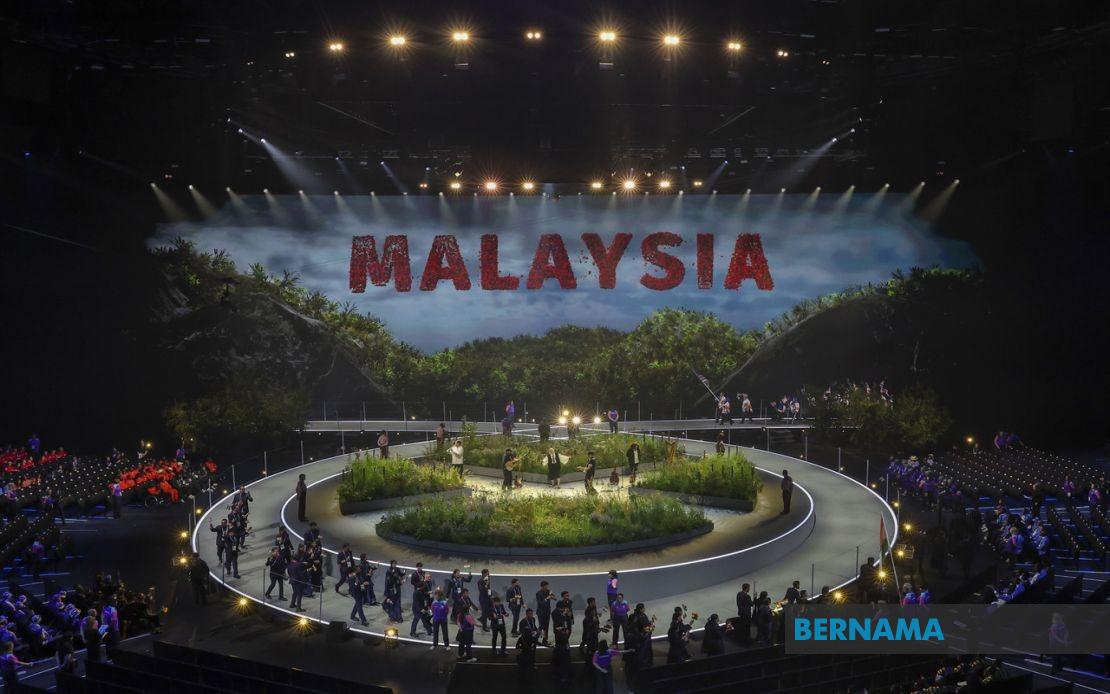
The Malaysian Cabinet has formally commended the country's contingent at the Glasgow 2026 Commonwealth Games, recognising what government officials describe as an exceptional showing that has elevated the nation's sporting profile on the international stage. Communications Minister and MADANI Government spokesman Datuk Seri Fahmi Fadzil delivered the Cabinet's congratulations at a post-meeting press conference in Putrajaya on August 5, characterising the athletes' achievements as a source of national pride and honouring the country's sporting traditions.
Malaysia's contingent secured eight gold medals, three silver and five bronze medals at the Games—a haul that decisively exceeded the government's initial target of five gold medals. This substantial outperformance reflects both the quality of preparation undertaken by the national sports establishment and the calibre of individual athletes representing the country. The medal tally represents a significant milestone in Malaysia's Commonwealth Games history, marking the strongest performance in the competition since the New Delhi 2010 edition, when the nation secured twelve gold medals.
Fahmi emphasised that the success achieved by Malaysia's athletes is anticipated to generate momentum across the broader sporting community, motivating other competitors to pursue international excellence and continue delivering glory for the nation. The Cabinet's public endorsement signals governmental commitment to supporting athletic development and underscores the importance placed on sporting achievement as an instrument of national prestige. Such recognition serves to reinforce the status of sports within the broader MADANI governance framework and demonstrates acknowledgment of the dedication required to compete at the Commonwealth Games level.
The government has substantiated its congratulations with tangible financial reward, allocating RM1.1 million through the Sports Victory Incentive Scheme (SHAKAM) to compensate athletes who exceeded performance targets. This financial commitment illustrates the administration's willingness to invest in incentivising athletic success and recognises the sacrifices made by competitors throughout their training and preparation phases. The SHAKAM allocation represents a concrete expression of governmental appreciation beyond ceremonial acknowledgment, providing direct financial support to medal-winning athletes.
For Malaysian sports development, the Glasgow 2026 results carry important implications extending beyond immediate medal counts. The performance demonstrates the effectiveness of current talent identification, coaching methodologies and sports science support systems in place across various athletic disciplines. These outcomes provide valuable data points for administrators assessing which programmes warrant continued investment and which sporting pathways have proven most productive in generating international competitive success.
The Commonwealth Games context carries particular significance for Malaysian athletes, as the competition provides a more immediately accessible platform compared to Olympic competitions or world championships. As a member of the Commonwealth community, Malaysia benefits from the regularised scheduling and established infrastructure of these Games, enabling more consistent participation and accumulation of experience at major international events. This accessibility factor has historically made the Commonwealth Games a crucial stepping stone in athlete development trajectories.
Regionally, Malaysia's strong showing at Glasgow 2026 positions the nation competitively within Southeast Asian sporting hierarchies. Commonwealth Games success often correlates with broader Olympic performance metrics, making the Glasgow results relevant to assessments of Malaysia's standing within the regional sports landscape and its trajectory towards future Olympic cycles. The achievement provides comparative benchmarking data against other regional competitors who similarly participated in the Glasgow Games.
The gap between the five-gold target and the eight-gold achievement also raises questions about forecasting methodologies employed in establishing performance benchmarks. While exceeding targets represents positive news, the differential between projection and realisation may prompt sports administrators to recalibrate assessment models for future competitions. Understanding whether the outperformance resulted from enhanced athlete preparation, improved competitive conditions, or other factors will inform strategic planning for forthcoming international events.
Looking forward, sustaining and building upon the Glasgow 2026 momentum presents both opportunity and challenge for Malaysian sports development. The Cabinet's support signals governmental backing that may facilitate continued investment in high-performing sports programmes, yet translating Commonwealth Games success into sustained international competitiveness across multiple Olympic cycles requires sustained institutional commitment and resource allocation. The challenge lies in converting single-Games achievements into consistent, long-term progression.
The formal Cabinet recognition also carries symbolic weight in positioning sports achievement within broader national narratives. By publicly commending the athletes and allocating financial rewards, the government reinforces the message that sporting excellence constitutes a legitimate avenue for national contribution and personal advancement. This emphasis on athletics within governance discourse may encourage broader participation in sports development pathways and expand talent pipelines feeding into elite competition structures.
For Malaysian athletes themselves, Cabinet-level recognition provides validation of their efforts and creates psychological reinforcement for continued competitive pursuits. The SHAKAM allocation offers practical recognition that translates achievement into tangible benefit, supporting athletes' post-competition transitions and reducing financial pressures that might otherwise constrain sporting careers. Such support mechanisms contribute to retention of talent within competitive sports ecosystems.

