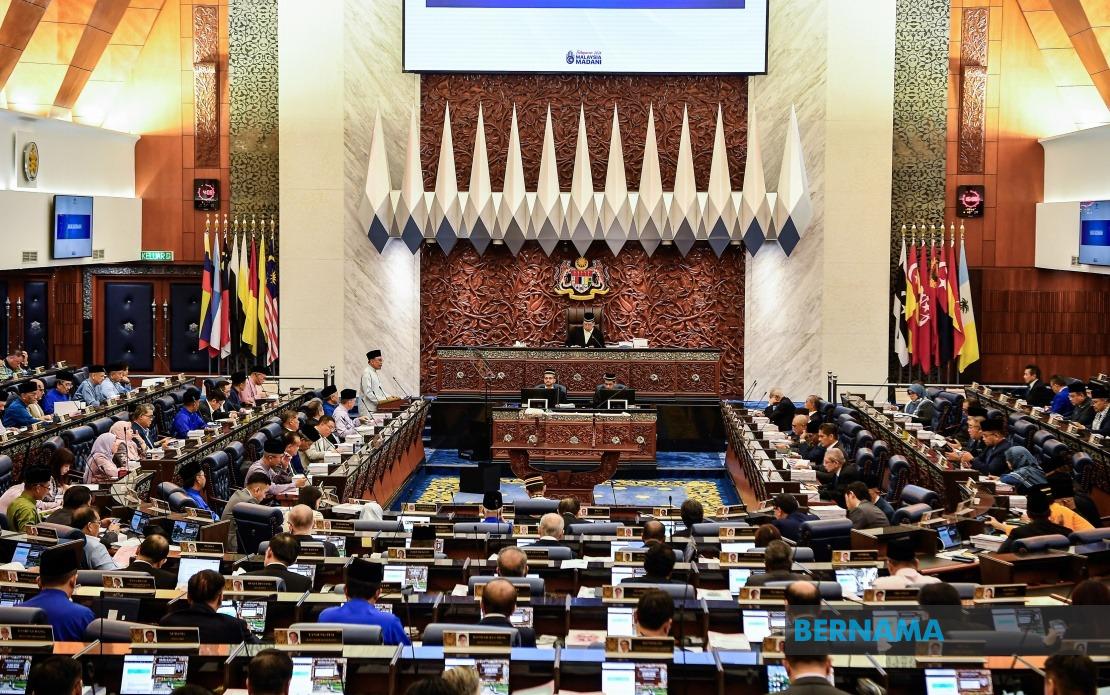
Malaysia's Cabinet has agreed to constitutional amendments that will significantly expand Parliament's involvement in the appointment process for the Public Prosecutor, representing a substantial shift in how the country's top prosecution authority is selected. The decision, made as part of the MADANI Government's institutional reform agenda, seeks to clarify and strengthen the distinction between the Attorney General's advisory role to the King and Cabinet, and the Public Prosecutor's independent prosecutorial responsibilities.
The proposed amendments to the Constitution (Amendment) (No. 2) Bill 2026 emerged from months of deliberation by a special parliamentary committee convened specifically to examine this governance question. The Special Select Committee on Constitutional Amendments Related to the Separation of Roles of the Attorney General and Public Prosecutor, comprising 11 MPs drawn equally from Government and Opposition benches, conducted seven substantive meetings to scrutinise the legislative framework. This bipartisan approach reflects the fundamental constitutional nature of the reforms, requiring broad political consensus before proceeding to legislative stages.
At the heart of the amendments lies a revised process for nominating the Public Prosecutor. Under the new framework, candidates' names will first be submitted to the Speaker of the Dewan Rakyat for presentation before Parliament. This initial step opens the appointment to broader public and parliamentary awareness, allowing elected representatives to understand who is being considered for this pivotal judicial office. The transparency inherent in this arrangement contrasts with previous processes that operated with less parliamentary involvement, marking a deliberate democratisation of what has historically been an appointment concentrated within executive circles.
Once Parliament receives the candidates' names, a dedicated Select Committee will conduct detailed scrutiny of each nominee. This examination stage allows the parliamentary committee to assess qualifications, experience, and suitability in a formal hearing process. The committee's role extends beyond mere procedural formality; its members will evaluate whether each candidate possesses the independence, integrity, and professional competence necessary to exercise prosecutorial powers impartially. Civil society organisations, legal experts, and opposition parties will have opportunities to engage with this process, ensuring that concerns about prosecutorial independence are systematically addressed.
Following the Select Committee's examination, the Dewan Rakyat itself will formally make recommendations regarding which candidate should be appointed. This parliamentary recommendation carries significant political weight, as elected representatives—accountable to their constituents—will have collectively endorsed the choice. The recommendation then proceeds to the Judicial and Legal Service Commission, which serves as a constitutional buffer, tasked with advising the King on whether to accept Parliament's recommendation. This layered approach balances parliamentary oversight with judicial independence and the King's constitutional role.
The amendments specifically target Article 145A of the Constitution, addressing concerns that have animated Malaysian legal and political discourse for several years. Institutional safeguards separating prosecutorial functions from political influence have become increasingly important across Southeast Asia, particularly as countries grapple with maintaining public confidence in justice systems. Malaysia's approach—inserting Parliament as an intermediary body while preserving the King's constitutional prerogative and the Judicial and Legal Service Commission's advisory function—represents a calibrated attempt to achieve multiple objectives simultaneously: ensuring prosecutorial independence, enhancing democratic accountability, and respecting constitutional hierarchy.
The genesis of these reforms traces back to broader concerns about the concentration of legal authority. Previously, the Attorney General simultaneously served as both the King's legal adviser and the chief prosecuting officer, creating potential conflicts of interest or at least the appearance of political influence over prosecutorial decisions. The MADANI Government's institutional reform agenda has explicitly sought to unbundle these roles, allowing the Attorney General to focus on providing impartial legal counsel to the Crown and executive, while creating space for the Public Prosecutor to exercise prosecutorial discretion independently. This separation reflects international best practices observed in common law jurisdictions and addresses recommendations from civil society organisations monitoring rule-of-law concerns.
The committee process that culminated in these amendments reveals the depth of consultation undertaken. Beyond the 11 MPs serving on the Special Select Committee, the government consulted extensively with legal experts, civil society organisations, and opposition lawmakers. This inclusive approach generated substantive feedback that shaped the final amendments. The committee's consideration of diverse viewpoints—from institutional lawyers concerned about prosecutorial independence to political actors mindful of public confidence in justice—resulted in amendments that attempt to satisfy multiple constituencies rather than impose a unilateral solution.
The timing of these reforms carries particular significance for Malaysian governance. As the nation seeks to strengthen institutional capacity and public trust in key branches of government, clarity about prosecutorial independence becomes essential. International observers, from ratings agencies to civil society networks, increasingly scrutinise how countries protect their judicial systems from political interference. Malaysia's willingness to formally embed parliamentary oversight in the Public Prosecutor appointment process signals commitment to transparent, rule-based governance. For foreign investors and international partners, such institutional clarity provides confidence that legal processes will be administered fairly.
For Southeast Asian peers, Malaysia's approach offers a template for balancing several governance priorities simultaneously. Unlike systems that vest prosecutorial appointment entirely in legislative hands, potentially creating majoritarian capture of the prosecution office, or those that leave appointment exclusively to the executive, Malaysia's model distributes authority across multiple institutional checks. Parliament provides democratic accountability, the Judicial and Legal Service Commission ensures legal-professional standards are maintained, and the King's constitutional role is preserved. This institutional architecture may prove instructive as other regional democracies evaluate their own prosecutorial governance frameworks.
The amendments are scheduled for parliamentary debate on July 13 during the Second Meeting of the Fifth Session of the 15th Parliament, setting the stage for detailed discussion before potential legislative passage. The Government's explicit framing of these reforms as advancing justice administration that is independent, transparent, and professionally competent suggests commitment to implementation beyond mere legislative formality. Cabinet's approval paves the way for legislative action, though the parliamentary debate stage will likely surface further refinements and clarifications about how the new system will operate in practice.
The broader reform programme reflects recognition that sustainable governance depends on institutional architecture that prevents power concentration while maintaining operational effectiveness. By opening the Public Prosecutor appointment process to parliamentary scrutiny while preserving professional-judicial standards through the Judicial and Legal Service Commission, the government has positioned the Public Prosecutor's office as an institution ultimately accountable to Parliament yet operationally independent. This balance between accountability and independence has long posed a challenge for democratic systems, and Malaysia's approach deserves careful monitoring as it implements these constitutional amendments.

