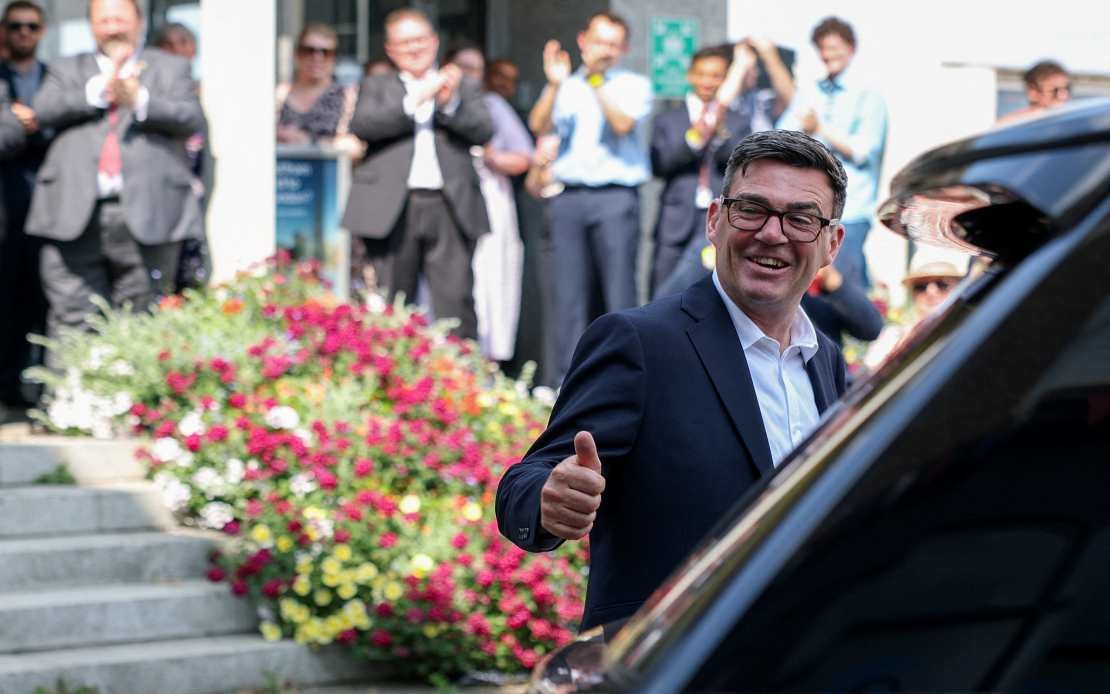
Andy Burnham formally assumes the office of British prime minister on Monday, taking the reins of a nation weary from a succession of leadership changes. The former mayor of Greater Manchester succeeds Keir Starmer, becoming the latest occupant of 10 Downing Street at a moment when the UK's political establishment faces mounting public scepticism. In his inaugural address following his visit to King Charles III, Burnham will articulate a vision centred on restoring faith in government institutions and delivering material relief to ordinary households struggling with inflation and energy costs.
The timing of Burnham's ascension carries particular weight in the context of recent British politics. Over the preceding decade, the United Kingdom has cycled through seven different prime ministers—a period of extraordinary instability that has fractured public confidence in Westminster's ability to govern effectively. Burnham's rhetoric will emphasise this dysfunction, positioning his administration as a departure from this pattern of constant upheaval. He intends to frame the moment as one requiring both introspection and decisive action, demanding that Britain confront its difficulties with candour while simultaneously demonstrating competence in addressing them. This framing suggests recognition that the electorate's patience has been exhausted by symbolic gestures without substantive outcomes.
Central to Burnham's early messaging is the promise of "breathing room" on the cost-of-living crisis, a phrase that resonates with households across Britain and indeed across much of Western Europe and Southeast Asia, where inflation has similarly strained family budgets. However, according to those close to the new prime minister, this relief cannot be merely rhetorical. Burnham's team has signalled that political stability must translate into tangible improvements in people's everyday circumstances—lower energy bills, reduced grocery costs, and restored purchasing power. This represents a deliberate pivot away from what many view as the previous government's emphasis on efficiency metrics and institutional reform at the expense of household economics.
Remarkably, Burnham arrived at the Labour leadership without facing a competitive contest, ascending to the position barely four weeks after his return to Parliament. This unusual pathway means he has had limited opportunity to articulate a comprehensive governing agenda, leaving many aspects of his platform still largely undefined. Nevertheless, decentralisation has emerged as a cornerstone of his stated priorities. Having spent years as a regional political figure before his Westminster return, Burnham appears committed to redistributing authority away from London's political centre toward devolved administrations and local communities. This approach could carry implications for Southeast Asian readers observing how major democracies manage centre-periphery relations in an era of globalisation and uneven development.
Among his initial policy announcements, Burnham has pledged to dismantle the digital identity scheme that Starmer championed as a flagship initiative. While critics might view this as merely reversing a predecessor's work, Burnham frames it as a reprioritisation—channelling the resources and political capital that the scheme would have consumed into addressing the more pressing immediate concern of household living costs. This decision signals a calculation that the electorate cares more about keeping the lights on than about the technological infrastructure of government.
The new prime minister's first week is anticipated to yield concrete policy proposals aimed at easing citizens' financial burdens. Speculation centres on measures affecting energy affordability, potentially including expanded oil and gas extraction licences in the North Sea. This prospect has triggered concern among environmental advocacy groups, who point out that Labour's 2024 election manifesto explicitly committed to rejecting new North Sea drilling permissions. Environmental campaigners argue that such drilling would fail to reduce energy bills for consumers—a factual dispute that underscores the tension between climate commitments and immediate economic relief.
Another pressing matter awaiting Burnham's attention involves Thames Water, a critical utility company drowning in a £20 billion debt burden. The firm's precarious financial position raises the possibility of temporary nationalisation, a scenario that the new prime minister has previously indicated willingness to consider. Thames Water's primary creditors have signalled openness to negotiating with Burnham's incoming ministers, seeking to forge a rescue arrangement that preserves the company's operational independence while stabilising its finances. The alternative—relegation to special administration—would represent a dramatic failure of private sector stewardship and a costly intervention for taxpayers. This situation encapsulates broader questions about whether essential services can remain profitable under private ownership, a debate relevant to utilities management across the Commonwealth and beyond.
Burnham's position on public ownership of critical infrastructure reflects a broader ideological stance that distinguishes him from recent predecessors. He has articulated support for expanded public control over essential services, suggesting potential sympathy for a more interventionist approach to market failures. This philosophical posture may shape his government's response to other sectors facing pressure, from telecommunications to water management—matters of interest to policymakers throughout Asia contemplating the appropriate role of the state in managing vital services.
The composition of Burnham's first Cabinet will occupy immediate attention, with particular focus on his selection of a chancellor to manage the Treasury. The contest has reportedly narrowed to Energy Secretary Ed Miliband and Home Secretary Shabana Mahmood, each representing different ideological emphases within the Labour party. Miliband, son of former Labour leader Ed Miliband, brings energy policy expertise that could prove valuable given current concerns about utility costs. Mahmood, by contrast, represents the security and order wing of the party. The choice between them will signal whether Burnham prioritises immediate economic relief or the law-and-order agenda that has gained salience in British political discourse.
For observers in Southeast Asia tracking global political developments, Burnham's ascension illuminates how established democracies respond to cycles of leadership instability and institutional erosion of public trust. His emphasis on stability, devolution, and tangible economic delivery offers a case study in how political leaders attempt to rebuild legitimacy after prolonged turbulence. Whether his administration can deliver on promises of material improvement while maintaining climate commitments and managing fiscal constraints will determine whether this new chapter in British politics represents genuine renewal or merely the opening of another transitional phase.

