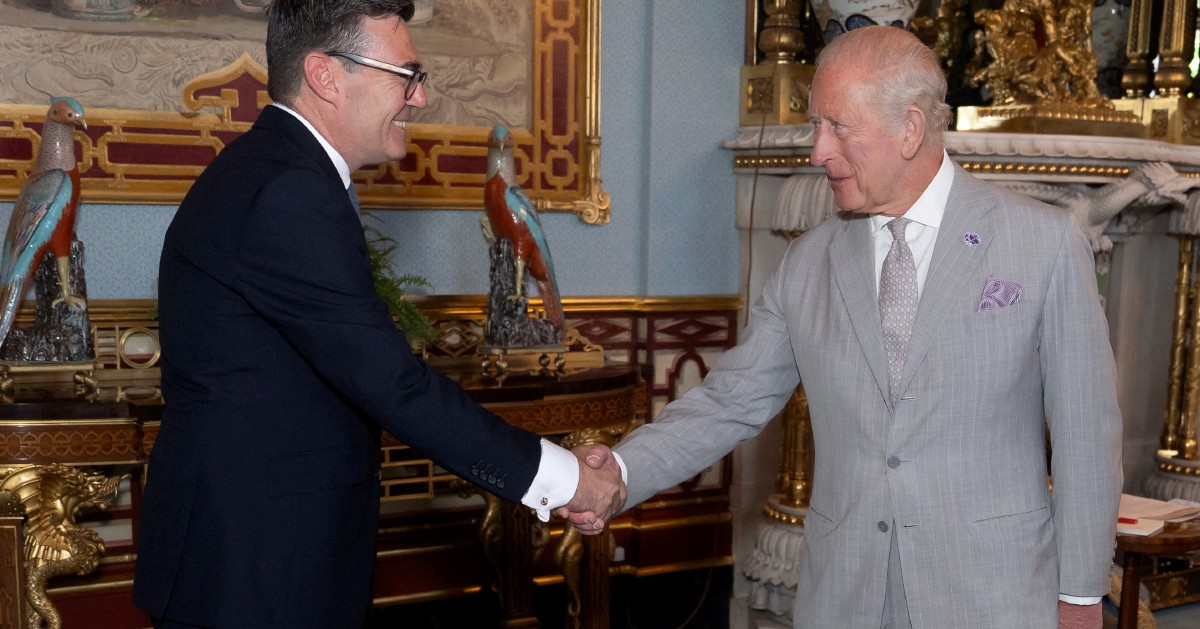
Andy Burnham has assumed the role of British Prime Minister after a formal meeting with King Charles III at Buckingham Palace, succeeding Keir Starmer in the position. The transition marked a significant shift in UK leadership following Starmer's departure from office, with Burnham now poised to articulate his strategic direction for the country during what is expected to be a critical period for British governance and domestic policy.
The ceremonial handover at the royal residence followed the constitutional procedure required for any change of Prime Minister in the United Kingdom. Under the British system, the newly appointed premier must meet the reigning monarch to formally accept the position and receive official sanction to govern. Burnham's appointment represents a turning point in British politics, particularly given his prior experience in senior government roles and his profile within the Labour movement.
For Malaysian and Southeast Asian observers, the UK's leadership transition holds broader implications for Commonwealth relations and international diplomatic alignments. Britain remains a significant player in global affairs and regional security architecture, particularly through its involvement in multilateral organizations and bilateral partnerships across Asia-Pacific. Burnham's approach to foreign policy and trade relationships could influence the trajectory of UK engagement with nations in the region, including Malaysia itself.
Burnham brings considerable political experience to the premiership, having previously served in prominent ministerial positions and held substantial responsibility in other senior roles. His background suggests an inclination toward pragmatic governance and coalition-building, both essential qualities for managing the complexities of contemporary British politics. The transition from Starmer reflects evolving dynamics within Labour Party leadership and potentially signals a recalibration of policy priorities or approach to governance.
The timing of the leadership change occurs amid ongoing economic and social challenges facing the United Kingdom. Issues ranging from public service reform to economic competitiveness remain central to the national agenda, and Burnham's administration will need to address these pressures whilst establishing its own credibility and policy direction. His vision for the country is likely to encompass both immediate responses to pressing domestic concerns and longer-term strategic objectives for national development.
International observers will be watching closely to assess how Burnham shapes Britain's role in global affairs. Questions about UK involvement in regional conflicts, trade partnerships, and climate policy will test his administration's priorities and decision-making framework. For countries like Malaysia with significant trading and diplomatic ties to Britain, the nature and extent of the new government's commitment to bilateral relations will merit close attention.
The leadership transition also reflects broader patterns within British politics, where Prime Ministers have increasingly faced shorter tenures and more volatile political environments. The factors contributing to Starmer's departure and Burnham's elevation provide insight into the current pressures shaping Westminster politics and the expectations that both the public and parliamentary colleagues place on government leadership. Understanding these dynamics proves relevant for comprehending British political trends that may influence international positioning.
Burnham's cabinet formation and initial policy announcements will be crucial indicators of his administrative priorities. The composition of his government and the appointments of senior ministers will signal whether he intends continuity with previous approaches or a fundamental reorientation of Labour governance. These decisions carry symbolic weight within British politics and practical consequences for policy implementation across all government departments.
For Southeast Asian governments and businesses, a change in British leadership warrants attention to potential shifts in trade negotiations, investment frameworks, and diplomatic emphasis. The UK's post-Brexit positioning requires active cultivation of relationships with trading partners worldwide, and any recalibration of priorities under Burnham could create both opportunities and challenges for regional stakeholders. Malaysia, as a prominent Southeast Asian economy with established Commonwealth connections, may find itself reassessing engagement strategies in response to the new administration's orientation.
The broader implications of Burnham's premiership extend to Commonwealth relations more generally. His administration's approach to Commonwealth cooperation, shared values, and institutional frameworks could influence how Britain engages with member nations. Given Malaysia's status within the Commonwealth and its economic and cultural ties to Britain, the character of these relationships under Burnham's leadership bears monitoring by policymakers and business communities alike.
As Burnham settles into his new position, observers will assess his early decisions, statements, and policy initiatives to gauge the direction of his administration. The Prime Minister's first weeks in office typically set the tone for his entire tenure, establishing priorities and signaling commitment to particular constituencies and policy agendas. How Burnham chooses to position Britain domestically and internationally will shape perceptions of his leadership and influence regional relationships.
The transition to Burnham's premiership represents both continuity and change within British politics. While Labour remains in power, the shift in leadership creates opportunities for policy adjustments and fresh approaches to longstanding challenges. For regional partners and international observers, Burnham's time as Prime Minister will reveal how British leadership intends to navigate contemporary global complexities and maintain its strategic influence in an increasingly multipolar world order.

