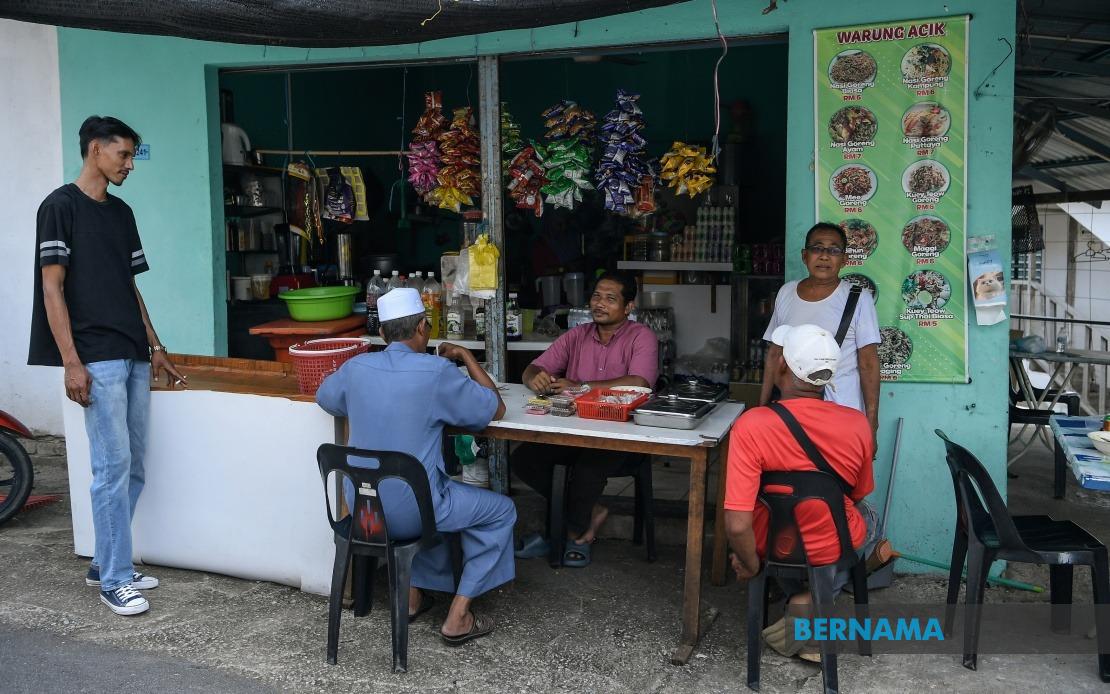
The waterfront settlement of Bukit Malut in Langkawi is fighting back against a reputation problem that has dogged the community for years. Local residents are mounting a determined effort to clear their neighbourhood's name from persistent allegations linking it to illegal refugee arrivals and undocumented immigration. The campaign reflects growing frustration among community members who say they have become unwitting scapegoats whenever migration-related incidents occur in the Kedah island district, regardless of actual involvement or evidence.
Mohamad Fadzli Abdullah, who chairs the Bukit Malut Neighbourhood Watch, emphasises that residents have become resigned to facing unfounded accusations. He points out that whenever reports emerge of refugee landings anywhere in Langkawi, his community faces immediate suspicion and blame. This pattern of association, he argues, persists despite the complete absence of substantiating facts. The impact extends beyond mere reputational damage, creating a corrosive effect on residents' daily lives and their standing within the broader Langkawi community.
The leadership council presents a compelling geographical counter-argument to support the community's denials. Bukit Malut sits in immediate proximity to major Malaysian security installations, including the Malaysian Maritime Enforcement Agency headquarters, the Royal Malaysian Customs Department base, and the Royal Malaysian Navy's operational command centre. Such sensitive installations would make clandestine maritime activities virtually impossible without detection. The presence of these enforcement agencies suggests that suspicious water-based movements in surrounding areas would trigger immediate official response, undermining any assertion that the settlement functions as a covert arrival point.
Beyond geographical considerations, residents stress that no legitimate barriers restrict public access to Bukit Malut. They reject suggestions that the area operates under security lockdown or poses danger to visitors. Rather, they characterise their neighbourhood as subject to continuous official security monitoring, a presence that should theoretically reassure the public rather than fuel speculation. The apparent contradiction between persistent rumours and transparent community access reflects how misinformation can take root independent of observable reality.
The demographic composition of Bukit Malut further undermines allegations of foreign settlement. Approximately eighty-five per cent of residents earn their livelihoods as fishermen, a labour-intensive occupation requiring permanent residential presence and integration into local maritime networks. The remaining population comprises traders, rental operators, civil servants, military personnel, and university graduates distributed across various employment sectors. This occupational diversity demonstrates deep economic integration within the district and stable community establishment, characteristics inconsistent with allegations of harbouring transient refugee populations.
Hasanah Zakaria, a resident for over two decades, attempts to counter digital misinformation by inviting direct observation. She encourages members of the public to visit and personally witness community life rather than accepting allegations circulated through social media platforms. Her appeal reflects recognition that rumours thrive in information vacuums and that physical visitation could effectively counter negative perceptions. Hasanah notes the personal cost of these stigmatising narratives, explaining how negative associations have affected her child's school experience and requiring her to actively encourage academic focus despite social pressures arising from community reputation.
Abas Salam, among the settlement's earliest pioneers with more than thirty years' continuous residence, provides historical perspective that challenges refugee settlement claims. His personal testimony spanning decades of community presence carries particular weight, as he maintains never having encountered undocumented Myanmar nationals living in Bukit Malut despite proximity and opportunity. Salam's pioneer status grants him credibility in describing the settlement's actual composition and evolution, positioning him as a witness to the community's genuine origin and development trajectory.
The broader implication of this community advocacy extends beyond local reputation repair. Bukit Malut's struggle reflects broader Southeast Asian dynamics surrounding refugee and immigration issues, where coastal communities often face unsubstantiated suspicion regarding irregular arrivals. As Myanmar's ongoing political instability continues generating displaced populations, maritime Southeast Asian regions from Thailand to Malaysia experience persistent cross-border movements. Langkawi, situated relatively close to Thai waters and positioned along traditional migration routes, naturally becomes subject to immigration concerns. However, such structural vulnerabilities can unfairly stigmatise specific communities lacking actual involvement in irregular movements.
The residents' insistence on their Malaysian citizenship and ethnic Malay-Muslim identity addresses another dimension of the stigma problem. Allegations implying Bukit Malut residents might themselves be Rohingya or other foreign nationals fundamentally contradict documented demographics. This aspect of the stigma appears particularly corrosive, as it questions residents' national belonging and legal standing within Malaysia. By emphasising their status as Kedah-based Malay-Muslims with established citizenship credentials, residents attempt to foreclose this avenue of speculation and restore clear legitimacy.
The settlement's development narrative provides additional context for understanding community identity. Early residents constructed core infrastructure including homes, religious facilities, and educational institutions through self-directed effort and limited external support. This pioneering contribution to district development represents significant community investment and integration, strengthening claims of legitimate establishment. Contemporary improved conditions allowing younger generations access to proper education further demonstrate community development and upward mobility consistent with settled Malaysian populations rather than transient or undocumented populations.
For Malaysian policymakers and security authorities, this community advocacy raises important questions regarding the relationship between security concerns and community reputation management. While border security and immigration enforcement legitimately attract official attention in maritime zones, effective enforcement requires community cooperation and trust. Reputational damage arising from unsubstantiated allegations potentially undermines the cooperation necessary for genuine security implementation. Langkawi authorities might consider whether formal statements clarifying Bukit Malut's security profile and resident demographics could simultaneously advance legitimate enforcement objectives while protecting innocent communities from unfounded association.
The Bukit Malut situation also reflects how social media and digital communication networks can propagate and perpetuate community stigmatisation faster than formal truth-telling mechanisms can counter them. Hasanah Zakaria's invitation to direct observation and Abas Salam's historical testimony represent traditional credibility-building approaches that struggle against algorithmic information dissemination. Addressing this dimension might require coordinated communication strategies engaging digital platforms more effectively than conventional community meetings.
Looking forward, Bukit Malut residents appear determined to shift narratives through persistent public assertion of their legitimate status and transparent community identity. Their campaign represents a broader phenomenon where Malaysian communities affected by geography or circumstance must continuously assert their legitimacy against circumstantial suspicion. Success in rehabilitation may depend partly on sustained community voice, but also on broader official recognition that effective security cooperation requires protecting innocent communities from reputational collateral damage incidental to legitimate enforcement activities.

