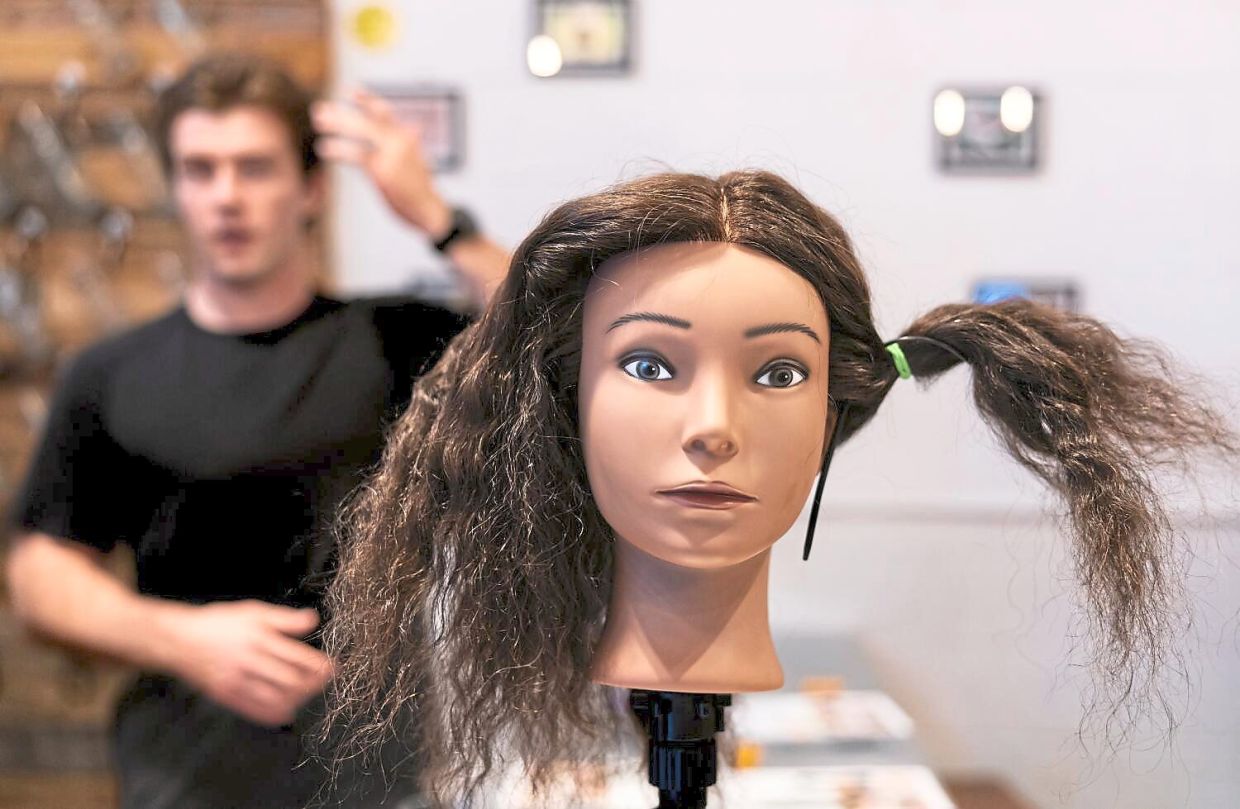
Austin Nieves transformed a California brewery into an unlikely classroom one May evening, gathering 15 men with a mission that would have seemed unusual a generation ago: learning to braid hair. The Santa Barbara Dads group founder orchestrated the event as a version of the trendy "Pints and Ponytails" experience, bringing together fathers aged 30 to 60 for what sold out within days. Using salon mannequin heads and professional hairstylist instruction in a casual, welcoming setting, the gathering demonstrated how modern fathers are seeking both practical skills and genuine connection in spaces designed specifically for them.
What began awkwardly—with men initially perching on bar edges, uncertain—quickly transformed once drinks were distributed and conversation flowed. Within minutes, participants shed their hesitation and engaged fully in learning techniques they would apply at home with their own children. For many attendees, the event represented more than hair-braiding instruction; it symbolised a broader shift in how fathers approach active parenting and the growing recognition that men need dedicated support systems during this demanding life transition. Nieves, a recent transplant from Pasadena who relocated to Santa Barbara in April 2025, understood this gap intimately from his own experience becoming a father.
Nieves' journey to founding these groups emerged from stark personal contrasts. When his wife gave birth to their son, she immediately accessed numerous mother groups, classes, and training programmes that provided comprehensive guidance, friendship, and practical assistance. As a first-time father, Nieves found himself largely dependent on his brothers who had their own parenting experience, lacking the structured support systems available to mothers. This disparity troubled him enough to take action, recognising that countless other fathers faced similar isolation during one of life's most significant transitions. The realisation prompted him to establish the Orange County Dads club in October 2023 while residing in Costa Mesa with his wife Katie.
Scientific research validates Nieves' observations about paternal isolation. A 2006 study published in the Journal of Family Issues by researchers Chris Knoester and David J. Eggebeen documented that increased involvement in fatherhood correlates with declines in well-being and social participation, as fathers necessarily reduce time spent with friends. Clinical psychologists Hillary Halpern and Maureen Perry-Jenkins have further documented that the transition from single life to fatherhood frequently triggers emotional instability. Most significantly, researchers from Stockholm's Karolinska Institute determined in 2021 that fathers specifically benefit from fatherhood support groups during their transition period. The research indicates that men participating in father groups report satisfaction with their involvement and experience measurable improvements in partner relationships, child connections, self-confidence, family equality, and reduced loneliness.
Nieves' Orange County group quickly demonstrated the appeal of such structured fatherhood networks. The club organised diverse activities including coffee shop meetups, zoo outings, holiday jam sessions, and CPR certification classes—creating multiple entry points for fathers at varying comfort levels. Importantly, despite being exclusively a fathers' club, membership grew substantially through wives and partners sharing Nieves' social media content with their husbands, suggesting that family units recognise the value of dedicated paternal support. Mikhail Alfon, founder of Blue Light Media, a social media strategy firm, brought his son Santos to multiple gatherings and reflected on the profound value of finding peers navigating identical life stages and challenges.
When Nieves relocated his family to Santa Barbara in April 2025, he faced the prospect of rebuilding his community network from scratch. Rather than accepting this setback, he replicated his successful model by establishing the Santa Barbara Dads group. The new iteration held its inaugural meetup in May 2025 and committed to monthly gatherings, demonstrating the transportability of the concept and its underlying appeal to fathers across different geographic regions. Within weeks of relocation, Nieves had successfully attracted members and launched activities, suggesting that demand for such communities extends broadly across American communities.
Austin Jones, a Santa Barbara real estate agent and investor, discovered Nieves' group through Instagram and immediately recognised its relevance to his circumstances. Juggling multiple professional and personal roles—businessman, husband, and father—Jones found himself stretched thin with minimal support systems acknowledging these diverse demands. The real estate sector's competitive nature and long hours intensified his sense of operating in isolation from peer support. Jones' attraction to the Pints and Ponytails event stemmed from practical necessity; his two-and-a-half-year-old daughter Noa possessed textured, curly hair that presented daily styling challenges beyond his existing capabilities. For Jones, like many fathers, paternal skill gaps combine with emotional isolation to create a compound need that traditional structures have historically ignored.
The hair-braiding workshop proved transformative for Jones in multiple respects. Through structured instruction and peer observation, he developed confidence in styling techniques that he previously felt unprepared to execute. Working with the practice mannequin allowed him to experiment without pressure or consequences, building muscle memory and mental frameworks he would immediately apply at home. By session's end, Jones had progressed from minimal hair-care competency—previously limited to headband application—to functional confidence in ponytail creation. More significantly, the experience embedded him further within a community of men facing similar parenting challenges and celebrating practical solutions together.
The emergence of fathers' groups like Nieves' represents a meaningful cultural shift acknowledging that active parenting requires support structures regardless of gender. Historical parenting narratives emphasised maternal guidance and support, leaving fathers to navigate independently or rely on limited informal networks. Modern fathers, increasingly engaged in hands-on child-rearing, face emotional, practical, and social challenges that deserve recognition and systematic response. These groups function simultaneously as skill-training venues, emotional support networks, and spaces where men collectively validate the legitimacy of their parenting challenges and developmental needs.
For Malaysian and Southeast Asian readers, the American fathers' group model offers instructive lessons as traditional family structures across the region similarly evolve. As more fathers in Malaysia, Singapore, and neighbouring countries seek active involvement in child-rearing beyond economic provision, demand for dedicated support systems will likely increase. The success of Nieves' initiative demonstrates that such communities can flourish organically when founders recognise genuine needs and create welcoming spaces that combine practical skill-building with genuine male camaraderie. The model adapts easily to diverse cultural contexts while addressing universal paternal experiences of transition, uncertainty, and the human need for community during significant life changes.

