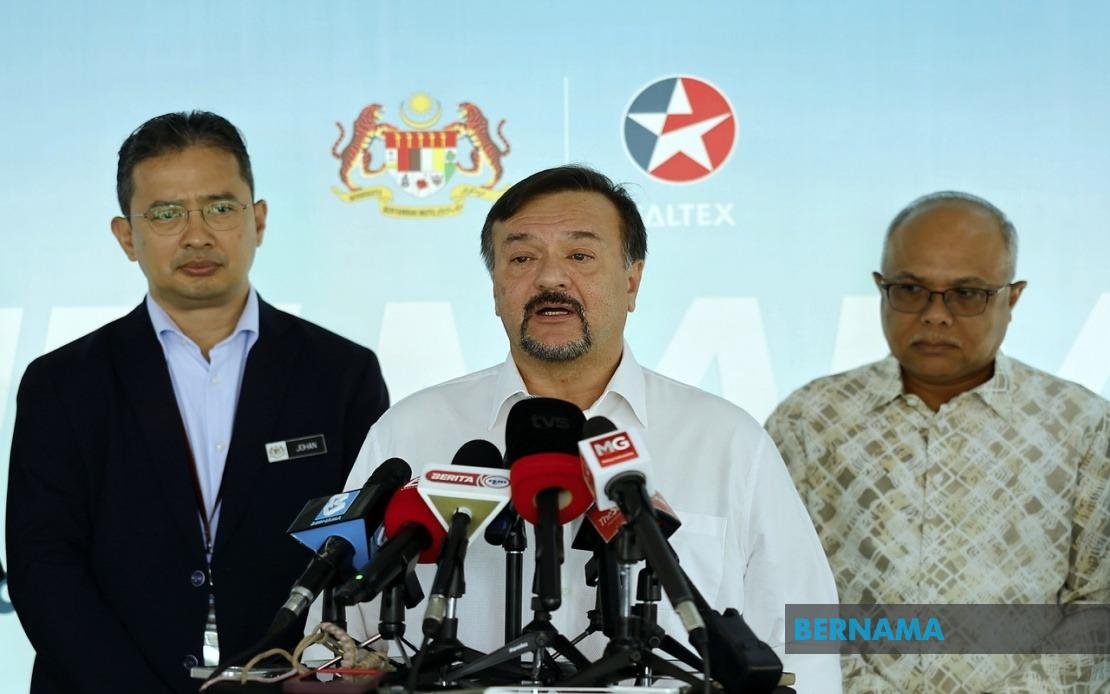
The Ministry of Finance has commenced its nationwide consultation process for the 2027 Budget, signalling the beginning of a crucial phase in shaping the government's financial roadmap for the coming year. Finance Minister II Datuk Seri Amir Hamzah Azizan revealed on July 1 that engagement sessions are now taking place across the country, bringing together stakeholders and officials from various ministries to contribute ideas and priorities for the budget, which will be formally presented to Parliament in October.
The consultation approach underscores the government's intention to build the budget through collaborative dialogue rather than top-down directives. By engaging multiple ministries and gathering input from various locations nationwide, the Finance Ministry aims to ensure that the final budget document reflects diverse perspectives and addresses challenges across different regions and sectors. This inclusive methodology represents a deliberate shift towards more transparent and consultative budget-making processes in Malaysia's financial planning.
Amir Hamzah emphasised during remarks at a BUDI Diesel programme observation that the government is adopting a measured and deliberate approach to budget formulation. Rather than rushing through preliminary decisions, officials are taking time to align fiscal priorities with the nation's overarching policy framework. This measured stance reflects awareness that budget decisions carry long-term consequences for economic trajectory and public welfare, particularly in a period when Malaysia faces competition from regional neighbours and structural economic challenges.
The MADANI Economy framework continues to serve as the foundational philosophy underpinning budget priorities. The framework's dual objective—simultaneously raising the economy's ceiling by enhancing competitiveness and boosting its floor by strengthening grassroots opportunities and safety nets—represents a deliberate attempt to pursue growth that does not leave segments of society behind. This inclusive growth model has become increasingly important as Malaysia confronts rising inequality and the need to maintain social cohesion while pursuing economic development.
Several recently unveiled strategic initiatives are shaping the budget's thematic direction. The 13th Malaysia Plan provides the long-term development blueprint, while the National Semiconductor Strategy positions the country to capture opportunities in high-value semiconductor manufacturing and design. The National Energy Transition Roadmap, meanwhile, charts Malaysia's pathway towards cleaner energy systems and reduced carbon emissions. These three frameworks collectively signal the government's commitment to steering the economy towards higher productivity, technological sophistication, and environmental sustainability.
For Malaysian policymakers and observers, the Budget 2027 consultation process carries particular significance given the government's stated ambition to achieve developed-nation status by 2030. This timeline means that budgets from now until 2030 serve as critical instruments for narrowing remaining gaps in infrastructure, human capital, and institutional capacity. The current consultation phase therefore represents more than routine financial planning; it reflects strategic positioning for a defining decade in Malaysia's economic evolution.
The previous budget cycle provides context for understanding fiscal scale and priorities. Budget 2026 commanded RM419.2 billion in total allocations, comprising RM338.2 billion designated for operating expenditure—funding the day-to-day functions of government—and RM81 billion for development expenditure, which funds infrastructure and capital projects designed to build long-term productive capacity. Additionally, the government channelled RM50.8 billion through government-linked investment companies, Federal statutory bodies, and public-private partnerships, leveraging these vehicles to amplify government resources and spread implementation of policy initiatives across multiple institutional channels.
This investment approach reflects evolving sophistication in how governments deploy fiscal resources. Rather than relying solely on direct government spending, Malaysia increasingly uses sovereign wealth funds and partnerships with the private sector to stretch limited public resources and tap private-sector expertise. This model becomes particularly important when major infrastructure projects, technological transformation, and energy transition require technical knowledge and capital that exceed traditional government budgeting capacity.
The nationwide engagement sessions now underway will shape which priorities receive resource allocation and emphasis in Budget 2027. Ministries competing for larger allocations will present cases explaining how their sectors—whether education, healthcare, defence, transportation, or social welfare—contribute to the government's overarching development objectives. This internal competition for budget allocation, mediated through formal consultation processes, helps ensure that final budget decisions reflect genuine policy priorities rather than bureaucratic habit or political favour alone.
For Malaysian businesses and citizens, the 2027 Budget will signal government intentions regarding taxation, subsidies, and public investment that affect economic conditions. Sectors dependent on government contracts or support will closely monitor which areas receive expanded or contracted funding. Taxpayers and the general public will look to the budget to understand whether the government intends to maintain existing subsidies or adjust them, whether tax structures will change, and how public services they depend upon will be resourced.
Amir Hamzah's assertion that the government approach remains consistent and grounded in the MADANI framework suggests continuity in budget philosophy, though this does not preclude specific policy adjustments or new initiatives responding to emerging challenges. The Finance Ministry's public emphasis on methodological consistency appears designed to reassure stakeholders that budget-making remains anchored to established principles rather than veering unpredictably with political winds.
The October parliamentary tabling deadline provides a fixed endpoint for the consultation process currently underway. Between now and then, the Finance Ministry must synthesise input from multiple sources, arbitrate competing priorities, and ultimately produce a comprehensive budget document that aligns with constitutional requirements and cabinet decisions. This timeline compresses the consultation window, meaning that the nationwide engagement sessions occurring now serve as the primary mechanism through which diverse interests attempt to influence budget outcomes.
Looking ahead, observers should monitor whether Budget 2027 introduces significant new policy directions or primarily consolidates recent strategic initiatives including the semiconductor and energy transition strategies. The breadth and depth of public and private investment allocated to digital transformation, green energy, and advanced manufacturing will reveal how seriously the government intends to pursue positioning Malaysia as a high-technology, sustainable economy capable of competing effectively against regional peers like Singapore and South Korea.

