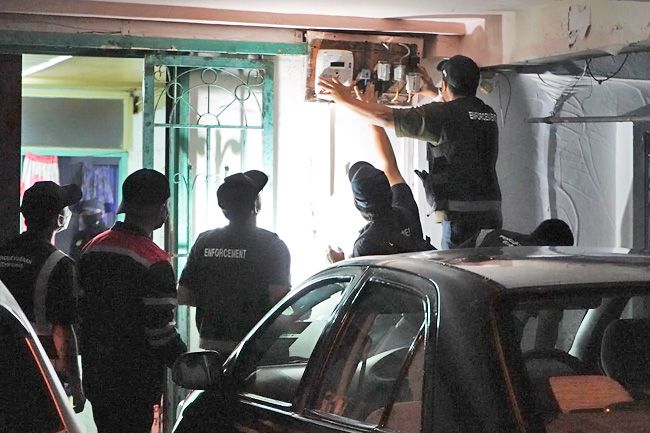
Authorities in Brunei have concluded a comprehensive enforcement sweep across Bandar Seri Begawan that exposed widespread violations spanning immigration, workplace safety, and electrical compliance, signalling renewed governmental attention to regulatory oversight in the capital's commercial and residential sectors. The operation, coordinated between the Brunei-Muara Police District and over a dozen government agencies, targeted two separate locations and resulted in the Immigration and National Registration Department apprehending two foreign nationals—one man and one woman—for further investigation under immigration statutes.
The scale of the operation underscores the systematic nature of non-compliance discovered during the raids. Labour inspectors identified five distinct breaches across the two sites, with three violations related to employer failures to furnish adequate worker housing and maintain proper sanitation standards as mandated by law. An additional two contraventions involved employers neglecting to formally register worker accommodation details on their foreign worker licences, suggesting inadequate record-keeping practices that could obscure labour conditions from regulatory scrutiny. These findings reveal gaps in how businesses manage migrant workforces, a concern that resonates across Southeast Asia where exploitation and unsafe conditions remain persistent challenges.
Beyond labour infractions, the Department of Electrical Services documented two separate breaches of Brunei's Electricity Act, indicating potential hazards in building infrastructure at the targeted locations. While specific details of these electrical violations remain undisclosed, such breaches typically involve unsafe wiring, inadequate grounding, or unlicensed electrical installations that pose fire and electrocution risks—dangers that disproportionately affect migrant workers living in substandard accommodation.
Remarkably, despite the operation's apparent focus on identifying human trafficking indicators, investigators interviewed 19 individuals across both raid sites without uncovering substantive trafficking offences. The Human Trafficking Investigation Unit's involvement demonstrates official concern about potential coercion or exploitation within the targeted establishments, though the absence of confirmed trafficking charges suggests either that conditions, while non-compliant, did not rise to trafficking thresholds, or that victims remained reluctant to disclose abuse to authorities.
The operation reflects broader regional and international pressure on Brunei to strengthen labour protections and immigration enforcement. As a small nation heavily reliant on migrant workers across construction, domestic service, and commerce sectors, Brunei faces mounting scrutiny from international labour organisations and human rights bodies regarding working conditions and worker vulnerability. This enforcement action signals to employers that regulatory agencies are actively monitoring compliance, potentially deterring future violations, though critics argue that sporadic crackdowns without sustained follow-up often fail to produce lasting behavioural change.
Supervising the operation was Superintendent Mohamad Noor Abd Rahman, the acting commanding officer of the Brunei-Muara Police District, who mobilised an unprecedented inter-agency force of more than 200 personnel. This coordination across the Narcotics Control Bureau, Royal Customs and Excise Department, Internal Security Department, and municipal authorities demonstrates Brunei's capacity for complex multi-sector enforcement but also raises questions about resource allocation and whether such large-scale operations represent sustainable or merely episodic enforcement patterns.
The involvement of the Religious Enforcement Division in a labour and immigration operation warrants particular attention, as it suggests potential connections between compliance violations and broader concerns about social order or regulatory adherence that extend beyond conventional labour law domains. This aspect may reflect Brunei's distinctive regulatory philosophy, where religious institutions participate in broader governance frameworks.
For Malaysian observers, the Brunei operation offers instructive insights into regional approaches to migrant worker protection. While Malaysia hosts substantially larger migrant populations and faces comparable labour violations, enforcement patterns differ markedly, with Malaysian authorities conducting smaller, more frequent raids rather than occasionally massive sweeps. The Brunei model's reliance on spectacular multi-agency operations potentially generates positive publicity and short-term deterrence but may overlook systemic improvements through continuous inspection regimes.
The enforcement action also illuminates how immigration and labour violations frequently cluster together—employers who fail to house workers adequately often simultaneously neglect licensing obligations and workplace safety standards. This pattern suggests that addressing workplace exploitation requires integrated regulatory approaches rather than siloed departmental enforcement, a lesson increasingly recognised across Southeast Asia as governments grapple with informal economy realities and supply chain accountability demands.
Brunei's government statement emphasising its "continued commitment" to law enforcement and "safeguarding public safety and well-being" reflects standard official messaging, yet the operation's comprehensiveness and inter-agency coordination do provide concrete evidence of enforcement capacity. Whether such operations will translate into sustainable improvement in migrant worker conditions, reduced exploitation, and stronger employer compliance remains uncertain, depending substantially on follow-up investigations, prosecutions, and penalties imposed on violators.
The coming weeks will reveal whether prosecutions proceed against the detained foreign nationals and identified employers, and whether fines or corrective orders generate genuine workplace improvements. For workers across Brunei and the broader Southeast Asian region, the operation's ultimate value depends not on its immediate publicity but on whether enforcement translates into tangible protections and accountability.

