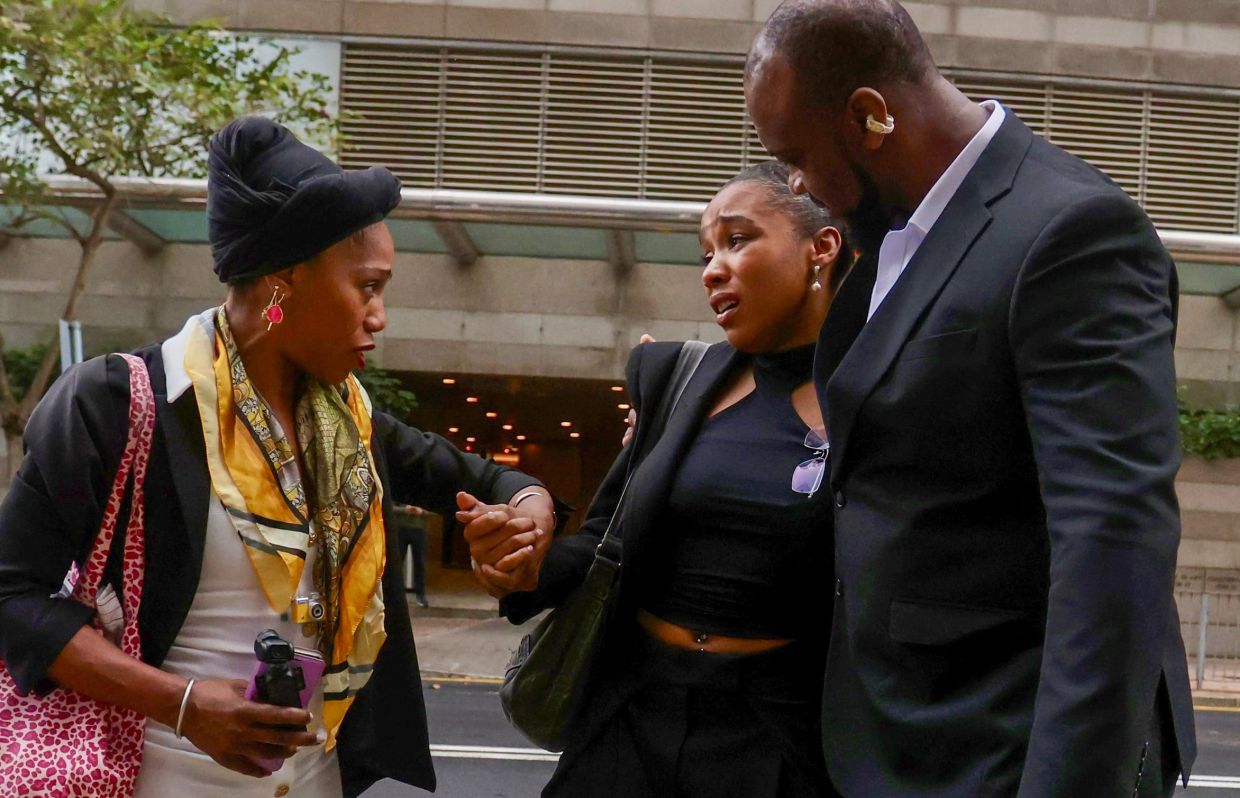
A Hong Kong court has handed down a six-year prison sentence to a British woman convicted of attempting to extract £100,000 from a fellow countryman through blackmail, following her fabricated claims that he had sexually assaulted her. Isabel Anonia Barbra Eudora Rose, 26, an event management professional from London, was found guilty of both blackmail and perverting the course of public justice by Judge Adriana Noelle Tse Ching at the District Court on Wednesday. The verdict marks a significant case examining how allegations of sexual misconduct can be weaponised for financial gain, raising questions about the credibility challenges that genuine victims face when reporting such crimes.
Rose's involvement in the incident began when she arrived in Hong Kong on January 31, 2024, intending to meet a man she had encountered while travelling in Thailand the previous month. According to her account presented to police, this man had sexually assaulted her at his apartment in Central that same evening. However, the court's examination of evidence painted a starkly different picture of what actually transpired between the two individuals. Rather than corroborating Rose's version of events, the judge concluded that she had deliberately concocted the rape allegation as part of a calculated scheme to obtain substantial financial compensation from the man.
The prosecution's case relied heavily on message exchanges between Rose and the man immediately following their encounter. These communications proved crucial in undermining her credibility with the judge. In one exchange, Rose wrote accusing him of rape, to which he responded with apparent shock and denial, stating that such behaviour did not align with his values and that he felt distressed by the accusation. The man explained that he had requested oral sex but that Rose had refused, and that he subsequently apologised for misinterpreting her signals and acting too hastily. His reply indicated that while he was disappointed by her refusal, he respected her decision. Judge Tse determined that the tone and content of these exchanges were fundamentally inconsistent with Rose's claim that she had been raped, noting that genuine victims of sexual assault typically do not engage in such casual negotiation with their alleged attackers immediately afterwards.
Forensic evidence presented during the trial further undermined Rose's account. Medical examination of Rose revealed bruising on her neck but no injuries to her genital area, which the judge cited as significant given the violent nature of the alleged rape. The court accepted the man's testimony that while the pair had engaged in intimate physical contact, they had not engaged in penetrative intercourse. This finding directly contradicted the foundation of Rose's allegations and supported the judge's conclusion that no sexual assault had occurred.
What emerged instead was a pattern suggesting financial motivation from the outset. Following the alleged incident, the two exchanged messages about compensation, initially discussing reimbursement for Rose's accommodation and travel expenses. The man agreed to pay £2,000 when Rose requested this amount, but she subsequently increased the demand to £5,000. Rose then sent a message stating: "You've given 10 per cent of what I'm owed, 100 per cent of my soul gone," signalling that she expected substantially more payment. The escalation continued as the man clarified he could not produce £100,000, prompting Rose to respond that he possessed half the amount and should transfer it immediately, with the remainder to follow the next day.
While the £100,000 figure did not appear in the preserved message records, Judge Tse concluded that Rose had mentioned this specific sum through disappearing text messages or voice communications that she subsequently deleted, demonstrating a deliberate effort to conceal evidence of her blackmail demand. The judge found that Rose had indeed threatened to report the man to police if he failed to meet her financial deadline. On February 3, just two days after her arrival in Hong Kong, Rose filed a formal report with the police alleging rape. The man was initially arrested and questioned, but police subsequently arrested Rose the following day and charged her with blackmail after investigating the circumstances more thoroughly.
During sentencing, Judge Tse delivered a scathing assessment of Rose's conduct, characterising her actions as "cruel and evil." The judge stated that Rose had deliberately exploited the man's kindness, naivety, genuine affection, and romantic interest in her to facilitate the blackmail scheme. Tse emphasised that the evidence suggested Rose had targeted the man for his financial resources from the moment she arrived in Hong Kong, further abusing their developing relationship to pressure him for payment within just 48 hours of meeting him in person. The judge set the starting point for the blackmail charge at five years' imprisonment and ordered an additional consecutive year from the second conviction relating to perverting the course of public justice, resulting in the six-year total sentence.
Rose's false police report particularly incensed the judge, who described the behaviour as "vengeful and wicked." Tse stated that Rose had effectively punished the man for his refusal to capitulate to her financial demands by weaponising the criminal justice system against him. By fabricating rape allegations, Rose not only attempted to extract money through direct blackmail but also sought to use law enforcement as a tool to coerce compliance. The judge noted that Rose bore full responsibility for the situation she now faced, stating she was "an author of her own wrongdoing."
In the aftermath of the guilty verdict announced in March, Rose visibly broke down in the courtroom and was remanded in custody pending sentencing. Following her conviction, she granted an interview to the South China Morning Post in which she expressed bewilderment at the outcome. Rose stated that she could not comprehend how events had unfolded so dramatically and questioned the fundamental reversal in how her case had been treated by authorities. She noted the striking transformation from initial police investigation into rape allegations to the subsequent focus on blackmail charges, observing that "within 24 hours, there was no rape any more." Rose claimed that officers had indicated they would pursue the blackmail matter with greater urgency than the sexual assault complaint.
Rose described her arrival in Hong Kong as a tourist visit intended to see someone she believed had become romantically involved with her. She now faces the prospect of serving a significant portion of her six-year sentence in a Hong Kong prison facility, far from her home and family in London. Her comment about needing to "suck it all up" reflected a grim acceptance of the consequences flowing from her actions. The case serves as a cautionary tale about the serious legal and personal ramifications of filing false criminal reports, particularly those involving sexual assault allegations. It also highlights the investigative challenges prosecutors and judges face when examining genuine sexual assault claims, as false allegations can undermine the credibility of authentic victims and complicate the pursuit of justice in real cases of sexual violence.

