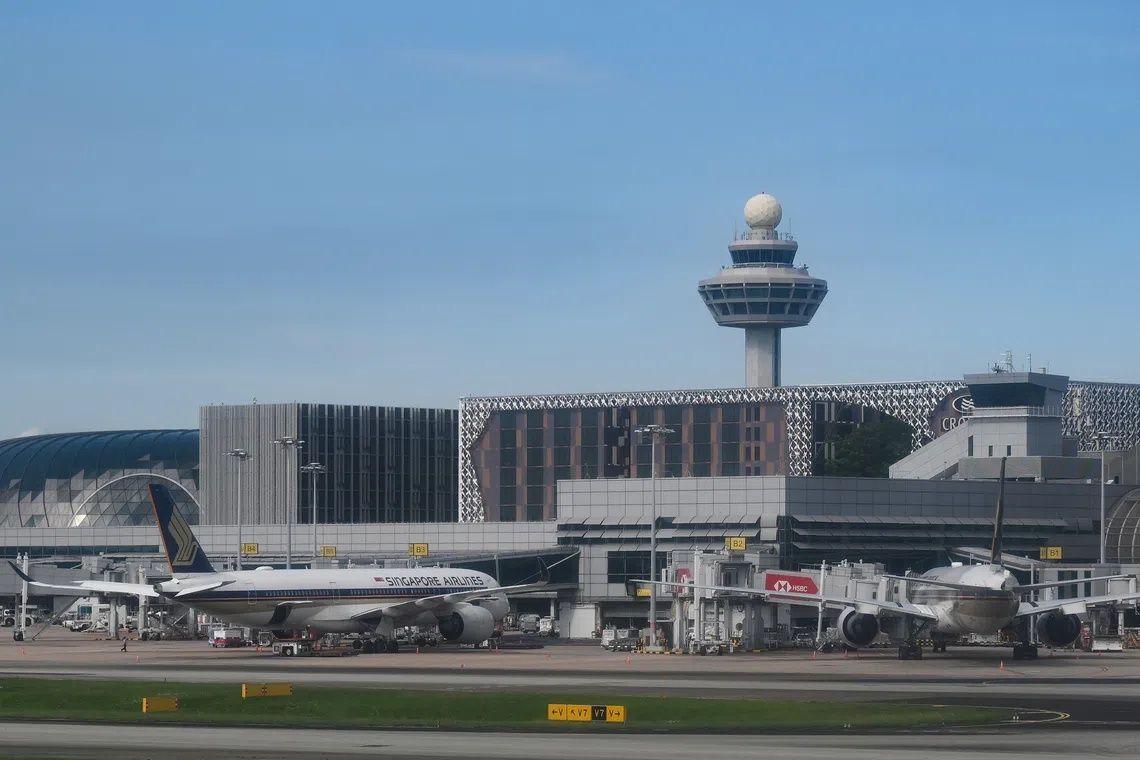
A British national aged 25 is set to face prosecution in Singapore following an incident at Changi Airport's Terminal 1 that left an airline staff member injured and delayed a departure to Kuala Lumpur by 45 minutes. The Singapore Police Force disclosed details of the case on Tuesday, August 11, outlining the sequence of events that unfolded on July 20 at approximately 4.05pm when officers received a complaint about a passenger causing a disturbance at one of the terminal's boarding gates.
According to investigators, the man displayed disruptive behaviour whilst waiting at the gate for his scheduled flight to Kuala Lumpur. His conduct included speaking and shouting at elevated volumes, which proved irritating to fellow travellers. Police assessments indicate the individual appeared to be under the influence of alcohol at the time, a factor that likely contributed to his inability to maintain composure in the crowded airport environment.
When two airline representatives approached him to address his behaviour, the situation escalated significantly. The man responded with anger, directing profanities at one of the staff members in a manner that breached acceptable conduct standards. His aggressive demeanour prompted the airline to make the decision to remove him from the aircraft, citing his intoxicated state as grounds for the action.
The incident took a more serious turn once the man learned of the airline's decision to exclude him from the flight. Rather than accepting the determination, he allegedly became increasingly aggressive and forcefully pushed his way past airline staff in an attempt to board the aircraft. During this confrontation, he entered a restricted zone within the airport terminal without proper authorisation. One staff member sustained injuries to her left arm and wrist after falling to the ground during the altercation, sustaining what police classified as minor but reportable injuries.
Throughout the episode, the man persisted in his aggressive behaviour, continuing to use offensive language directed at airport security personnel tasked with managing the situation. The cumulative effect of his actions—the initial disturbance, the physical altercation with staff, and the ongoing verbal aggression—resulted in a substantial operational impact on airport services. The flight bound for Kuala Lumpur experienced a departure delay of 45 minutes, affecting not only the disruptive passenger but also the dozens of other travellers scheduled for that service.
The prosecution will pursue three separate charges against the man, each carrying distinct potential penalties. The first charge relates to causing annoyance whilst in an intoxicated state in a public location, for which conviction could result in a fine not exceeding S$1,000, imprisonment up to six months, or a combination of both sanctions. This charge addresses the initial disruptive conduct that disturbed other airport users.
A second charge concerns the use of threatening, abusive, or insulting words or behaviour. If found guilty on this count, he faces a potential fine of up to S$5,000. This charge captures the verbal aggression directed at both airline and airport security staff throughout the incident. The third and most serious charge involves unauthorised entry to a protected area of the airport, which carries substantially heavier penalties: a fine of up to S$20,000, imprisonment for up to two years, or both. This charge reflects the significance accorded to breaches of airport security protocols and the physical intrusion into restricted zones.
The case underscores the strict enforcement approach Singapore adopts towards disruptions at its major transportation hubs. Changi Airport, serving as one of Southeast Asia's busiest aviation centres and a critical gateway for regional connectivity, maintains stringent standards for passenger and visitor behaviour. The incident also highlights how alcohol-fuelled disruptions can rapidly escalate from minor annoyances into security violations with potential consequences for operational efficiency and staff safety.
For Malaysia, the case carries particular relevance given that the flight in question was heading to Kuala Lumpur, indicating the interconnected nature of regional air travel. Malaysian authorities and airport operators regularly encounter similar incidents, though enforcement approaches may vary. The injuries sustained by the airline staff member in this instance demonstrate that airport disruptions are not merely inconveniences but can result in physical harm to workers performing their professional duties.
The incident also reflects broader concerns about alcohol-related misbehaviour in airport and aviation settings across Southeast Asia. Airlines and airport operators in the region have increasingly implemented stricter policies regarding intoxicated passengers, recognising that such individuals pose risks to operational safety, staff welfare, and the experience of other travellers. This case will likely serve as a cautionary example of the serious legal consequences that jurisdictions like Singapore impose on those who breach airport conduct standards.
The man was scheduled to appear in court on August 12, with prosecutors expected to present the evidence gathered during the police investigation. The case will proceed through Singapore's judicial system, which maintains a reputation for imposing meaningful penalties on those convicted of airport-related offences, particularly when such conduct results in injuries to staff or operational disruptions.

